Prepared by the Imperial Cushions editorial team. Laboratory terminology is retained where a report is cited; historical context and dealer judgment are identified as interpretation.
An old mine cushion combines a softly squared outline with broad facets and an open culet. Many examples have a high crown and small table. The result is a pattern of large flashes that shifts as the stone turns.
What does Old Mine Cut describe?
Old Mine Cut describes a way of shaping a brilliant diamond, associated with the eighteenth and nineteenth centuries. The usual clues are a cushion outline, a relatively small table, a high crown, short lower-half facets and a culet that can be seen through the centre. GIA notes that the girdle may be very thin in places. Look at these features together, because their size and shape vary from one diamond to another. GIA’s Old Mine Cut guide gives the gemological background.
The name also needs care when it is used to describe a particular stone. A diamond cut in an old style today can resemble one fashioned in the nineteenth century. The visible cut cannot establish its age, mine, ownership history or natural origin. Read the laboratory record for the material and grading information, then ask for separate evidence if a seller claims an antique date or a named provenance. GIA discusses the difference between historic cuts and modern antique-style cushions. Each Imperial stone page identifies the stone by reference and lists the measurements and report details available for it.
Read the outline, then the light
Start with the corners and sides. Some cushions are round and pillowy; others have straighter sides and clipped corners. Turn the diamond slowly and follow the central facets. Notice where the bright areas appear, how they move and whether the centre stays lively at normal viewing distance.
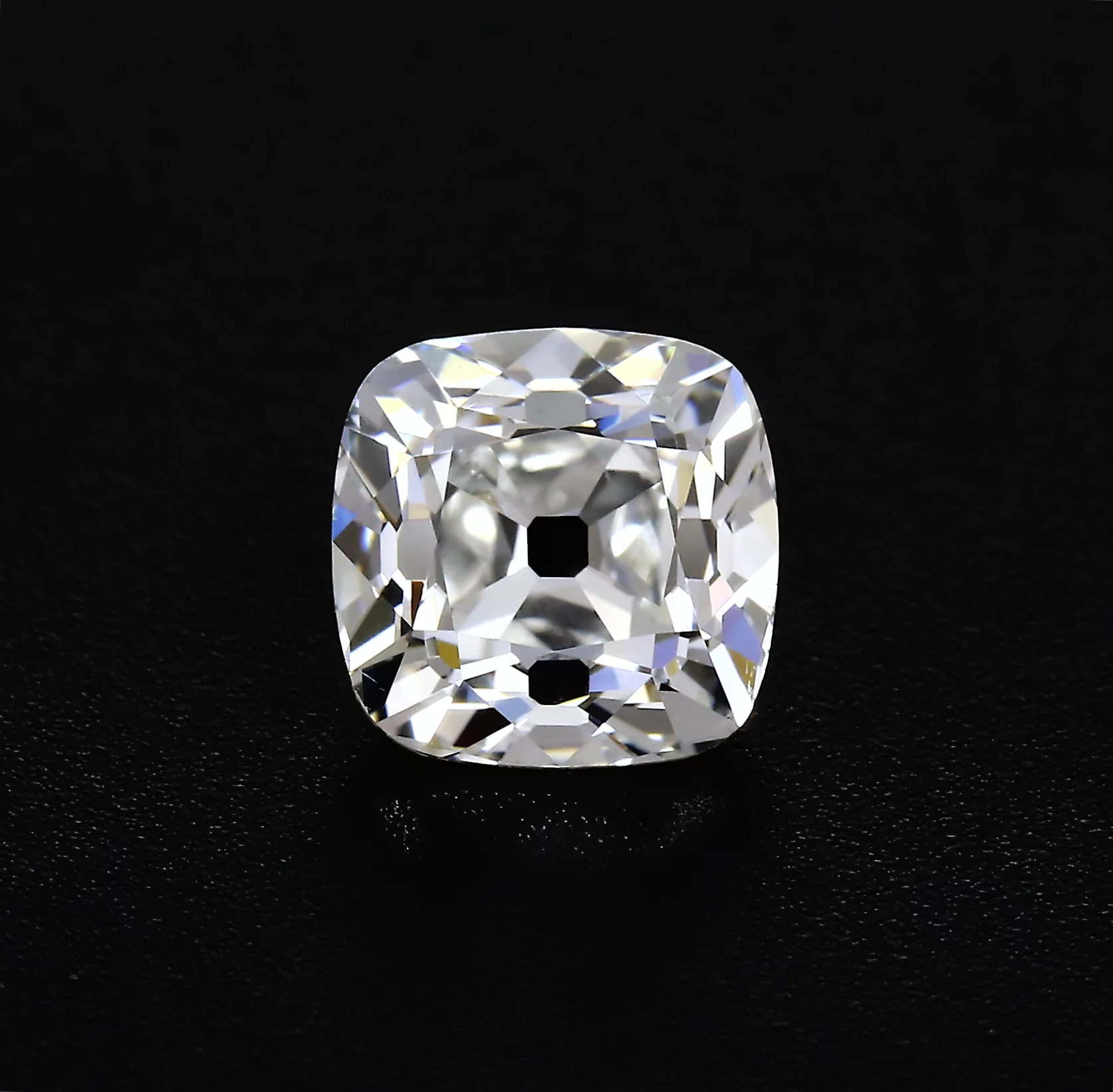
The 3.01 ct G VS2 diamond gives a useful starting example: an 8.24 × 8.05 mm face, rounded corners and a small open culet. Its almost-square outline makes the relationship between the central facets and the corners easy to study.
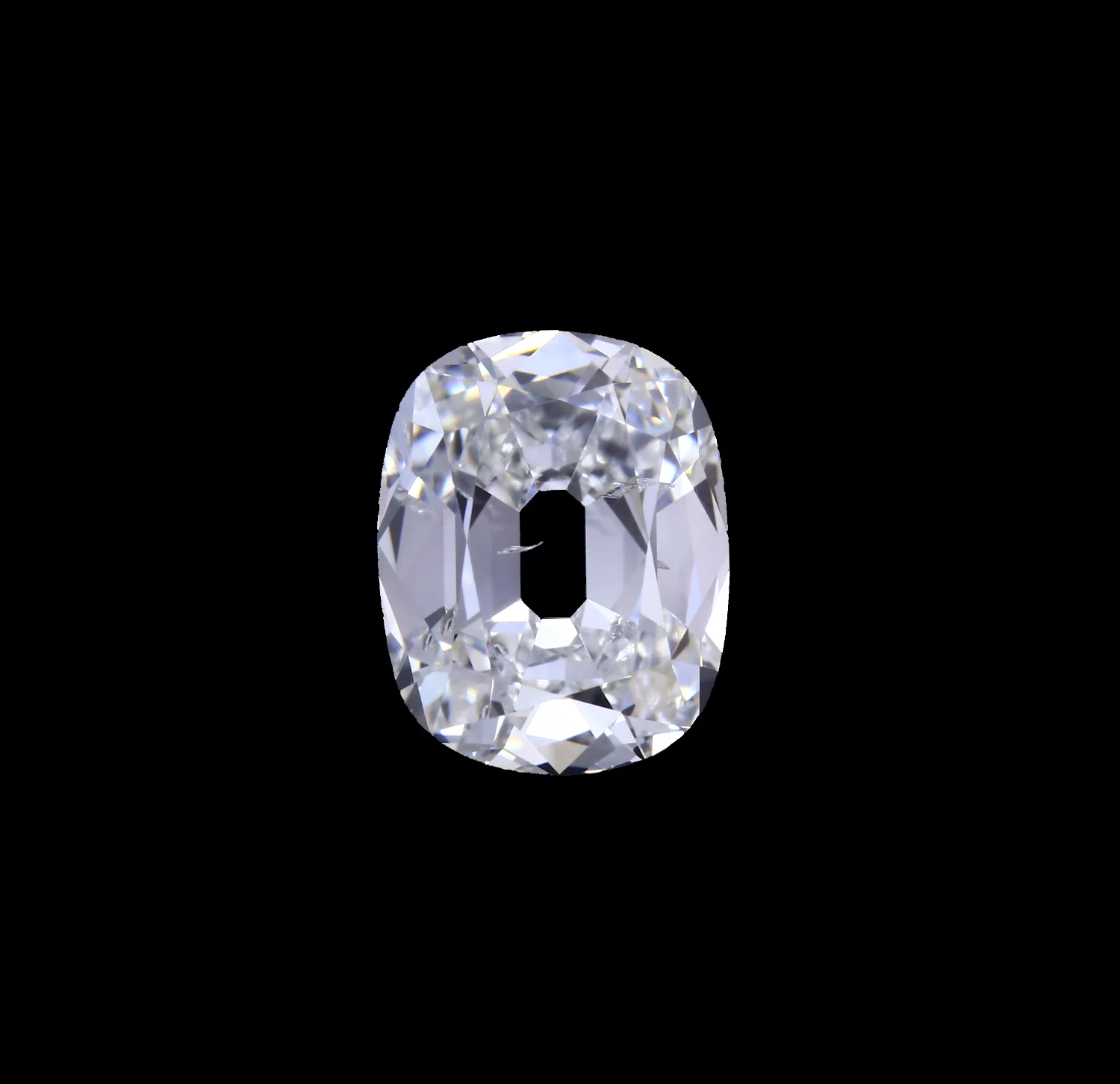
Now compare a stone of almost the same weight. The 3.09 ct F SI2 Old Mine Cushion Brilliant measures 10.21 × 8.10 mm face-up. Its long sides and rounded ends give it a clearly different outline from the 3.01 ct stone, and its open culet occupies more of the centre in the published photograph. The images were made at different scales, so use the stated millimetres for size and the photographs for shape and facet arrangement. Carat weight alone would hide the difference between these two faces.
Look from the side, then watch the stone move
A face-up photograph can show the outline and one instant of reflection. The side view answers a different question: how high the crown rises, how deep the pavilion extends below the girdle and where the mass sits beneath the visible face. Read all three dimensions on the report beside the carat weight. A high crown may be attractive in profile, while pavilion depth affects how the diamond can sit in a new setting. Neither the depth percentage nor a still image tells you whether the stone stays lively as it moves.
Ask for a clean face-up view, an oriented side view and a slow turn under diffuse light. Then watch it under an ordinary room light and a small direct light. Hold the camera position and exposure steady so a dark centre at one angle can be seen recovering, or not, as the facets move. Look at the ends as well as the middle of an elongated stone. A single bright frame cannot show that sequence. The elongated Old Mine guide takes the outline and ratio question further.
Compare the right cuts
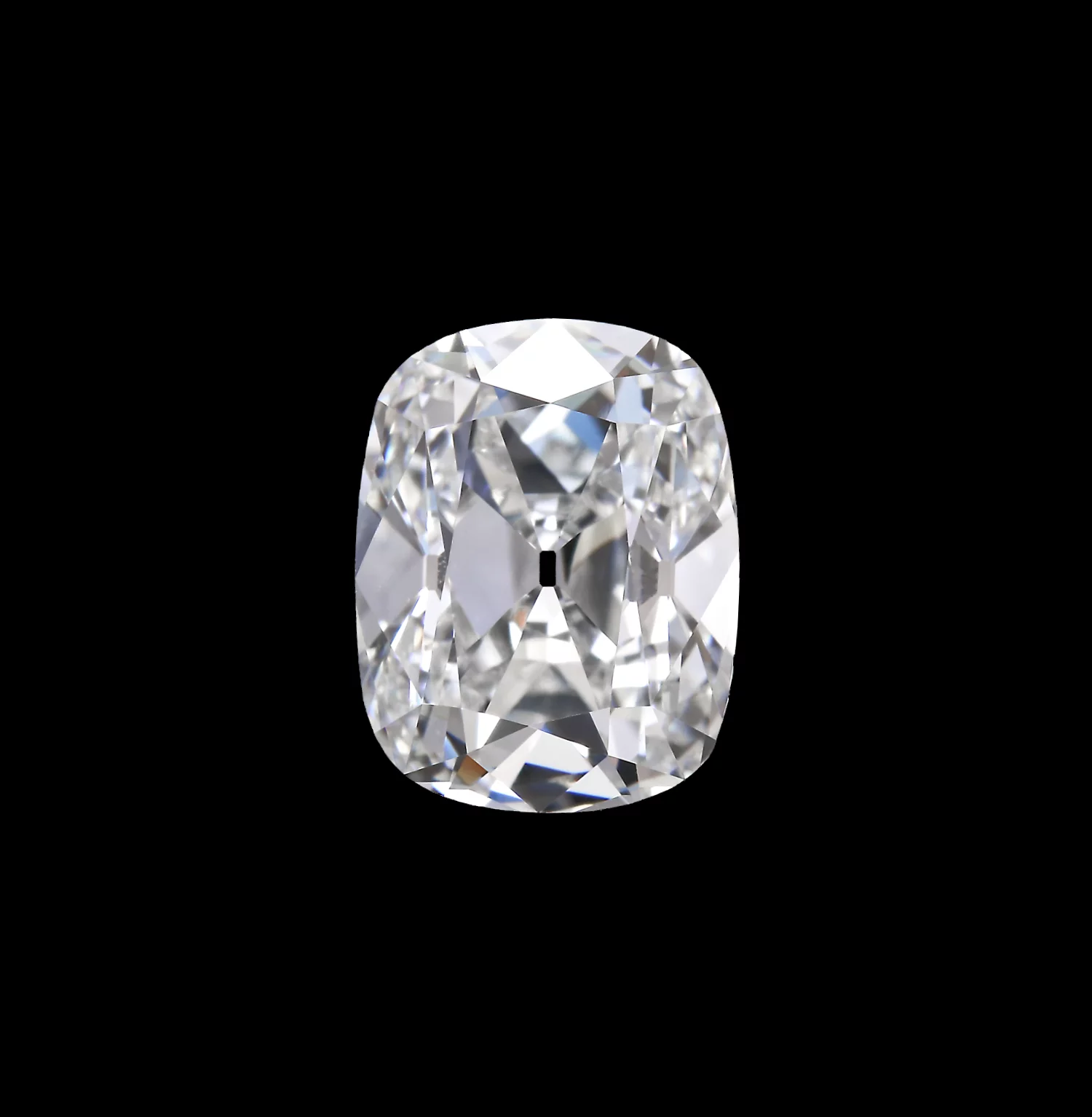
An Old European Cut shares some period features, including a high crown and visible culet, but its outline is rounder. A modern Cushion Brilliant can share a pillowy outline while arranging the crown and pavilion facets differently. Use these names to find useful comparisons, then judge the individual stone under consistent light. Our Old Mine and Old European comparison deals with the rounder historic cut. The Old Mine versus modern elongated cushion study sets out the facet and viewing questions for that different comparison.
Before choosing one
Compare the report, side profile and condition notes with the moving view. Thin girdle areas and the culet need particular attention when planning a setting. Read the condition guide, then browse the Old Mine Cut diamonds for outlines you enjoy.
For a serious candidate, ask for an oriented magnified examination of the girdle, corners, facet edges and culet. A photograph made for shape cannot establish whether a tiny feature is a reflection, an inclusion or surface damage. Match the stone reference and measurements to the current laboratory record, and confirm availability before planning a setting. If the centre, spread or condition remains uncertain, arrange a private or independent inspection of that exact diamond.
See the details in a stone
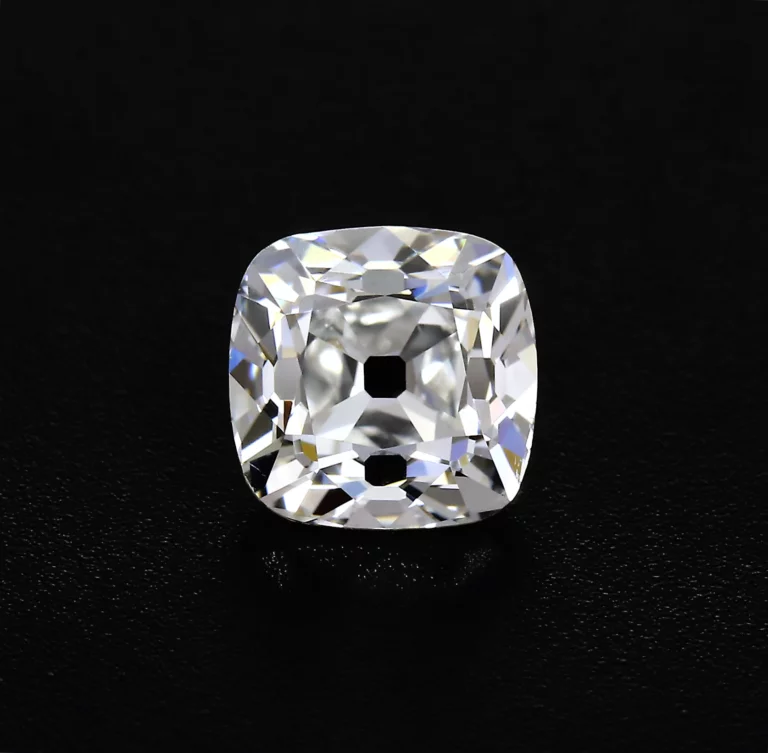
3.01 Ct. G VS2 Old Mine Cushion Brilliant
A near-square, 3.01 ct old mine cushion with a 51% table.
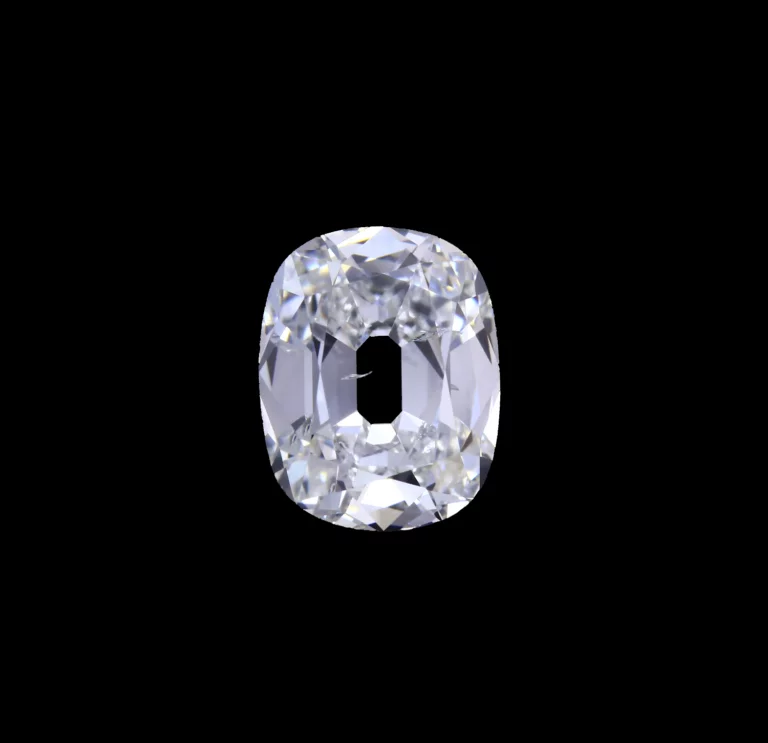
3.09 Ct. F SI2 Old Mine Cushion Brilliant
A 3.09 ct old mine cushion with a longer outline and 55.2% depth.