Prepared by the Imperial Cushions editorial team. Laboratory terminology is retained where a report is cited; historical context and dealer judgment are identified as interpretation.
Old mine cuts usually have a cushion-shaped outline. Old European cuts are rounder, with facets arranged around a circular face. Both families can have high crowns, small tables and visible culets.
Start with the silhouette
Look at the whole outline from normal wearing distance. An old mine cushion may have straight sides, soft corners or gentle elongation. An old European cut gives a more circular frame to the central pattern. Later work can alter these features, so compare the current stone with its report and condition notes.
Then watch the facets
Follow one slow rotation. In an old European cut, look for the radial arrangement around the centre. In an old mine cushion, follow the broad central facets toward the corners. Compare the size, timing and distribution of flashes in the same light.
The 3.01 ct G VS2 diamond is a documented cushion example with rounded corners and an almost-square face. Use it to establish the cushion side of your comparison, then request a suitable round antique example for a side-by-side viewing.
See GIA’s old mine cut guide for the typical structures, and our setting guide for the practical design questions.
See the details in a stone
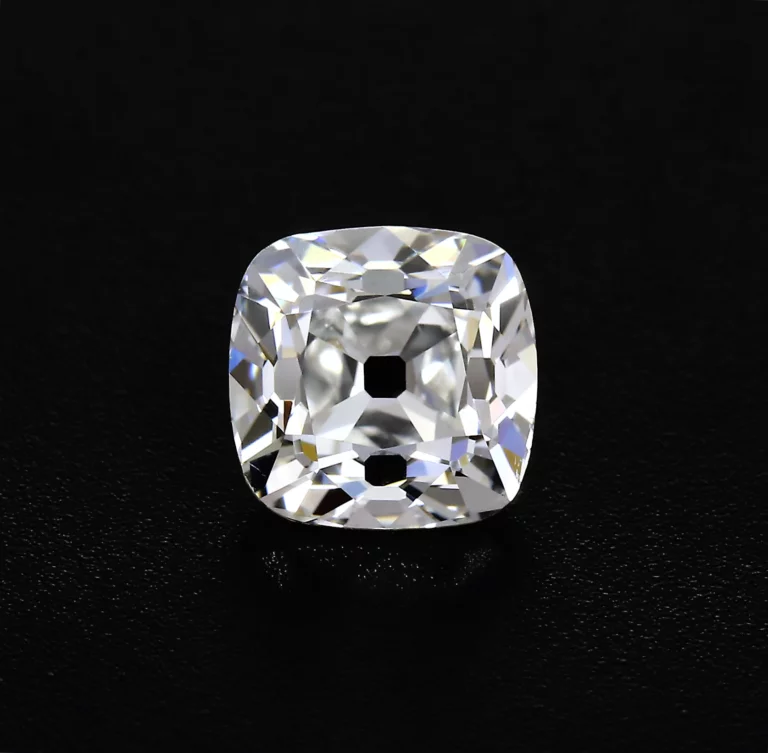
3.01 Ct. G VS2 Old Mine Cushion Brilliant
A near-square, 3.01 ct old mine cushion with a 51% table.
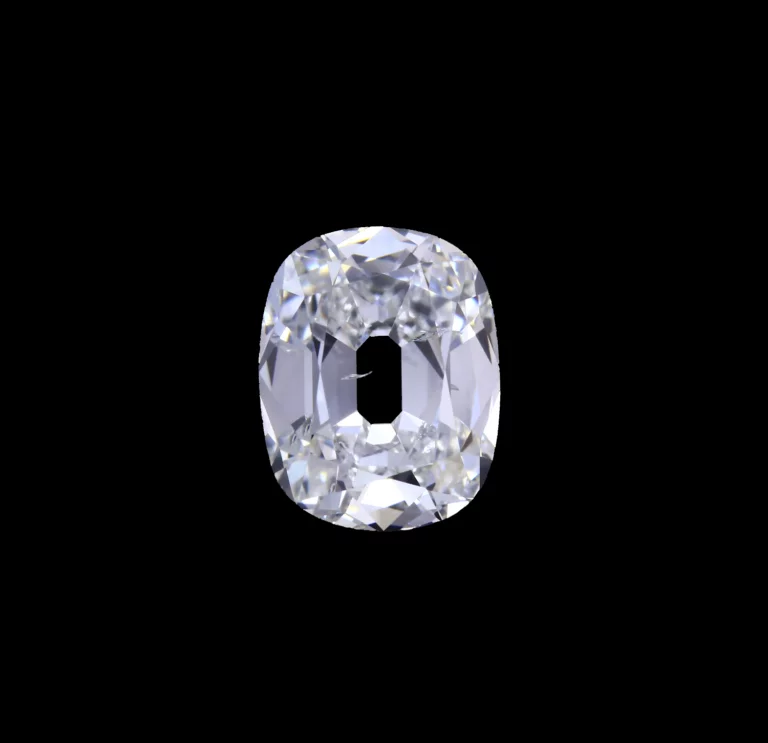
3.09 Ct. F SI2 Old Mine Cushion Brilliant
A 3.09 ct old mine cushion with a longer outline and 55.2% depth.