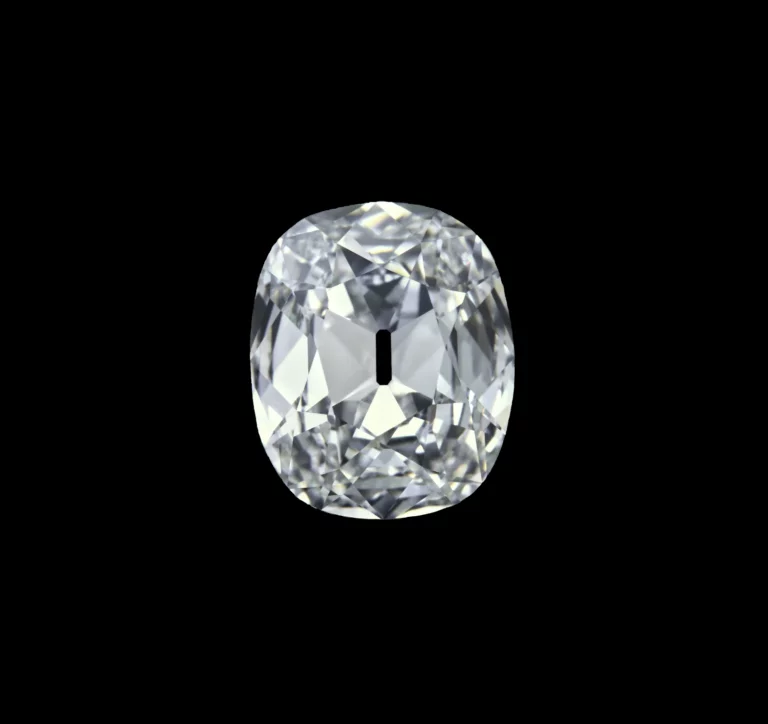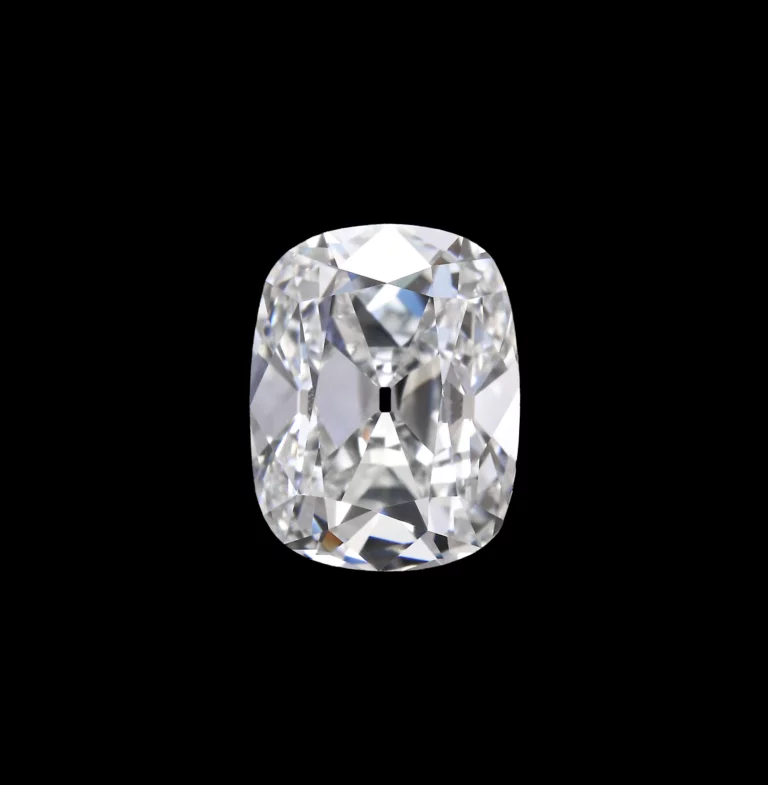
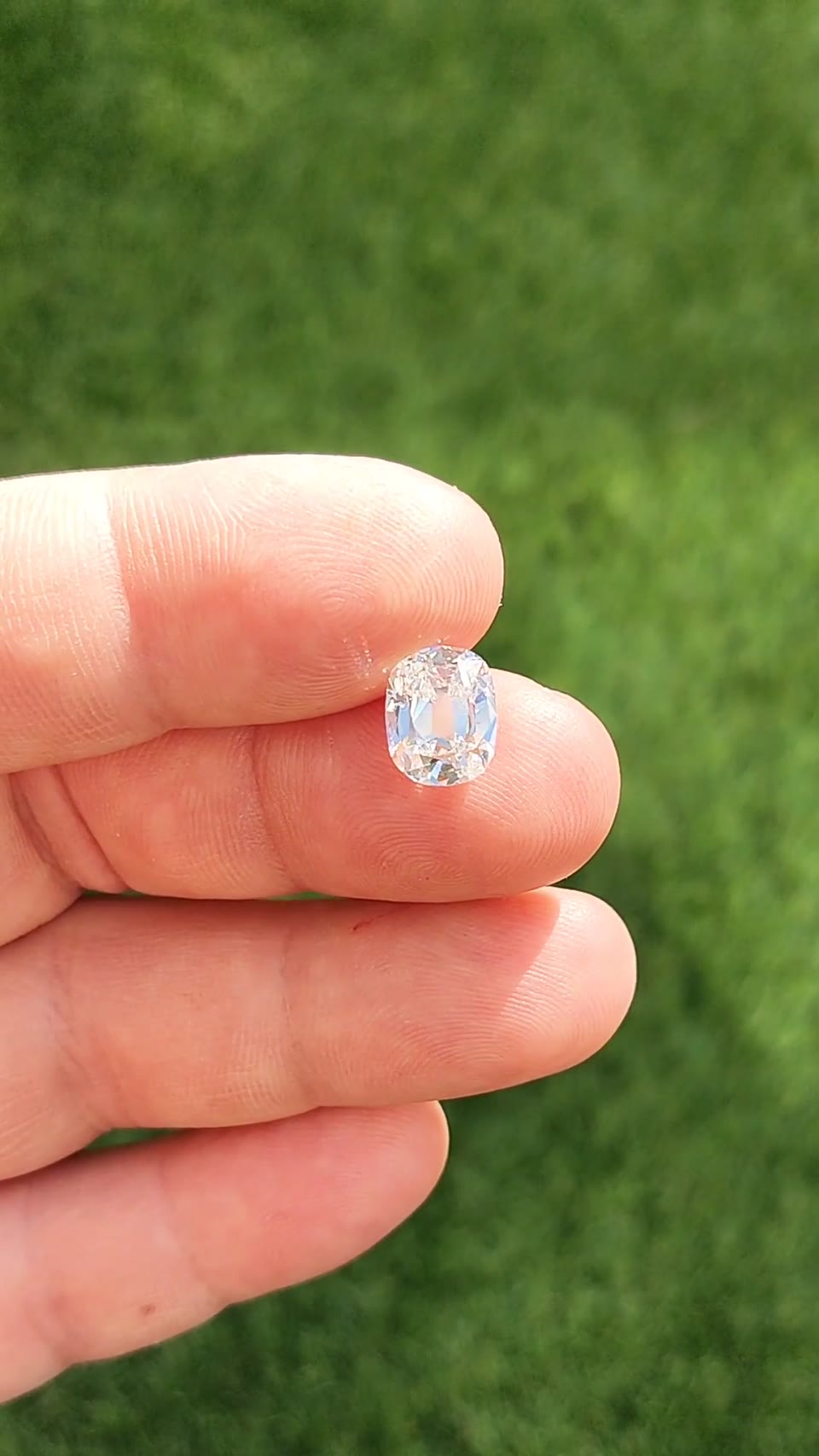
An elongated Old Mine cushion often draws you in with broad flashes, a raised crown and a small open centre. A modern elongated cushion can have a finer, more closely divided sparkle, or a bold pattern of its own. Both have the long outline and softened corners that make a cushion so easy to imagine on a hand.
The choice becomes personal when you see them move. You may find yourself waiting for one large facet to catch the light, or enjoying a scattering of smaller reflections with every gesture. Try both in the light you live in, then notice which one you want to see again.
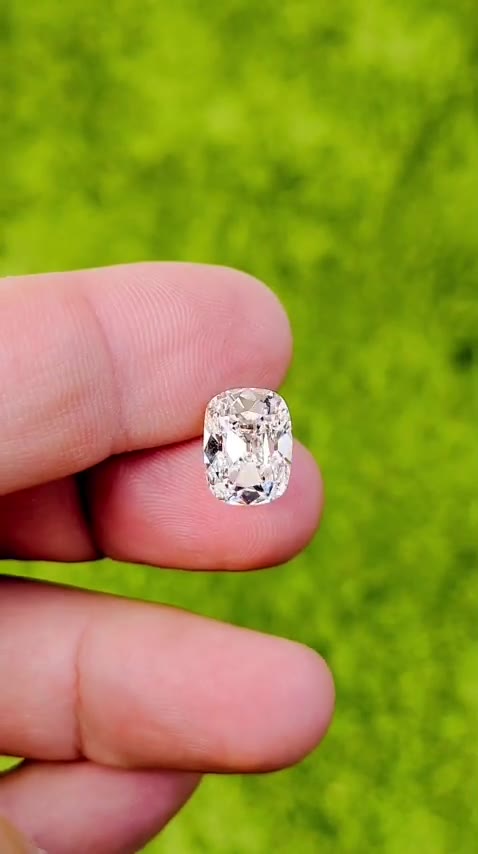
The same long shape, a different first impression
Picture a simple ring with the diamond running along the finger. An elongated cushion gives you rounded corners within a rectangular outline. The amount of curve changes the feeling: fuller shoulders can make a stone look pillowy; straighter sides can give it a more defined shape.
That outline and the cutting style are separate choices. An Old Mine can be nearly square or clearly elongated. Modern cushions vary in length too. Begin with the shape you enjoy on your own hand, then look into the diamond.
The 5.03 Ct. F VS1 Old Mine Cushion measures 11.72 × 8.91 mm, a length-to-width ratio of 1.32. The 3.09 Ct. F SI2 Old Mine Cushion measures 10.21 × 8.10 mm, a ratio of 1.26. Those numbers describe the length relative to the width; the photographs show the curves.
The broad reflections of an Old Mine cushion
There is time to follow individual facets in an Old Mine cushion. A broad reflection may brighten beside the centre, darken as you turn your hand, then return from another angle. If you enjoy looking closely at a diamond, that changing pattern can be part of the pleasure of wearing it.
Old Mine cuts typically have a smaller table, higher crown, short lower-half facets and a visible culet, the small flat facet at the bottom of the stone. Seen through the top, the culet can look like an opening at the centre. These are characteristic features of the style, described in GIA’s Old Mine guide. Individual stones vary.
The 3.09 Ct. F SI2 Old Mine Cushion has a more prominent open centre in its face-up photograph. Seeing both helps you decide how much of that detail you enjoy. Even within the Old Mine family, your preference can be quite specific.
Why crushed ice is our least favourite cushion look
Modern elongated cushions include several facet patterns. Some retain larger, clearly separated reflections. Others show the dense, fine texture called crushed ice, described in GIA’s guide to diamond shapes. Crushed ice is the cushion look we find least attractive.
To our eye, that crowded glitter can look fussy and visually muddled. Small reflections compete across the face, making it harder to enjoy a clear pattern. The outline may be beautiful; the fragmented interior is where it loses us.
We find the broad flashes of an Old Mine much more beautiful. You can follow the larger reflections as your hand turns, see the open culet, and enjoy the way the pattern changes around it. Those are the details we would want to keep looking at in a ring of our own.
Modern cushions include brilliant and modified brilliant arrangements. GIA describes variations with four or eight pavilion mains, and modified designs with additional facets. The term “modern elongated cushion” covers several appearances. See GIA’s explanation of cushion cutting styles.
What to look at together
| Detail | Elongated Old Mine cushion | Modern elongated cushion |
|---|---|---|
| Reflections | Often broad, with individual facets easy to follow. | Crushed ice has a finer, fragmented appearance; other modern patterns vary. |
| Centre | A visible culet is characteristic; its size varies. | Check the actual culet and central pattern in the image and report. |
| Profile | A raised crown is typical and can be part of its appeal. | Profiles vary with the design. View the stone from the side. |
| On the hand | Judge the actual length, width, curves and movement. | Use the same checks, at a similar scale and in similar light. |
For a close decision, ask to see both stones together in diffuse daylight and ordinary room light. Include a slow turn, a face-up pause and a side view. Then look at each from a comfortable viewing distance. Separate photographs are useful introductions; a shared view makes differences in size and light easier to judge.
Imagine the ring you would wear
A plain band leaves the outline easy to see. A bezel traces its curves; prongs leave more of the sides visible. With an Old Mine cushion, a side view also lets you enjoy the raised crown. Ask the jeweller to plan the setting around the diamond’s depth, corners and girdle condition.
If an antique history is part of the attraction, ask for the evidence for the particular stone. Cutters also make Old Mine-style diamonds today, as GIA explains. The name describes a cutting style; a documented history adds something separate to the choice.
You can explore proportions further in our elongated Old Mine cushion guide. For a first look at real stones, open the 5.03 Ct. F VS1 Old Mine Cushion or the 3.09 Ct. F SI2 Old Mine Cushion. Use the enquiry option on either diamond page to request its report, current availability and a closer viewing.