
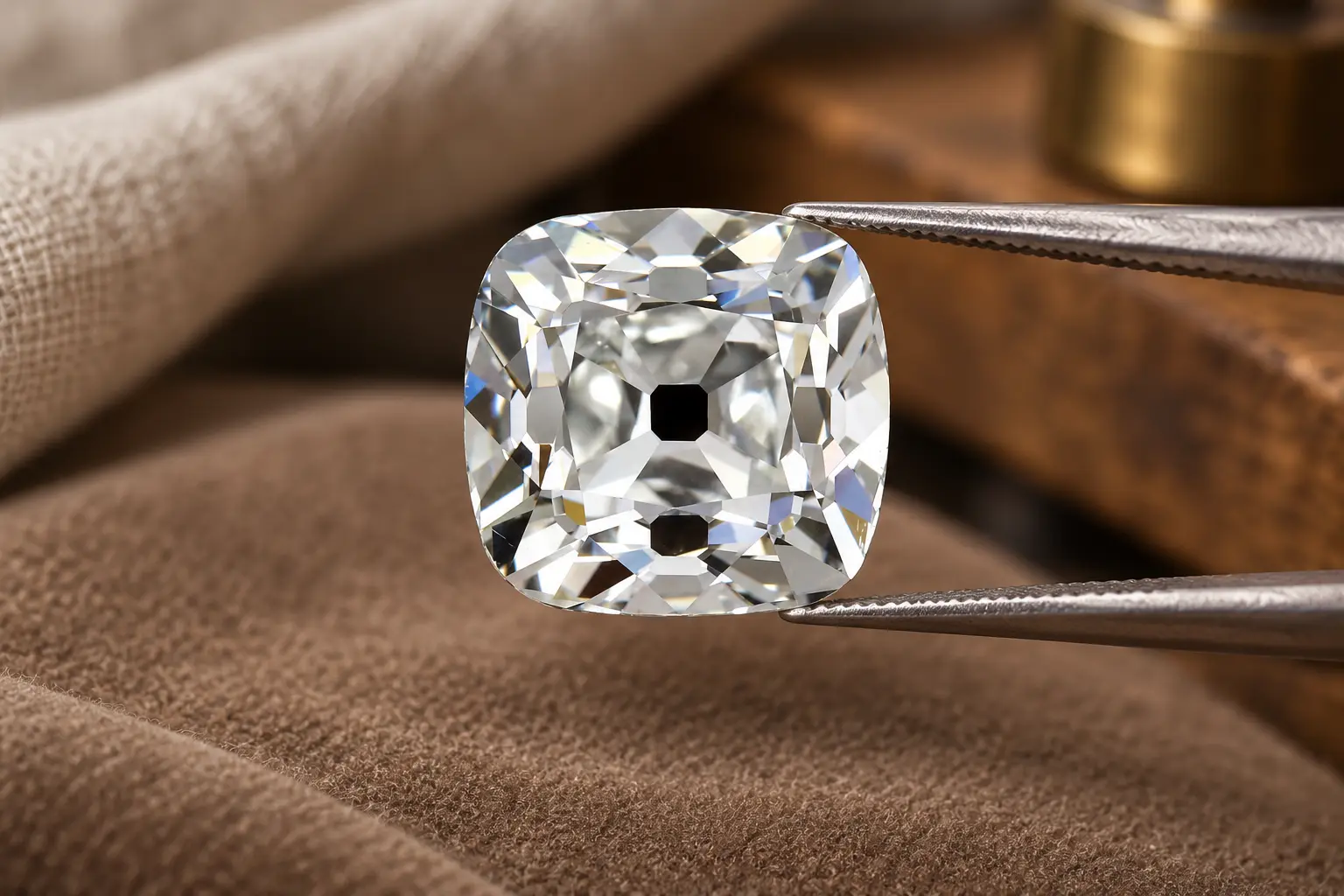
Length, width and outline determine a diamond’s face-up footprint. Carat records its weight. Read those dimensions alongside depth to understand where the weight is carried. A ring presents the outline to the eye, while part of the pavilion sits below the visible surface. The two measurements deserve separate attention. Even on a tray, the difference appears as soon as the stones are shown at equal scale.
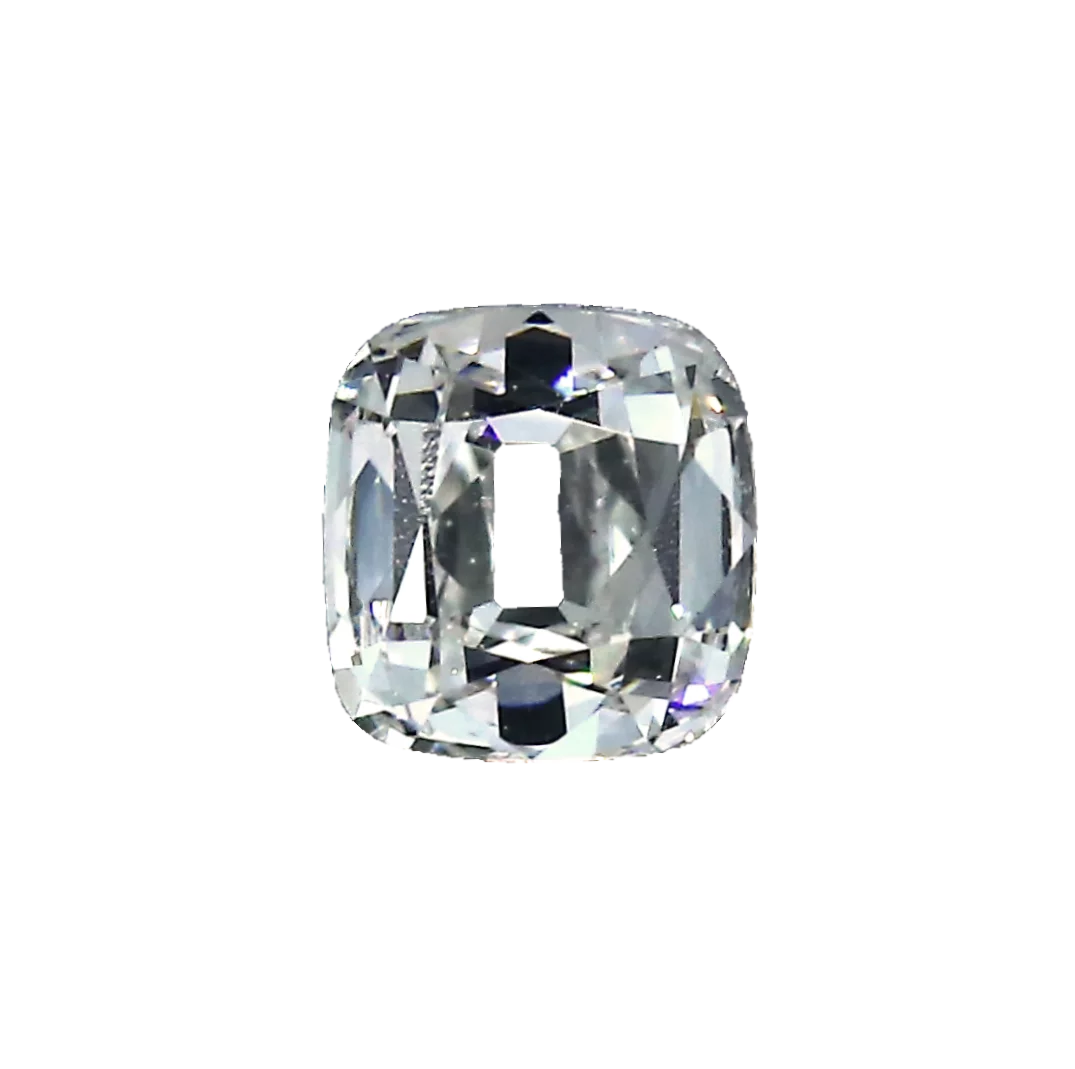
Read all three measurements
Reports list length × width × depth in millimetres. Length and width describe the visible footprint. Depth shows how much stone sits below the table. A deeper stone can carry weight where it disappears into the setting. Draw the length and width at actual scale, then ask for a side view to see how much of the depth the mounting will hold.
The numbers become more useful when you draw the stone at actual scale. A rectangular cushion can run farther along a finger than a nearly square cushion of the same weight, while a deep pavilion can carry material below the visible outline. Even the length-times-width proxy used later in this article is only an enclosing rectangle. Rounded corners, shoulders and asymmetry mean two diamonds with the same proxy can occupy different apparent areas. Compare the outline itself, preferably with both stones aligned along the same axis and photographed at the same scale.
The report's depth percentage is a ratio, and its denominator depends on shape and reporting convention; it should not be treated as a direct prediction of brightness. A tall crown can also change a stone's profile without yielding the same face-up impression as a shallow pavilion. Before choosing from measurements alone, ask for face-up and side views, the report, and a slow movement video. GIA explains that carat is a unit of weight, while the measured dimensions describe what a buyer can actually compare on the hand.
A similar weight, a different outline
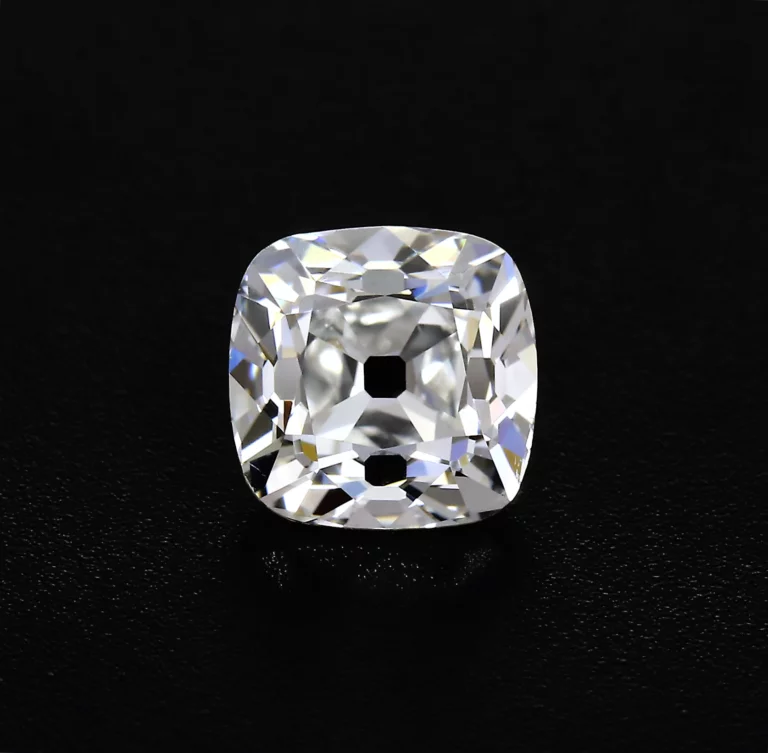
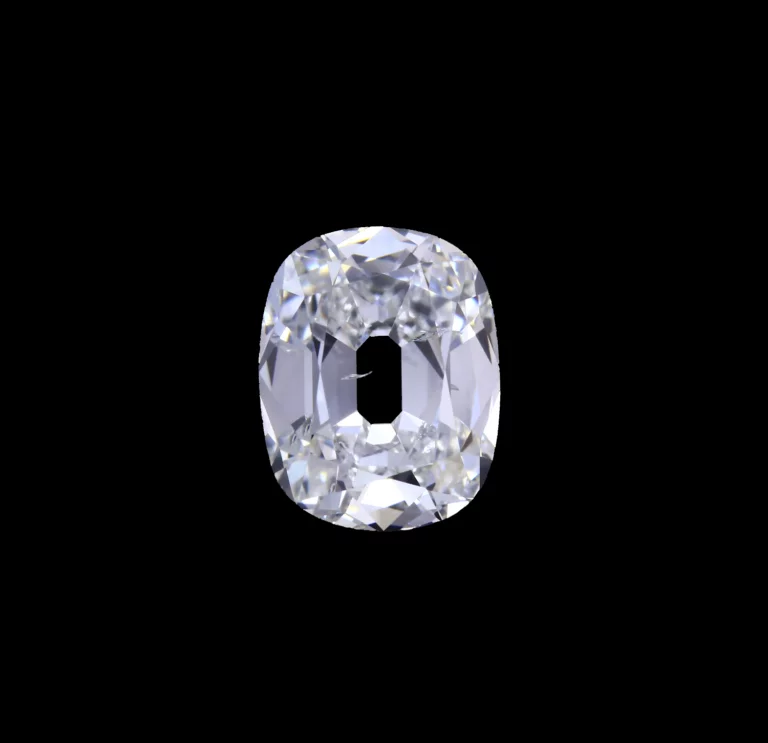
Images fit matching frames; use the report measurements for physical scale. Lighting and camera exposure differ between clips.
When a client asks for a three-carat cushion, I ask about the outline they want on the hand. These two stones are almost the same weight, but they would lead us towards quite different rings.
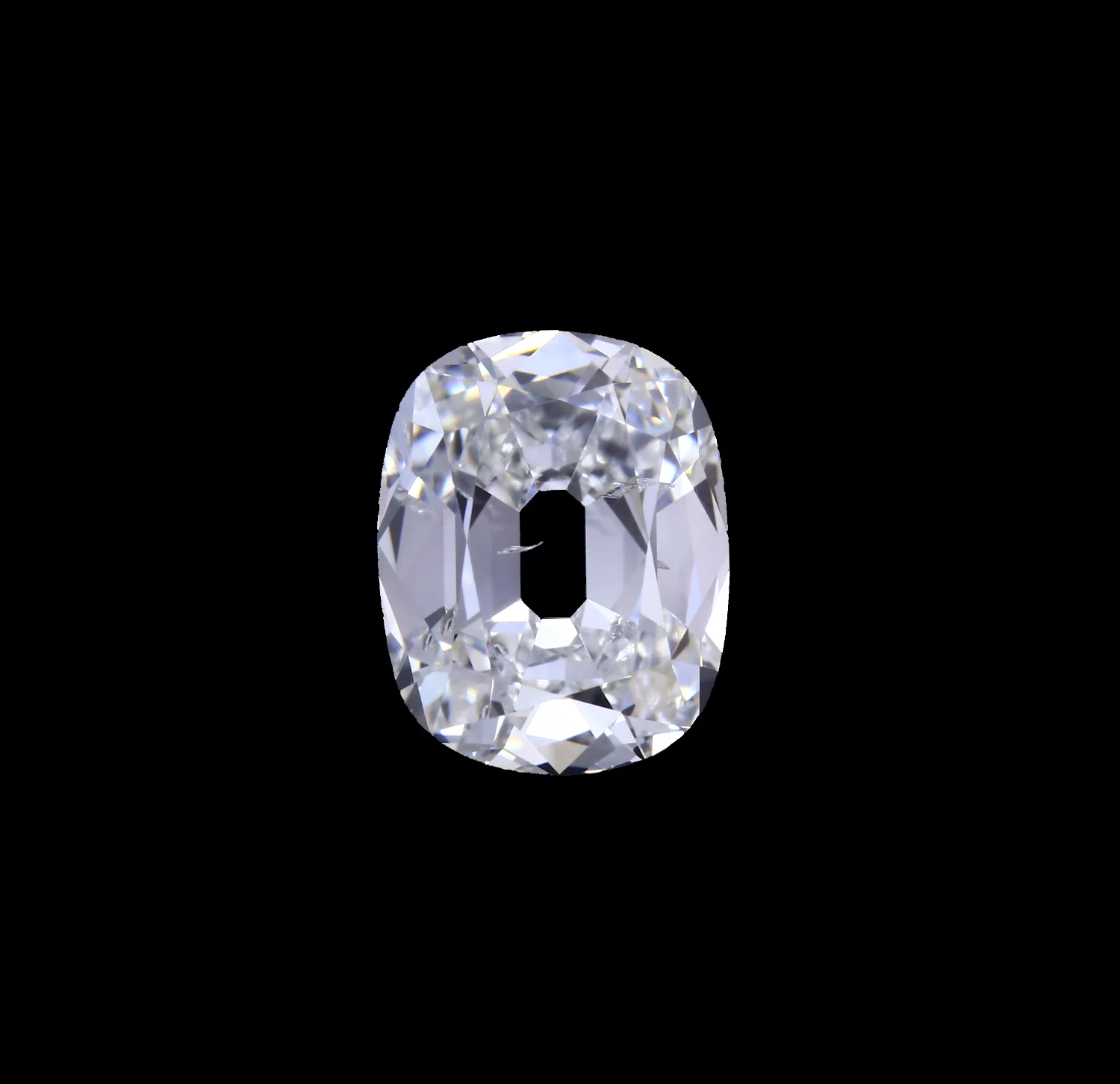
Six real diamond examples
The final column below multiplies length by width as a simple comparison aid. It describes the enclosing rectangle; curved corners and individual outlines make the actual face-up area smaller. Use the figure to begin a comparison, then examine photographs of the real outlines. A squared proxy cannot tell you how much space the corners occupy. It also cannot show how the long axis sits in a ring.
| Diamond | Measurements, mm | L/W | L × W proxy, mm² |
|---|---|---|---|
| 2.01 ct H SI1 | 6.84 × 6.51 × 4.90 | 1.05 | 44.53 |
| 2.03 ct F VS1 | 6.97 × 6.45 × 5.06 | 1.08 | 44.96 |
| 2.13 ct D IF | 7.74 × 6.52 × 4.68 | 1.19 | 50.46 |
| 5.01 ct H VS1 | 10.85 × 9.39 × 6.32 | 1.16 | 101.88 |
| 8.01 ct H VVS2 | 11.72 × 11.60 × 7.14 | 1.01 | 135.95 |
| 9.04 ct F IF | 14.45 × 12.02 × 6.56 | 1.20 | 173.69 |
The near-two-carat group shows the point clearly. The 2.01 ct and 2.03 ct stones have almost identical proxies. The 2.13 ct stone carries only about five to six percent more weight, yet its longer outline gives a proxy roughly twelve percent larger. Compare that extra spread with each stone’s profile and movement. The table gives a reason to look closer, rather than a verdict on which diamond looks better in a finished ring.
Use ratio to describe shape. Length divided by width describes squareness or elongation. Photographs show the corners, shoulders and small asymmetries. Compare the near-square 8.01 ct stone at 1.01 with the elongated 9.04 ct stone at 1.20. The first feels concentrated; the second covers more distance along one axis. That difference is visible even before the details of the facets are considered, so align the long axes before judging the outlines.
Depth can hide weight
A high crown, deep pavilion or thick girdle can add depth. Ask how that depth relates to brightness, fire, obstruction and face-up spread. Use the Old Mine Cushion proportions guide to read the complete proportion set. A stone with a generous footprint may still look dark in a particular view; the face-up image and a slow tilt show how its facets handle light.
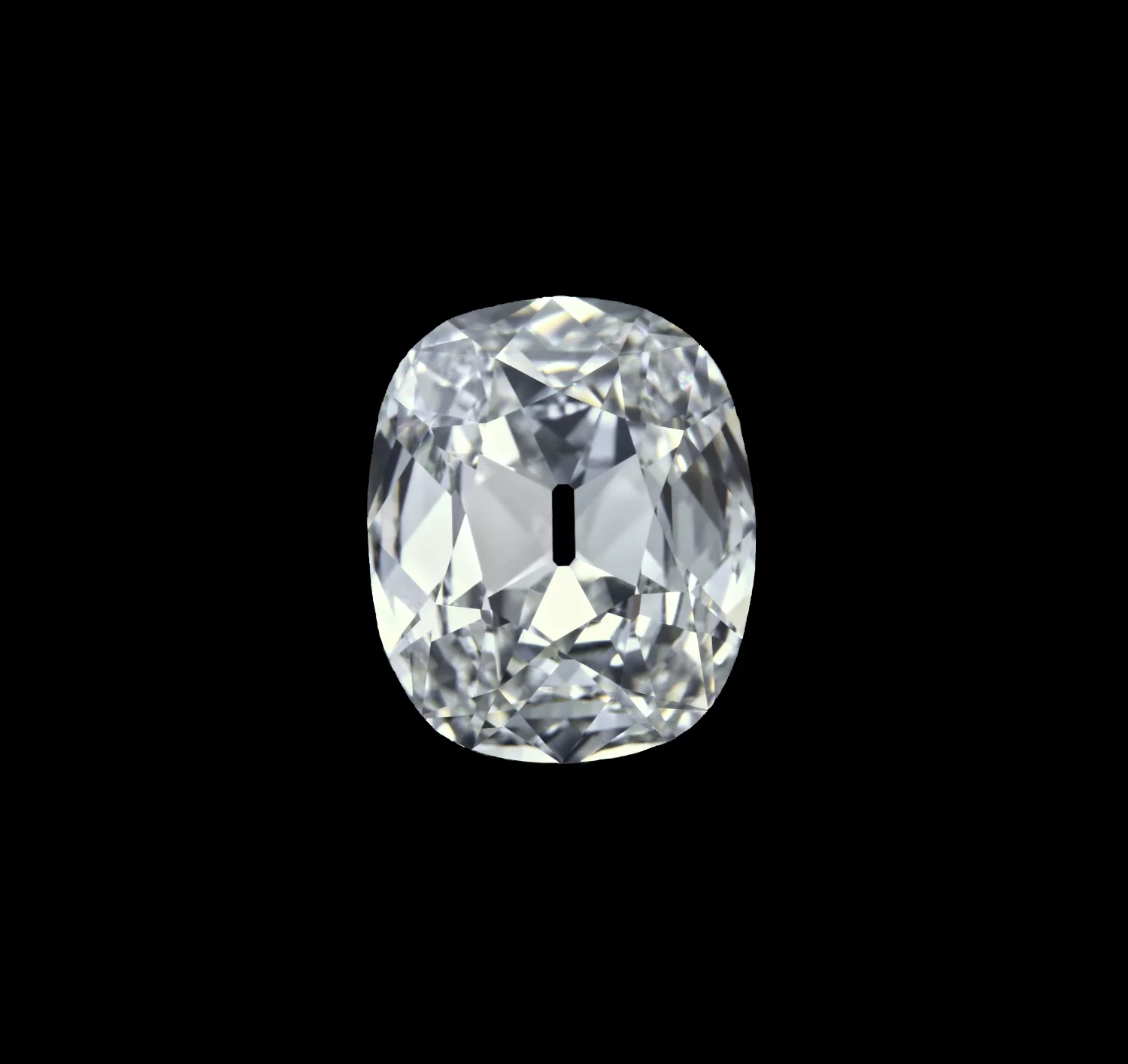
Balance spread with profile and movement
A broad footprint can be desirable, but maximum spread may cost crown height, pavilion structure or durability. Judge spread beside movement, contrast, outline, condition and the intended setting. A thin edge or vulnerable corner can affect the setting plan. Ask to see the diamond in profile as well as from above before trading depth for a wider-looking outline. Make the choice with both views in hand.
A quick comparison method
- Match the report and measurements to each stone.
- Compare actual length and width in millimetres.
- Use L/W to describe the outline.
- Review depth and side profile.
- Watch both stones under matched lighting and scale.
- Consider how each outline will sit in the setting.
The antique diamond evaluation guide explains the video and lighting sequence.
Request a side-by-side comparison
Ask for equally scaled photographs, matched movement video and the available reports for the stones you are considering. Request a private diamond search.
Editorial review: Updated 3 September 2026 from published Imperial Cushions diamond details and GIA educational material. Measurements and availability should be reconfirmed before purchase.
Sources: GIA Guide to Understanding a Diamond Grading Report; GIA: Understanding Carat Weight; GIA: Diamond Cut Grading Q&A.
See the details in a stone
3.01 Ct. G VS2 Old Mine Cushion Brilliant
8.24 x 8.05 mm face-up dimensions at 3.01 ct.
3.09 Ct. F SI2 Old Mine Cushion Brilliant
10.21 x 8.10 mm face-up dimensions at 3.09 ct: similar weight, longer outline.