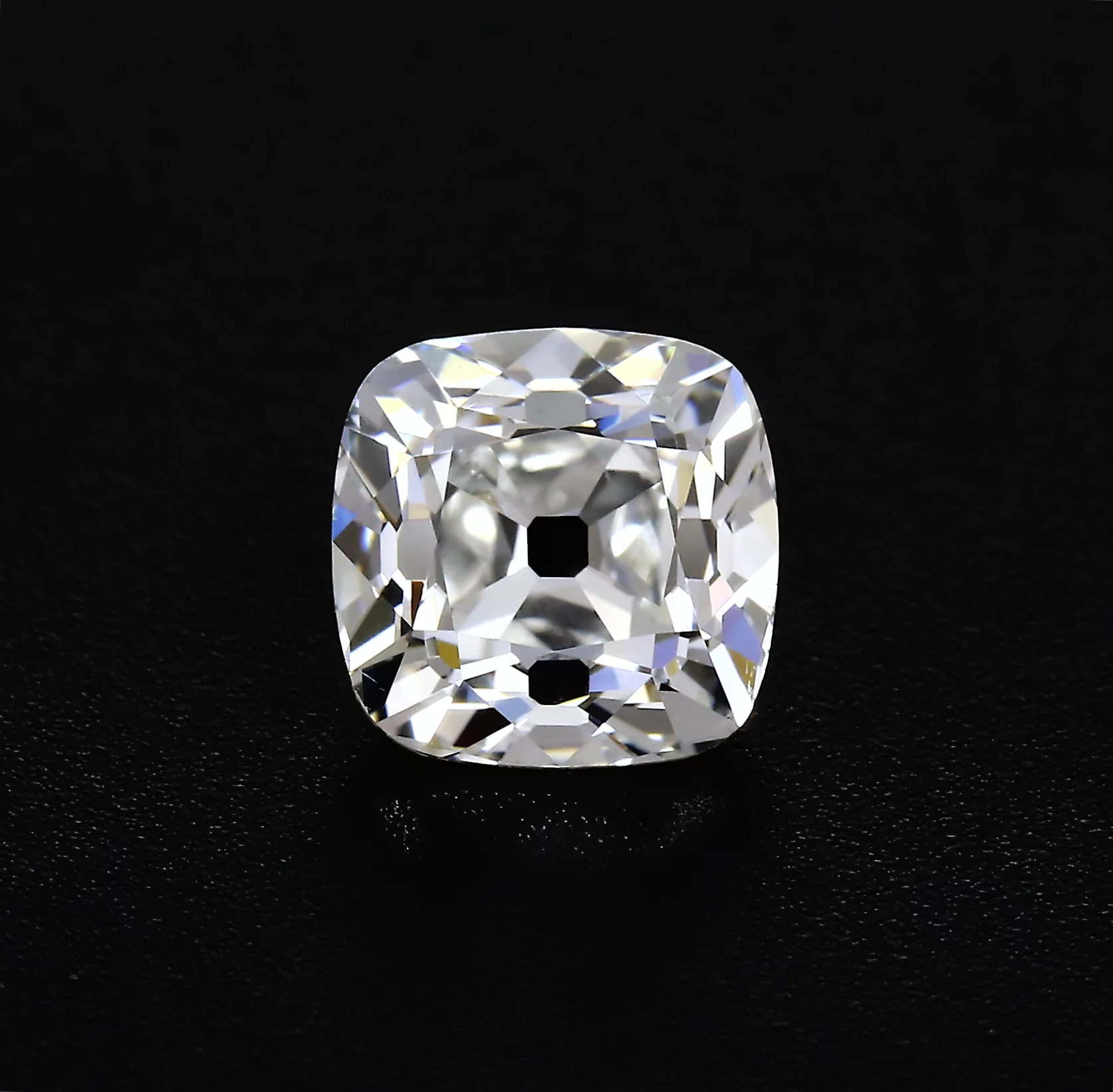
A high crown gives an Old Mine Cut a raised profile above the girdle. Its facets work with the table and pavilion to shape the diamond’s brightness, contrast and fire. Start from the side, separate the crown from the total depth, then watch the same diamond in diffuse, directed and ordinary room light.
What “high crown” means
The crown is the part above the girdle. Total depth includes crown, girdle and pavilion, so a deep diamond may have a high crown, deep pavilion, thick girdle or all three. A true side view shows how the total height is divided between those parts. Old Mine Cuts often combine a small table, high crown, large culet and short lower-half facets, but hand-cut proportions vary. Compare the actual profile and moving light pattern of each stone.
Why the profile survived
The old mine cushion developed when a cutter had to negotiate the shape of a real crystal and the value of retained weight. A high crown and a smaller table became familiar parts of the style, though one hand-cut stone can differ considerably from the next. From directly above, the crown's height is easy to miss. From the side, its slope becomes visible, and the table no longer seems to sit in the same plane as the girdle. That view can make a collector understand why two cushions of similar weight demand different settings.
The profile has a practical consequence. A high crown can lift the top of the diamond above a ring's protective metalwork. The pavilion also needs clearance beneath it, especially when there is an open culet. A jeweller should see the loose stone from the side before promising a low setting. The safest design depends on the actual girdle and outline, not on a generic old mine silhouette.
What the crown can change
Crown facets help shape brightness, contrast and dispersion. Small directed lights make spectral fire easier to see than broad diffuse light. Crown, table and pavilion still work together, and the lighting determines which effects are visible.
Two current stone profiles
The measurements below provide a starting point for comparing profiles. The 3.01 ct stone is 5.57 mm deep; the 5.02 ct is 6.41 mm deep. Both carry a 51% table. Those numbers do not divide the height into crown and pavilion. Use aligned side photographs to see where the girdle sits and how much of each stone rises above it.
| Diamond | Measurements | Table and depth | Profile review |
|---|---|---|---|
| 3.01 Ct. G VS2 | 8.24 × 8.05 × 5.57 mm | 51% table, 69.2% depth | Compare the crown and pavilion above and below the girdle. |
| 5.02 Ct. H VS2 | 10.39 × 9.11 × 6.41 mm | 51% table, 70.4% depth | Check how the 6.41 mm total height is divided in profile. |
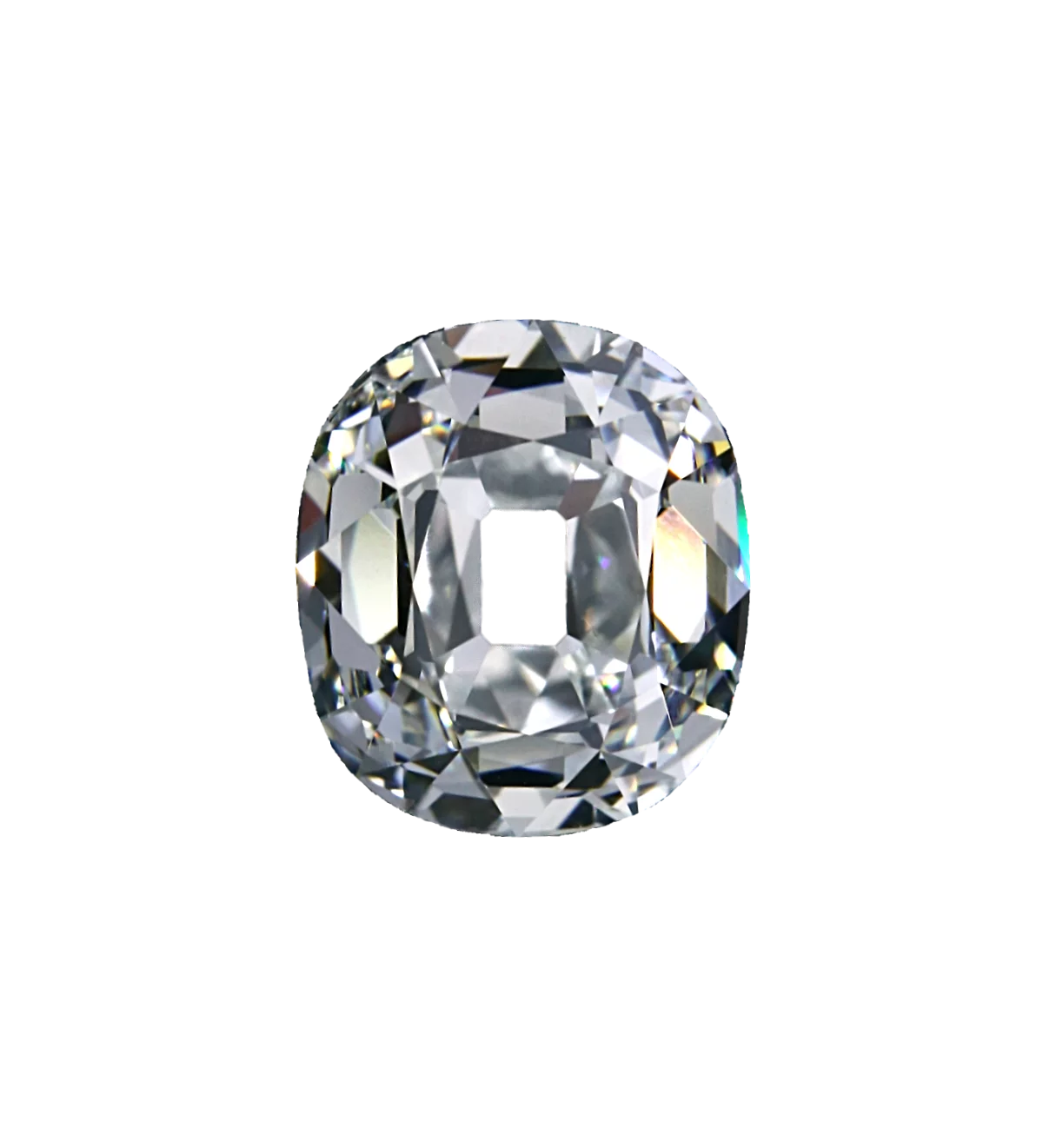
Use the gallery to confirm identity and face-up pattern. The compact 3.01 ct and longer 5.02 ct show different outlines, but both photographs look down onto the table. Neither image alone can establish which crown is taller. For crown comparison, request side-profile images at the same angle and scale, with the girdle visible as the dividing line.
Read profile and motion together
Pause at a true side view and locate the girdle, table and culet. A tilted frame can exaggerate height, so check the opposite side. Then watch face-up movement and repeat from farther away to reduce camera obstruction.
Follow one facet through the light
Choose a central facet and watch it as the stone rocks only a few degrees. Under broad daylight it may return a relatively even bright area. A smaller light source can create sharper flashes and coloured fire. In ordinary room light, the same facet may become dark while a neighbouring facet comes forward. The crown participates in this exchange, but it is never acting alone: the table, pavilion, observer and surroundings complete the path of light.
That is why a high crown should be judged as a profile feature and an optical part of one whole stone. A large depth percentage does not prove that the crown is high. The report records total height, while a side photograph shows where that height sits. Ask for the image and keep the report beside it. Then return to motion to decide whether the crown's geometry produces a pattern you enjoy.
Use three lighting conditions
| Lighting | What it reveals | Common mistake |
|---|---|---|
| Diffuse light | Overall brightness and persistent dark areas | Expecting strong fire from a large soft source |
| Small directed light | Fire and coloured flashes | Treating one spotlight clip as everyday appearance |
| Mixed room light | Daily balance of brightness and contrast | Comparing videos with different exposure or distance |
Ordinary room light gives a useful view of the balance you will see during daily wear. Stand where the stone will usually be seen, then rock it slightly rather than making a full dramatic spin. Watch whether the central facets exchange light clearly and whether a dark patch stays in one place. Repeat in another room before blaming the crown for an effect caused by the lighting.
What the report can settle
Match the report number, weight, dimensions, table and total depth. Examine crown height in a true side view. If exact crown comparison matters, use matched profile photography or a calibrated three-dimensional scan, then inspect the stone itself. For related viewing methods, read Why Antique Diamonds Return Light Differently, the proportions guide and the guide to open culets.
Plan the setting from the side
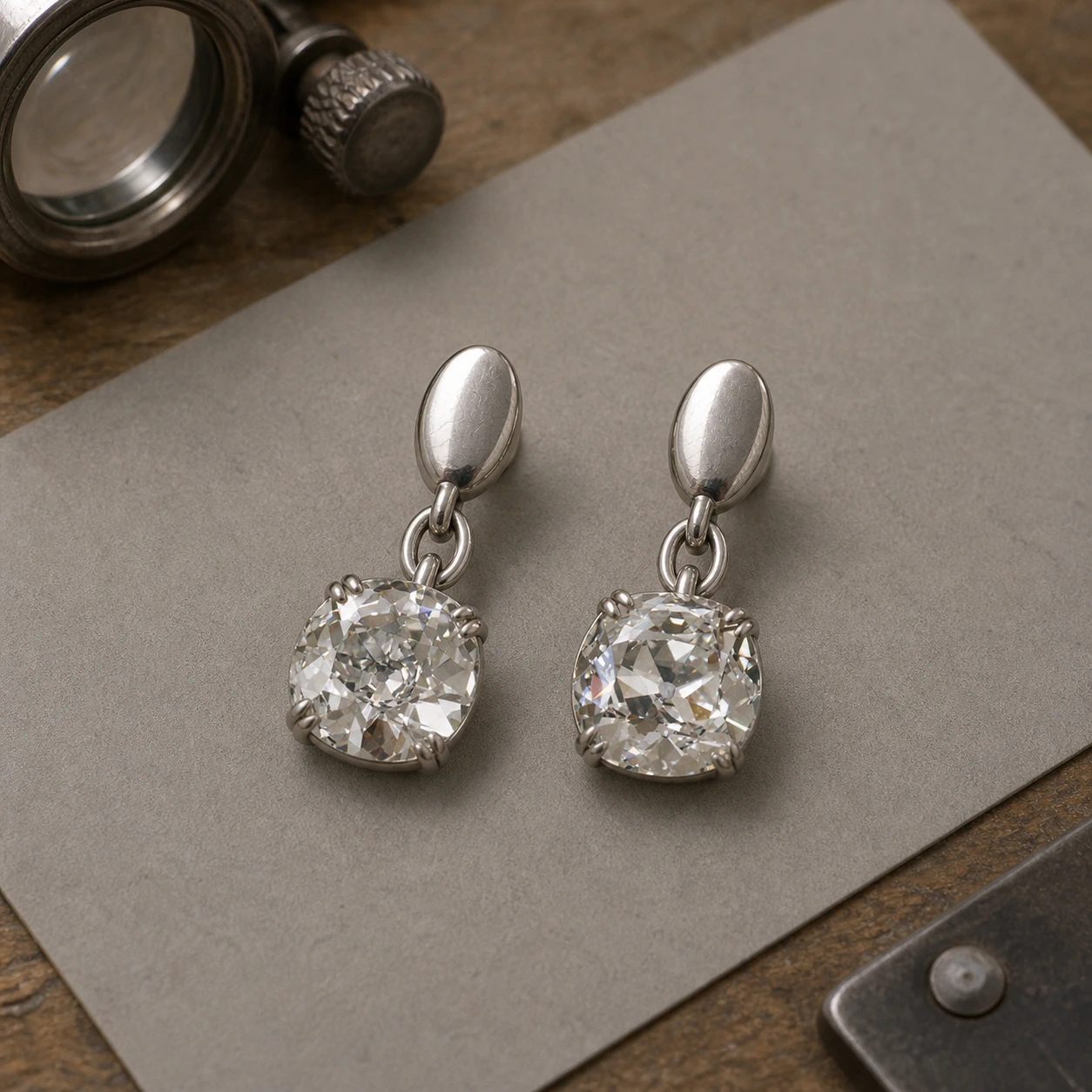
The setter must support the actual girdle, protect vulnerable areas and leave enough culet clearance. A high crown can look proud of the metalwork, but that appearance should follow the stone’s profile rather than a preset ring height. For a pair, compare both crown profiles at the same scale and check their finished seats together, so the heights read as a deliberate match when worn.
High-crown checklist
- Match the report, weight and dimensions.
- Use matched side views with a clear girdle line.
- Separate crown, girdle and pavilion.
- Compare movement in diffuse, direct and room light.
- Repeat from farther away to test obstruction.
- Map condition before setting.
- Confirm support, seat height and culet clearance.
Request a matched profile review
Ask for aligned side photographs, unedited movement video, available reports and condition notes. Request a private diamond search or ask about inspection.
Editorial attribution: Updated by Mortdechay for Imperial Cushions from the published stone records, 3 September 2026. Confirm the condition through loose-stone inspection.
Sources: GIA Guide to Old Mine Cut Diamonds; GIA Anatomy of a Round Brilliant; GIA Cut Grade Research Background.
See the details in a stone
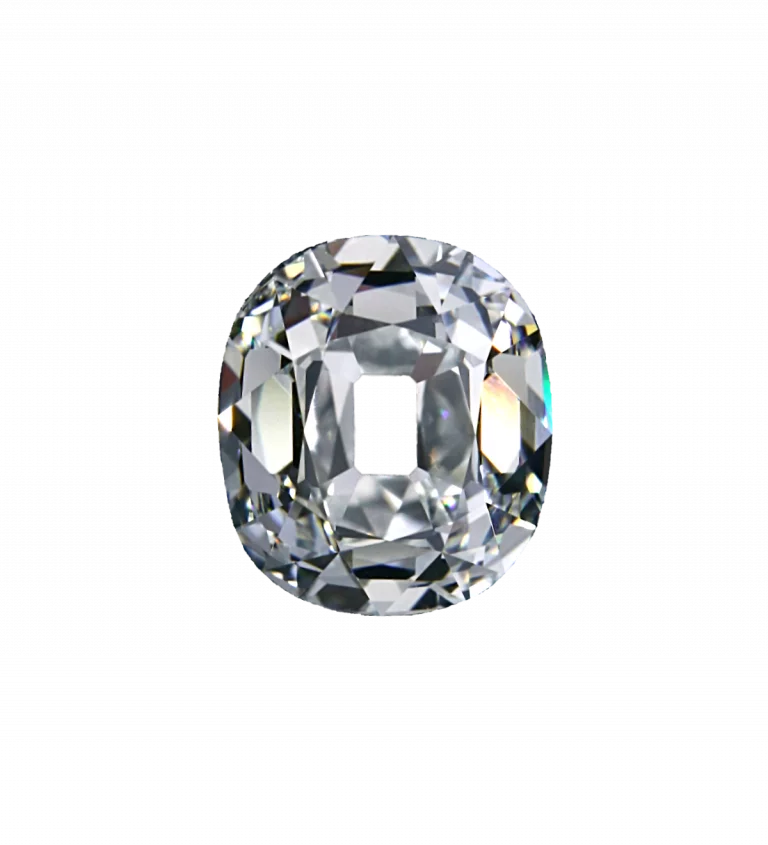
5.02 Ct. H VS2 Old Mine Cushion
The on-hand clip includes a side view for examining crown and pavilion together.