Antique diamond knowledge
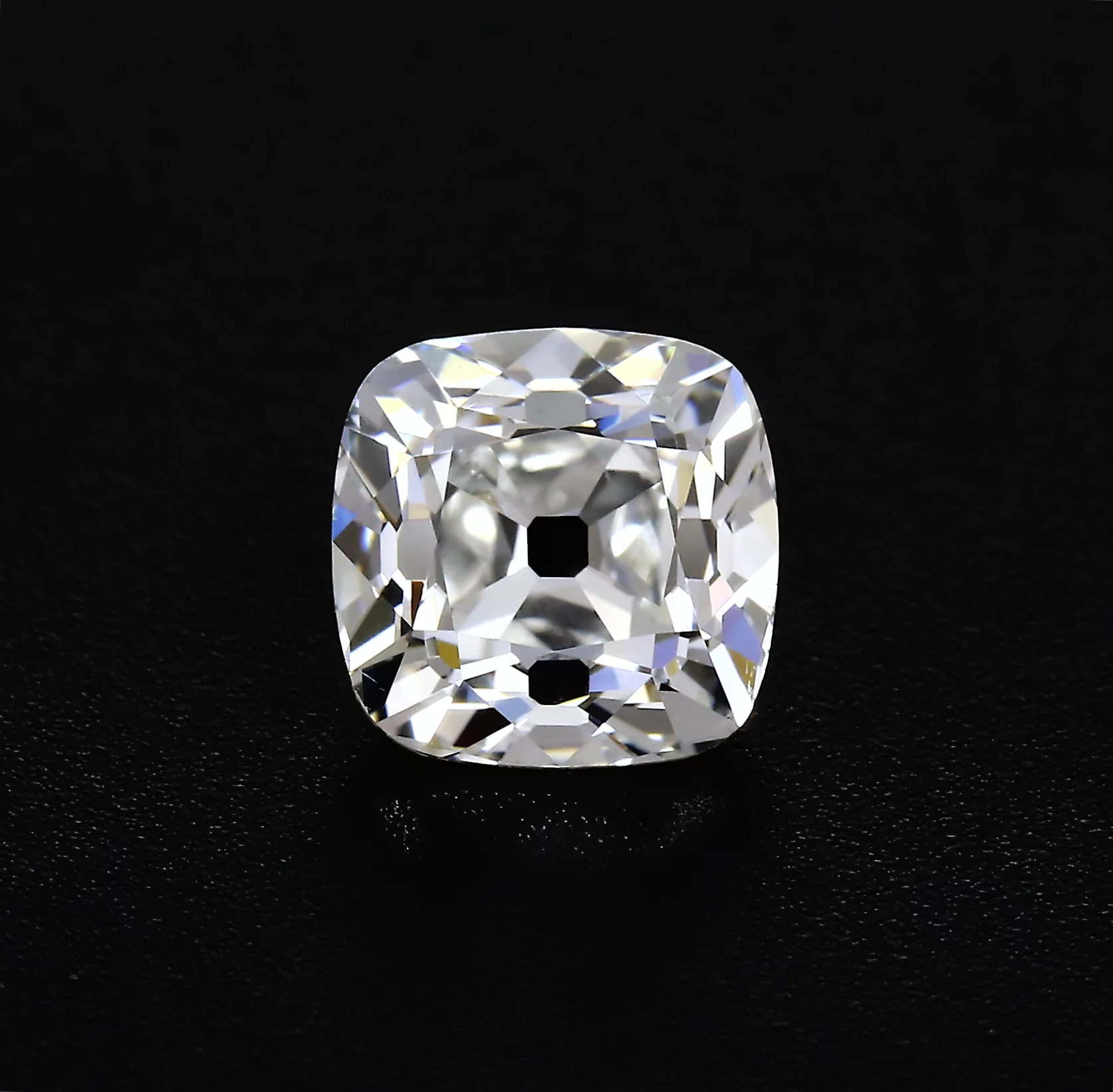
Old mine cushions return light in broader, slower flashes than many modern brilliants. Their high crowns, small tables, open culets and individual proportions create the effect. Judge the pattern in motion and under several lights, using photographs alongside video. A still frame can hold one striking flash, but a slow turn shows whether light travels across the stone or stays concentrated in one area.
“Sparkle” is doing too much work
Three effects deserve separate names. Brightness is reflected white light. Fire is white light split into spectral colour. Scintillation is the changing pattern of flashes and contrast seen when the diamond, viewer or light moves. A diamond reflects its surroundings as well as the light source. Change the room, distance or angle and the pattern changes. A still image records one angle and lighting setup. Movement reveals how the pattern changes.
Why an old mine cushion looks different
Old mine cuts commonly have a softly squared outline, small table, high crown, visible culet and short lower-half facets. Historical examples vary because cutters followed the crystal and worked by hand. GIA places the old mine style across the eighteenth and nineteenth centuries; the softly rounded corners and visible centre were part of a cut made with the rough in view.
A broad facet occupies more visual area than a row of smaller facets. As the viewing angle changes, one large facet can move from bright to dark while its neighbour brightens; the culet may appear central, then recede. A modern round brilliant uses a more standardised optical pattern. The high crown, pavilion geometry and open culet influence movement, but two old mine cushions with similar report proportions can still behave differently. GIA's discussion of light and diamond appearance explains why source, environment and viewing conditions change what the observer sees.
The historical setting is part of the comparison. A museum brooch, a loose diamond in a tray and a ring on a hand put the stone against different materials and at different distances. The Metropolitan Museum's early eighteenth-century brooch pictured below documents one arrangement of diamonds in silver; it does not identify the cutting history of any Imperial stone. When comparing diamonds for a new setting, use the museum object to study composition and the current stones to study their own motion, condition and dimensions.
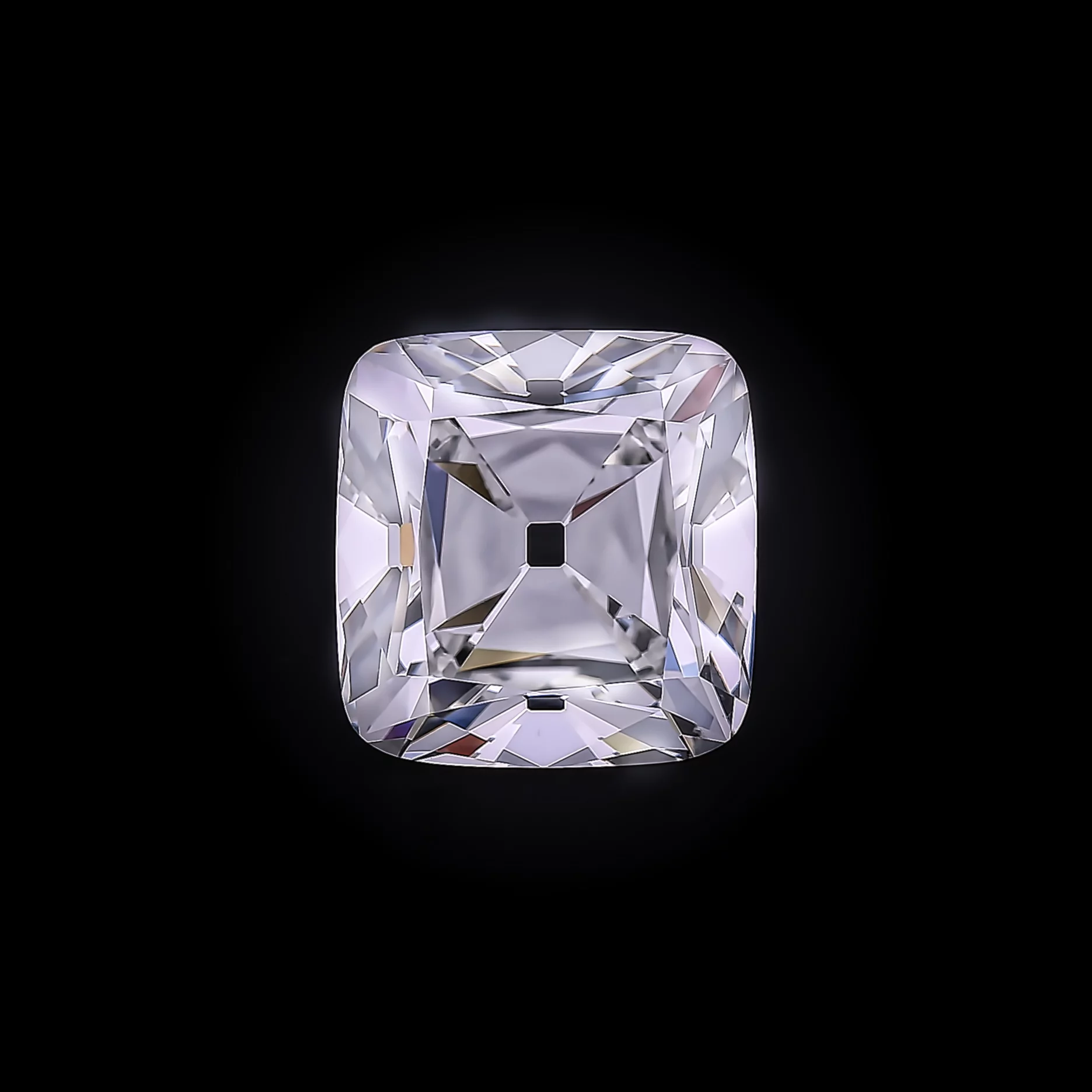
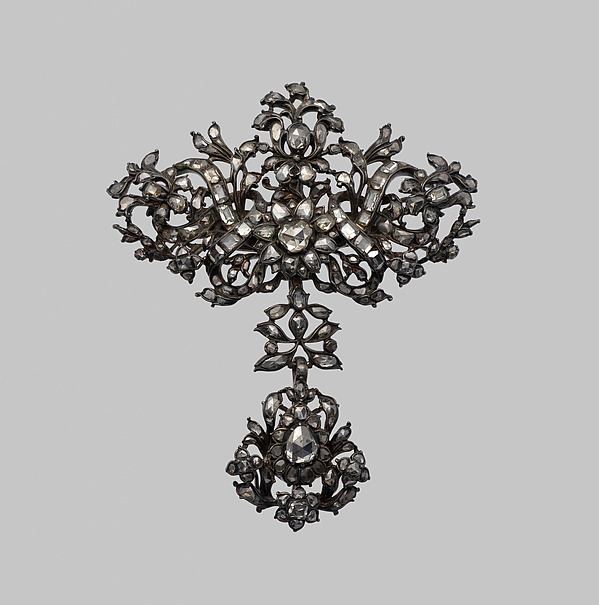
The museum identifies the brooch by date, materials and place. Its varied stone outlines show how different shapes can work together. A centre stone belongs to a composition: setting, side stones, scale and normal viewing distance all affect the result. The brooch demonstrates a historic arrangement of diamonds, while a loose modern inventory photograph isolates one stone. Those are different viewing tasks.
Broad facets change the pace
Dealers use “slower” to describe large facets switching on and off over a broader arc of movement. A good antique cushion feels rhythmic. A weak one may hold a large dark area or lose life at normal distance. Watch the same facet over several degrees of movement before deciding whether the darkness is part of a lively contrast pattern or a persistent problem.
Motion separates contrast from darkness
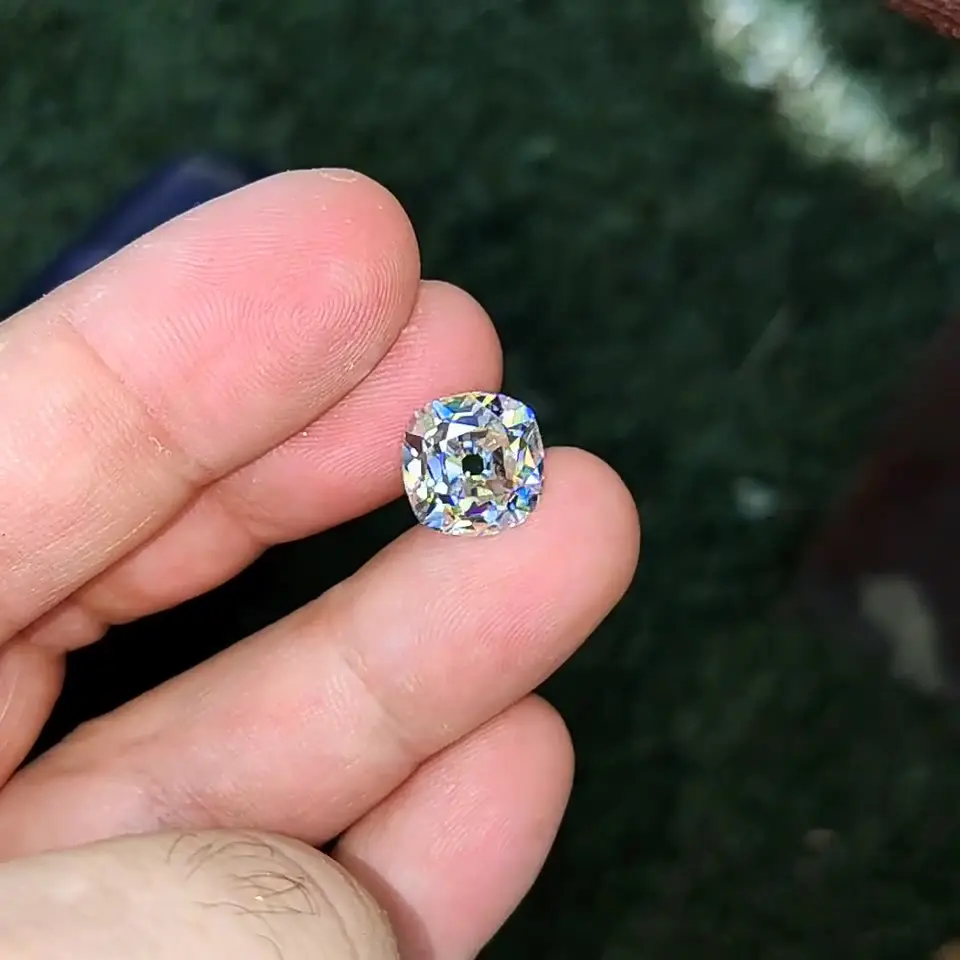
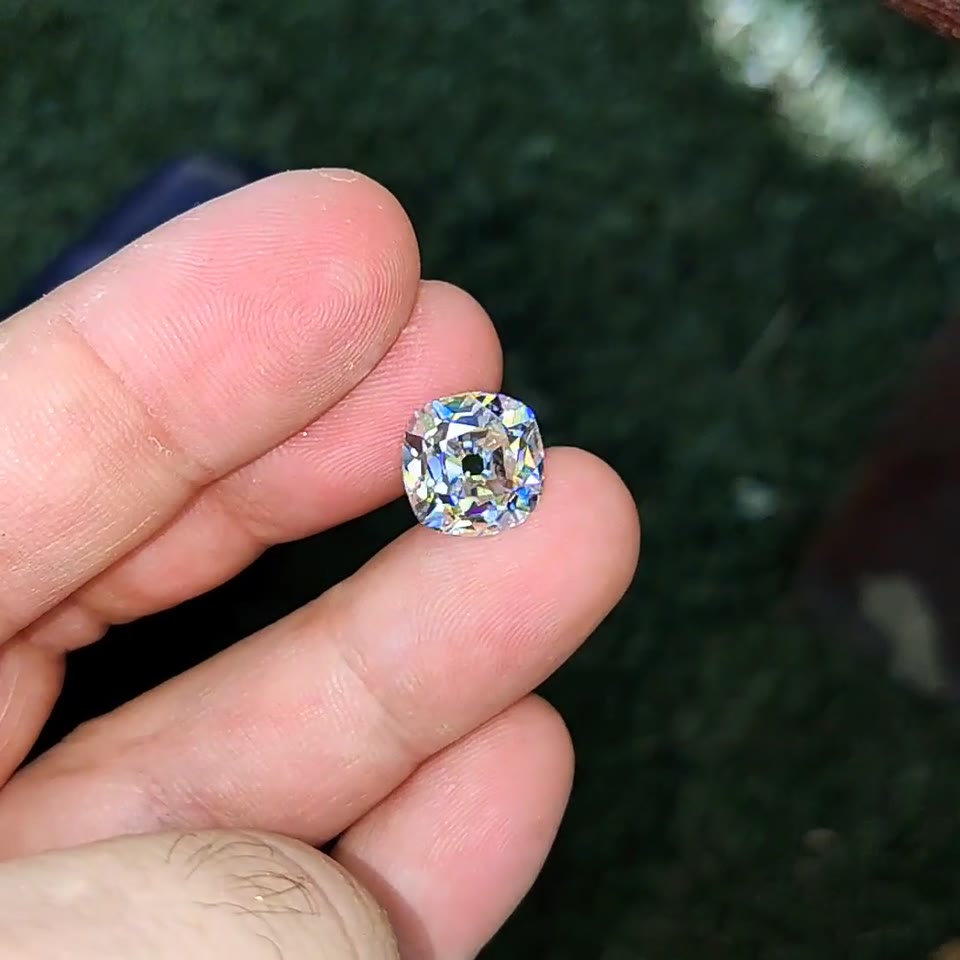
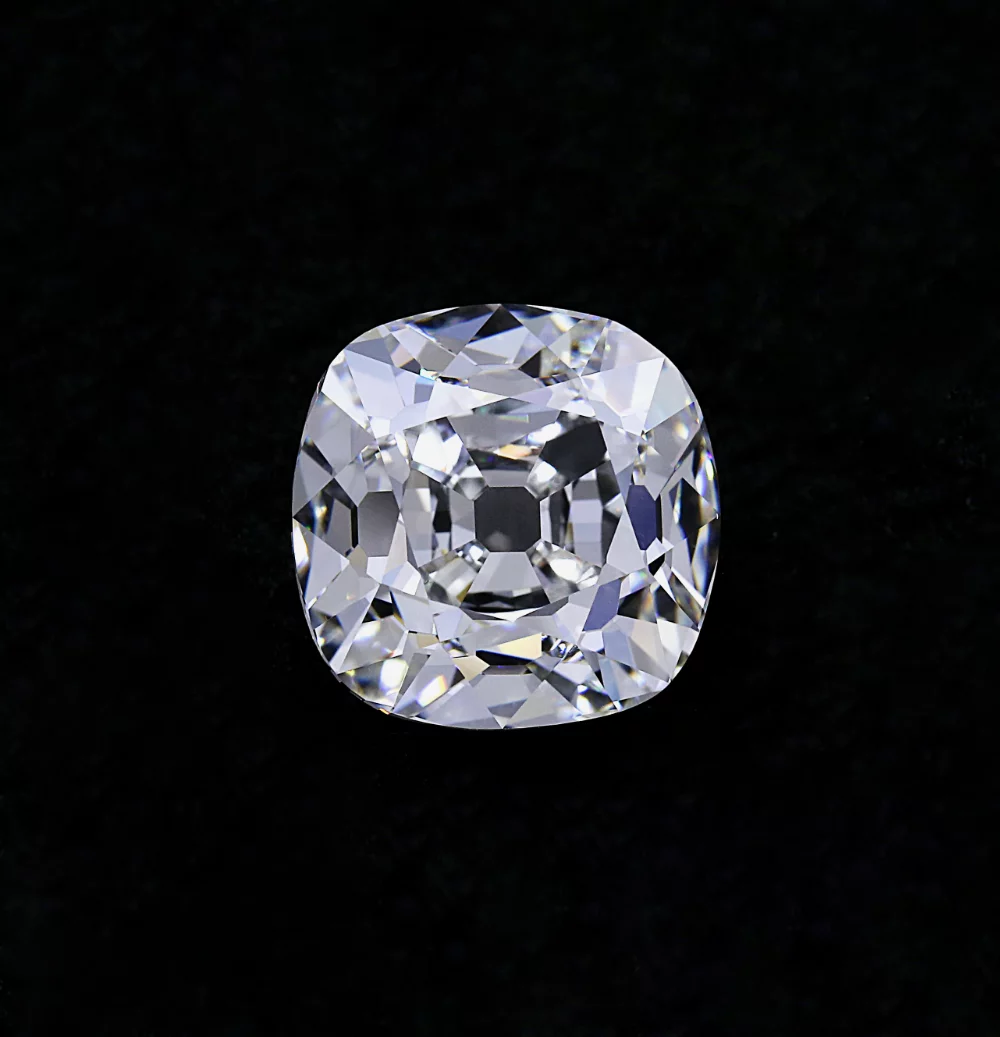
The rotating view below shows an actual 3.06 ct G VVS2 old mine cushion brilliant. Watch the culet, then the broad reflections around it, then the smaller perimeter facets. Pause at a few angles and compare the broad central flashes with the faster changes at the edge, using the same screen size throughout.

Healthy contrast moves. A dark area caused by the camera or viewer should change as the stone tilts. A fixed dark region that survives different angles, distances and lights deserves closer study. Repeat the view with the camera moved away from the direct reflection; obstruction from a phone or face can otherwise dominate one frame. Video still has limits: exposure, compression and screen brightness can change colour and intensity.
Use three kinds of light
- Diffuse light: check the spread of white brightness and any persistent dark areas.
- Small direct lights: look for fire and the size of individual flashes.
- Ordinary room light: judge how the diamond behaves where it will be worn.
Include the room lighting in which you expect to wear the diamond.
Combine the report with the moving view
A grading report records measurements, weight, colour, clarity and other characteristics. Photographs, profile views and video add detail about the outline, weight distribution and movement of an antique cushion. Two stones with similar grades can look unrelated. Those records should be read together: a report can name the dimensions, while movement and profile views show how the particular cut looks. That is why our diamond pages combine laboratory information with photography and video when available.
A practical viewing sequence
- Read the outline at normal distance.
- Watch one slow rotation without pausing.
- Repeat while tracking the culet and broad facets.
- Change the light and camera distance.
- Use magnification for condition, then return to the naked-eye view.
Compare the compact pattern of this 3.01 ct G VS2 old mine cushion brilliant with the more spacious face-up pattern of this 8.01 ct H VVS2 old mine cushion. Keep the stones at matched scale and light when comparing the pace of their flashes; their different weights alone cannot explain the visual rhythm. Follow how the corner shapes and facet sizes change the pattern. For current availability, reports or a private presentation in several lighting conditions, contact Imperial Cushions.
Sources and further reading
See the details in a stone
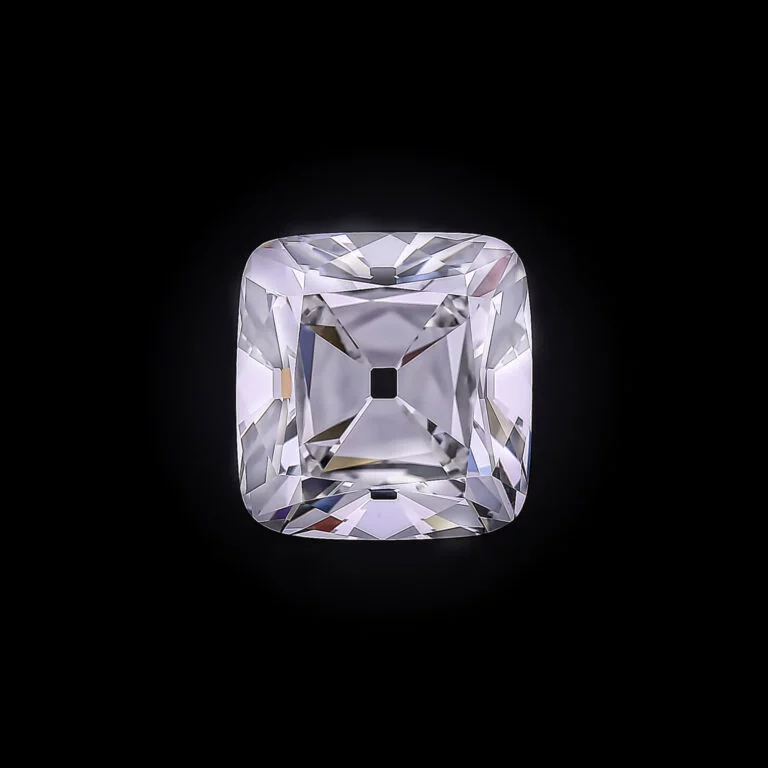
3.06 Ct. G VVS2 Old Mine Cushion Brilliant
Compare how the central pattern changes on a different old mine cushion.