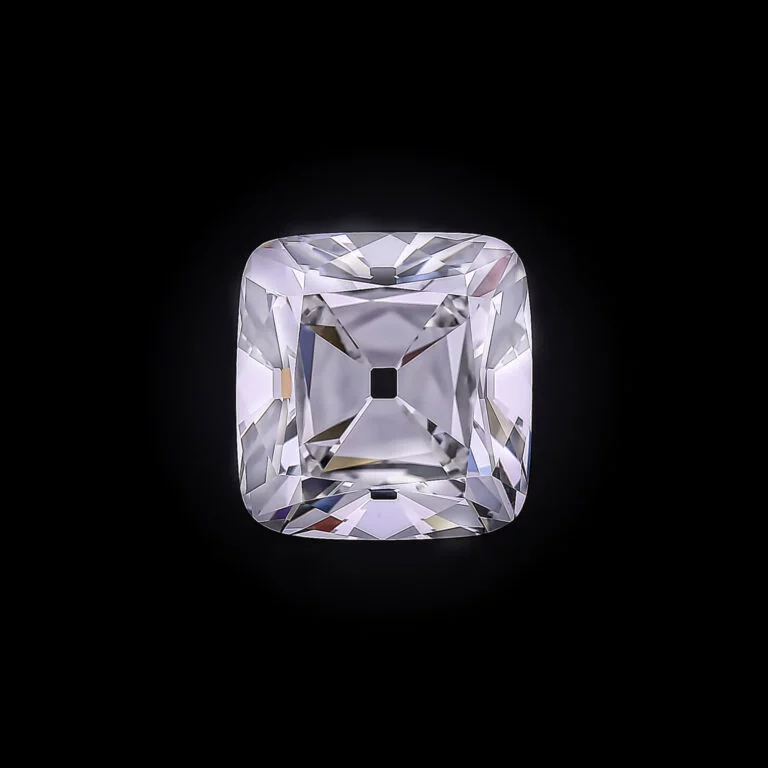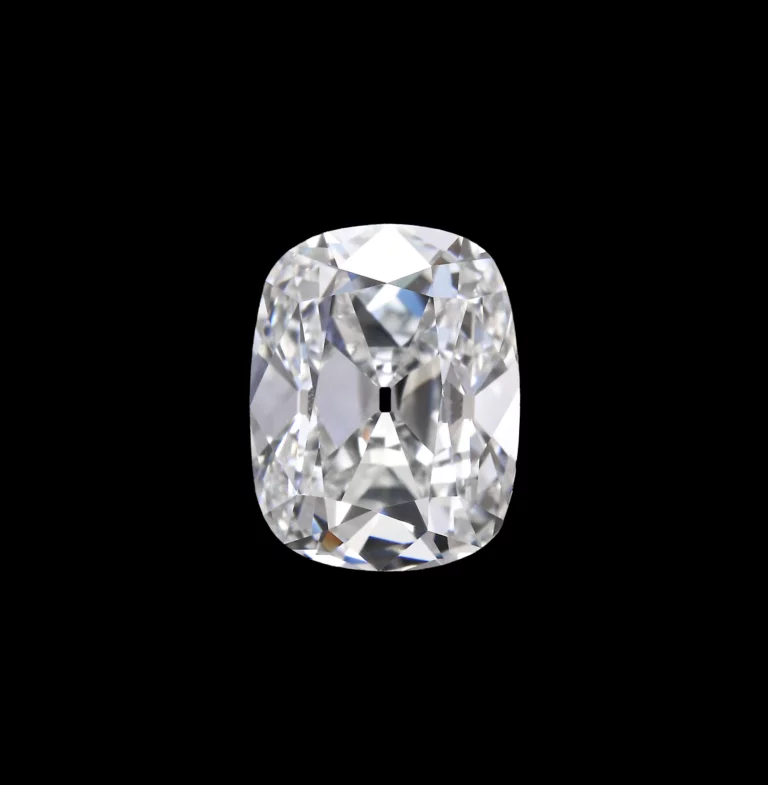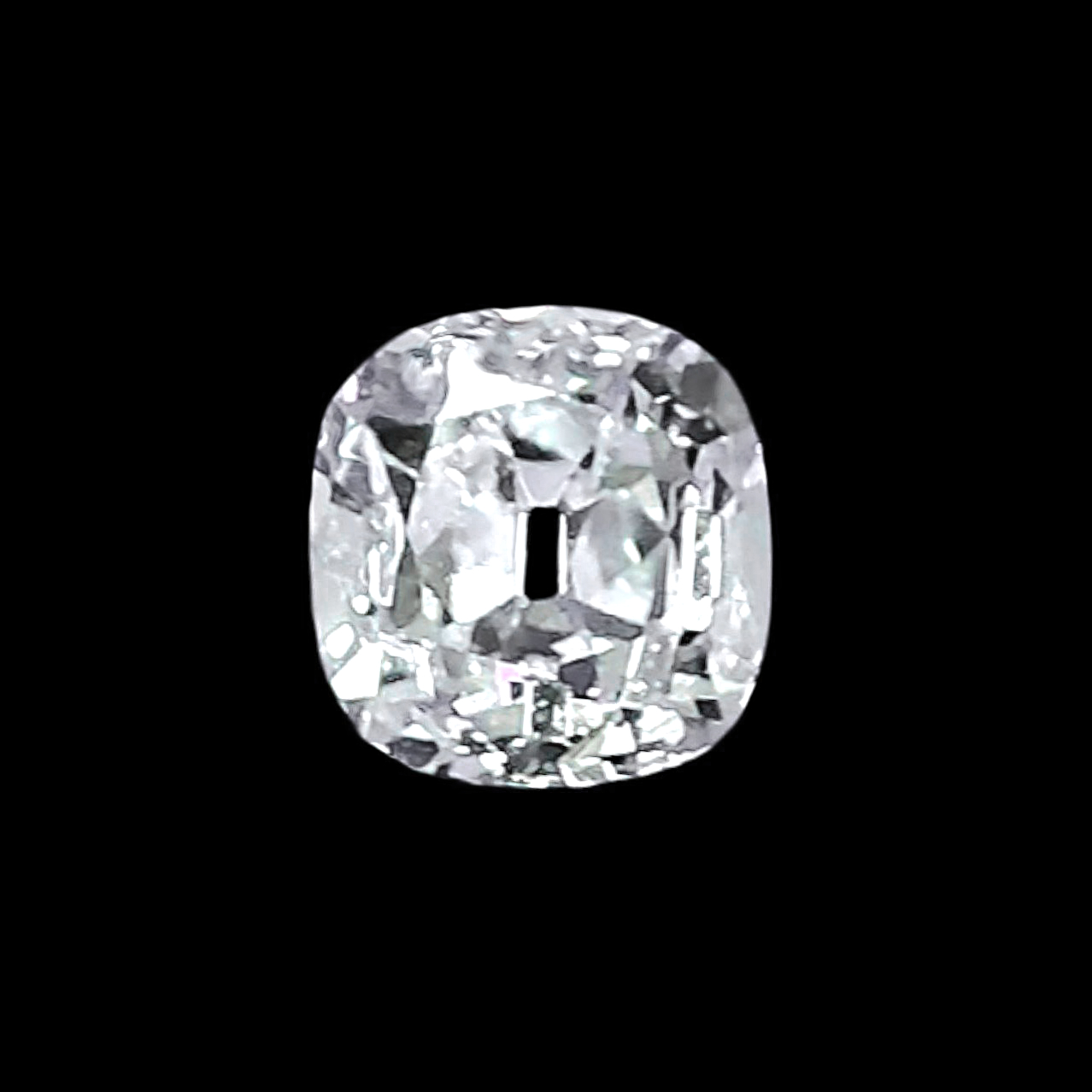
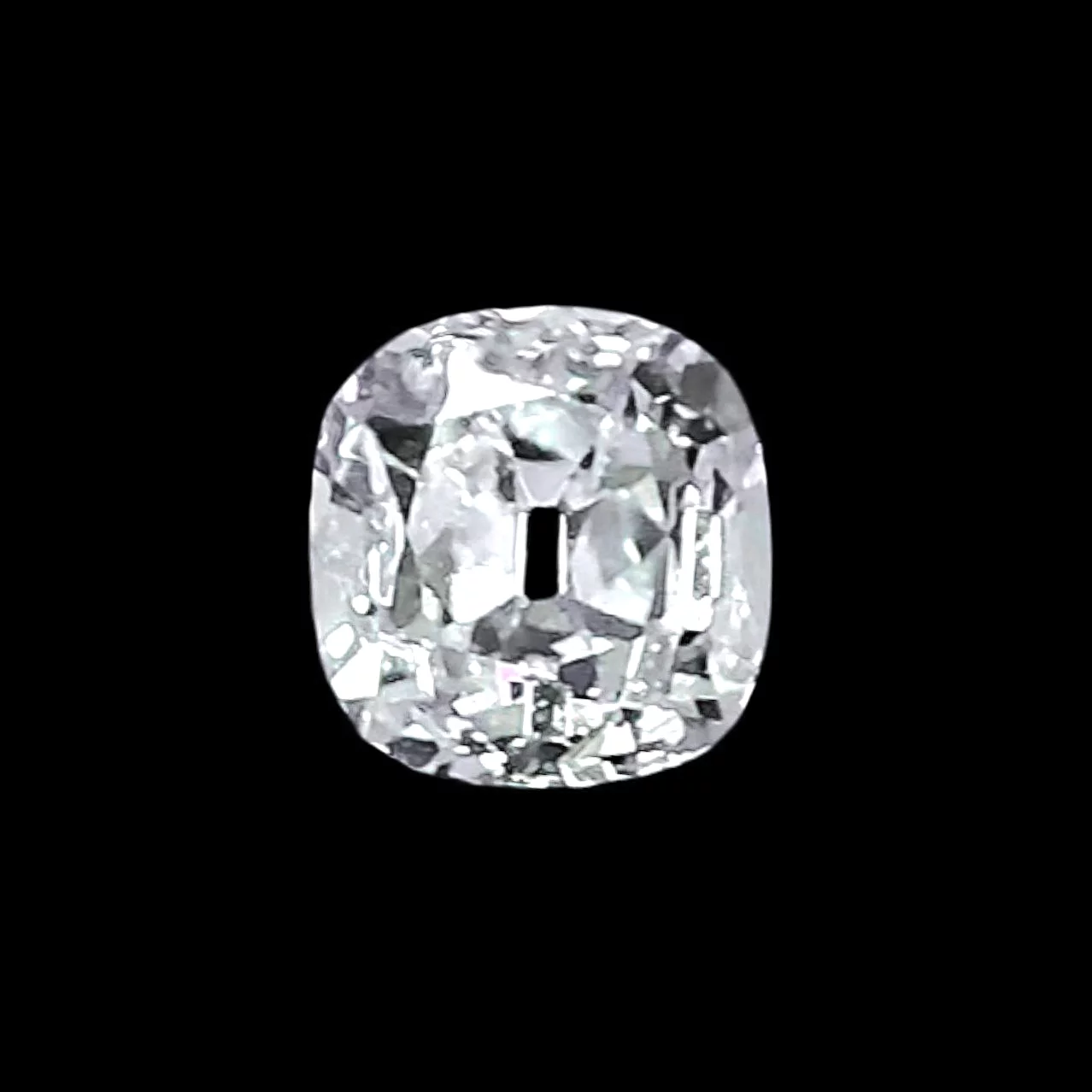
When an Old Mine Cut's report records Fair symmetry, ask which features contributed to the grade and where they sit on the stone. Then compare an oriented magnified view with a clean face-up view at your usual viewing distance.
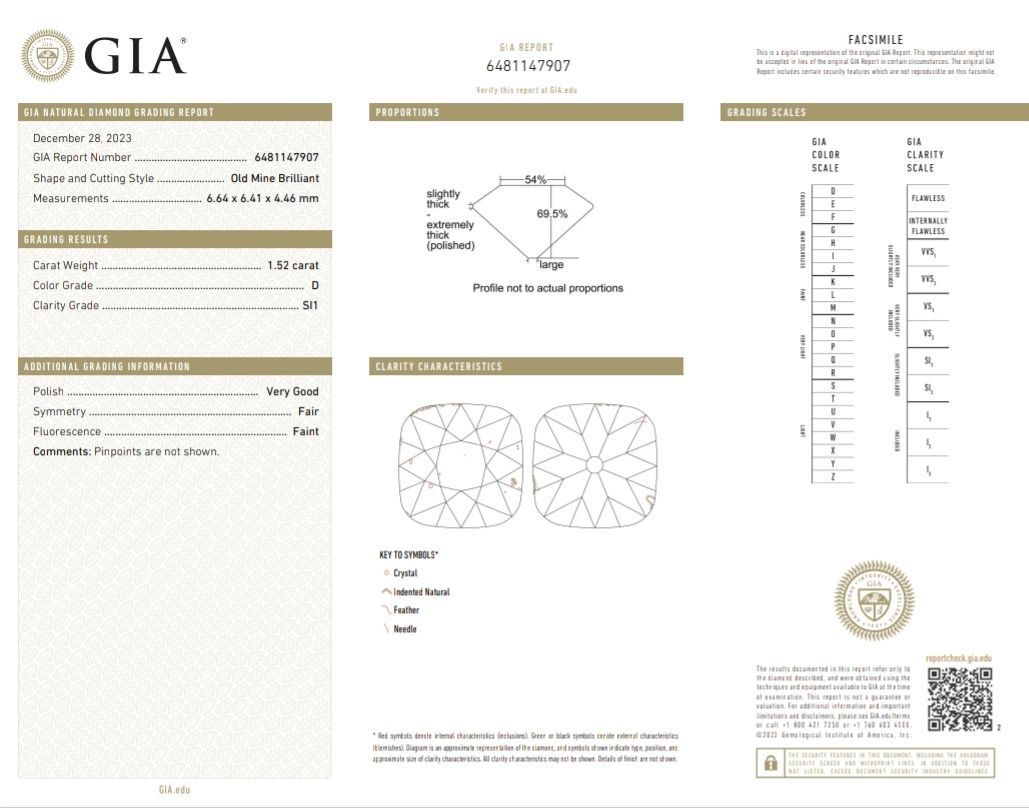
Read the two finish entries separately
Polish describes the condition of the facet surfaces. Symmetry describes the exactness of the outline and the shape, placement and alignment of facets. GIA assesses the relevant features at 10x magnification and grades each entry from Excellent to Poor. Its polish and symmetry terminology guide explains the features behind those entries. A polish assessment can include scratches, pits or polish lines. A symmetry assessment can include differences in facet shape, an off-centre culet or uneven outline. GIA also records cumulative effects when several symmetry features contribute together. Ask for the recorded features and an image identifying their positions.
Why the older cut resists a perfect grid
An old mine cutter worked with a crystal that had its own outline, inclusions and limits. Keeping a corner or a little weight could produce a cushion whose facets do not meet with modern regularity. The finished stone may still have a persuasive face: light moves through its central facets, while the outline retains a small irregularity that only becomes obvious once someone points to it. GIA describes the old mine style through its small table, high crown, short lower-half facets and often open culet. Those traits help explain the visual character; they do not tell us which individual feature caused a particular symmetry grade.
A grade is a record of observed finish at magnification. It cannot show how the stone looks on a hand across a dinner table. Equally, an attractive video cannot reveal whether a chipped girdle or a misplaced facet affected the report. The two views belong together. Begin with the report, then ask for a straight face-up photograph, a slow turn and a condition view of any vulnerable edge.
Very Good polish, Fair symmetry: a real example
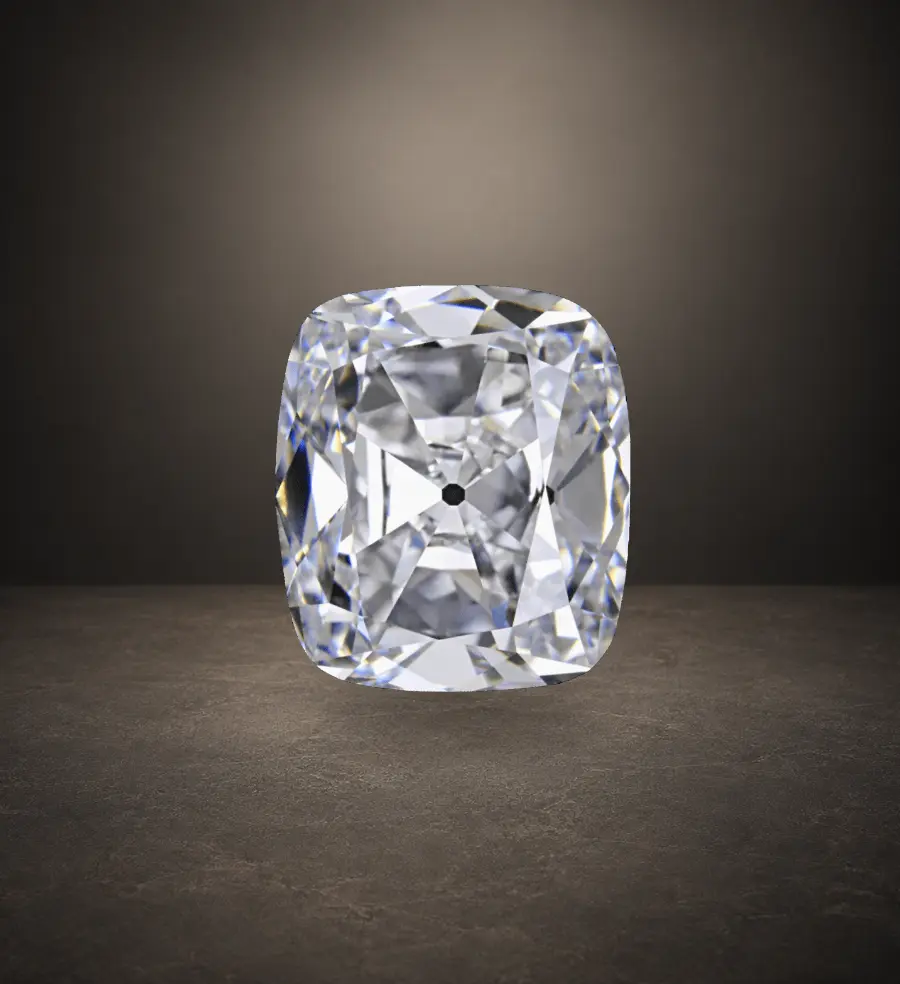
Our 1.52 ct D SI1 Old Mine Cushion, IC-05732, carries GIA report 6481147907, dated 28 December 2023. The laboratory cutting style is Old Mine Brilliant. Under Additional Grading Information, the report records Very Good polish and Fair symmetry.
GIA gives submitting laboratory clients access to detailed finish assessments through Item Details in My Laboratory, as explained in its finish guide. Ask whether those details are available for the stone. If they are, request an image identifying each recorded feature and its position. A current specialist examination can supply the viewing evidence needed for your decision.
Use the clip to follow the visible central pattern. For the finish assessment, request a straight-on image with the whole perimeter clear, followed by an oriented 10x view of the recorded features. Small changes in camera angle make a casual outline comparison harder.
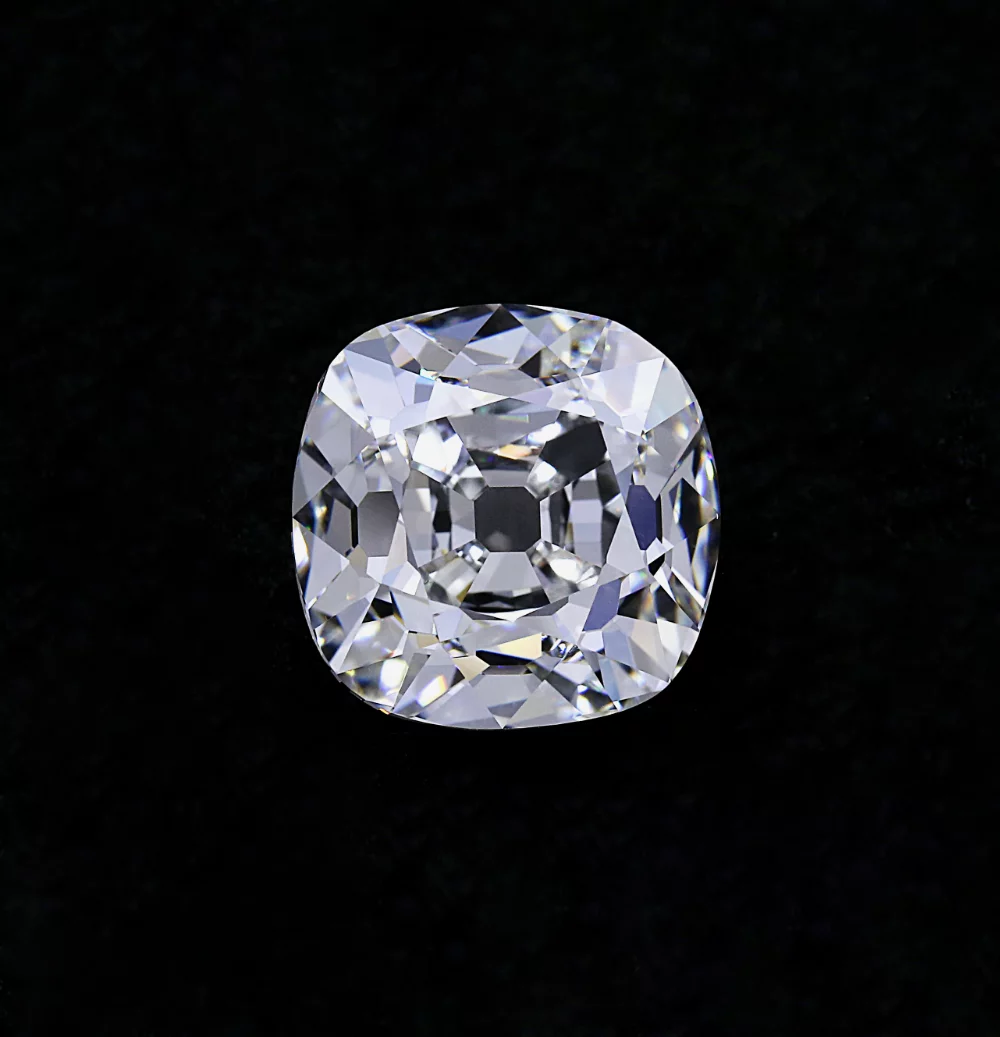
Where a small deviation becomes visible
Trace the edge before watching the centre. Uneven corners tend to announce themselves in a bezel or a tight halo, where the setting draws a regular border around the stone. An off-centre culet may be most noticeable through a wide table. Unequal pavilion facets may change the rhythm of dark and bright areas as the diamond turns. These observations are separate from polish marks, which concern the finished facet surfaces. A good comparison uses the same orientation for the report plot, the face-up photograph and the moving view.
There is no universal answer to how much asymmetry is pleasing. For IC-05732, the record gives a concrete starting point: Very Good polish and Fair symmetry. What would settle the visual question is a clear view of the full outline and an oriented close-up of the actual symmetry features. If the stone is being considered for a ring, the setter should also see the girdle and corners, since a delicate place at the edge matters more than a harmless irregularity in the pattern.
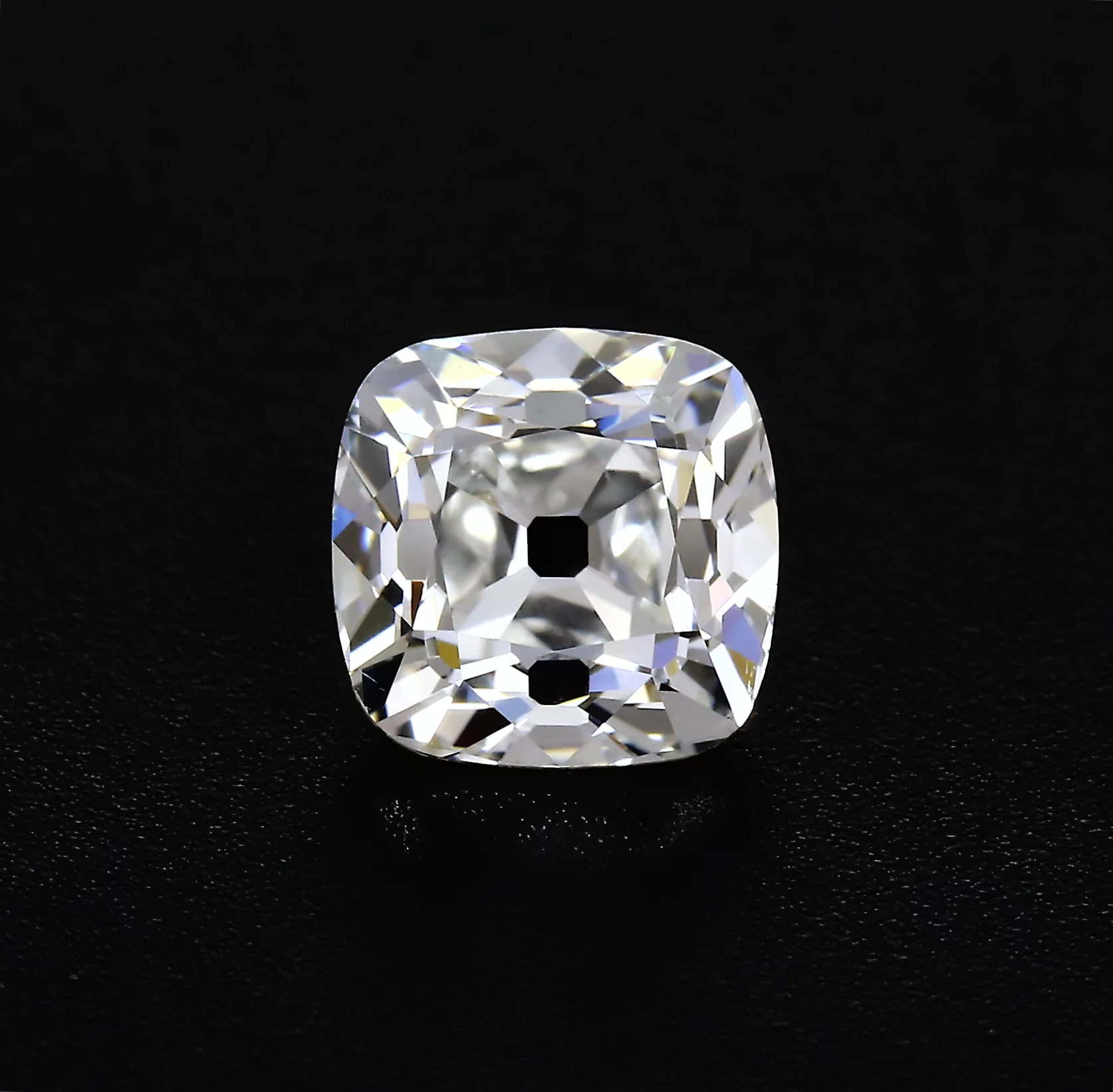
Match the evidence to the question
| What you want to understand | What to request |
|---|---|
| The features behind the finish grade | Available laboratory Item Details, plus an oriented magnified image identifying each feature. |
| How those features look face-up | A clean stone, full perimeter visible, at a stated distance and lighting, with a slow turn. |
| The stone's current condition | A loose-stone examination of the girdle, corners and facet surfaces, considered with the intended setting. |
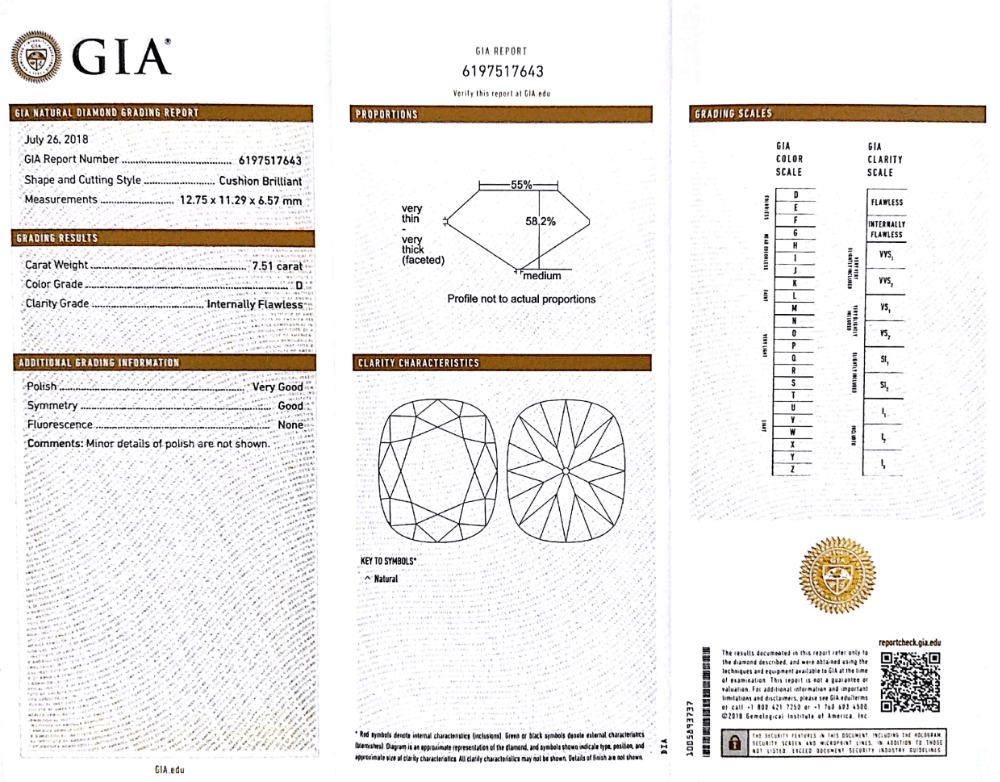
For comparison, the 7.51 ct D IF Cushion Brilliant, IC-01706, has Very Good polish and Good symmetry on GIA report 6197517643. These two reports pair the same polish grade with different symmetry grades. Read both entries before planning the close-up inspection.
Our asymmetry article covers shape preferences and setting considerations. Use the report guide to match the document to the stone and the condition guide for the physical checks. Browse the diamond collection or request a private selection. Ask us for the report, available finish details and a private inspection of the diamond you are considering.