Asymmetry can appear in the outline, facet placement or girdle of an Old Mine Cut diamond. Judge the outline, facet placement and condition separately, then see whether the stone looks balanced face-up, stays coherent in motion and can be set safely.
What asymmetry can mean
| Observation | Possible cause | Best check |
|---|---|---|
| Unequal corners or sides | Original shaping, wear or repair | Aligned image, measurements and loose-stone inspection |
| Off-centre table or culet | Uneven facet placement or pavilion geometry | Face-up view and full neutral-light rotation |
| Uneven light pattern | Facet rhythm, tilt, obstruction or optical imbalance | Matched video in diffuse, direct and room light |
| Irregular girdle | Original handwork, natural, abrasion, chip or repolishing | Magnification and a clock-position condition map |
Use aligned photographs, movement and magnification to distinguish these features. A slightly uneven side may be part of the cut; an abrasion or chip at that same side is a condition issue. Ask for a clock-position map so everyone is discussing the same place on the stone. The condition guide explains how to separate original features from damage before a setter designs around them.
I look at the whole face before concentrating on an uneven corner or an off-centre culet. Then I turn the stone. I want to see whether that feature remains distracting or becomes part of a pattern I enjoy.
Why two antique cushions seldom rhyme exactly
Before a cushion could be measured on a screen, a cutter had to decide how far to follow the crystal and how much weight a more regular outline would cost. A softened corner or a slightly different shoulder can record that decision. Later wear, repair or recutting can leave marks that look equally irregular at first glance. The romance of handwork should never be used as a diagnosis. Magnification and a condition map tell a different part of the story from a face-up photograph.
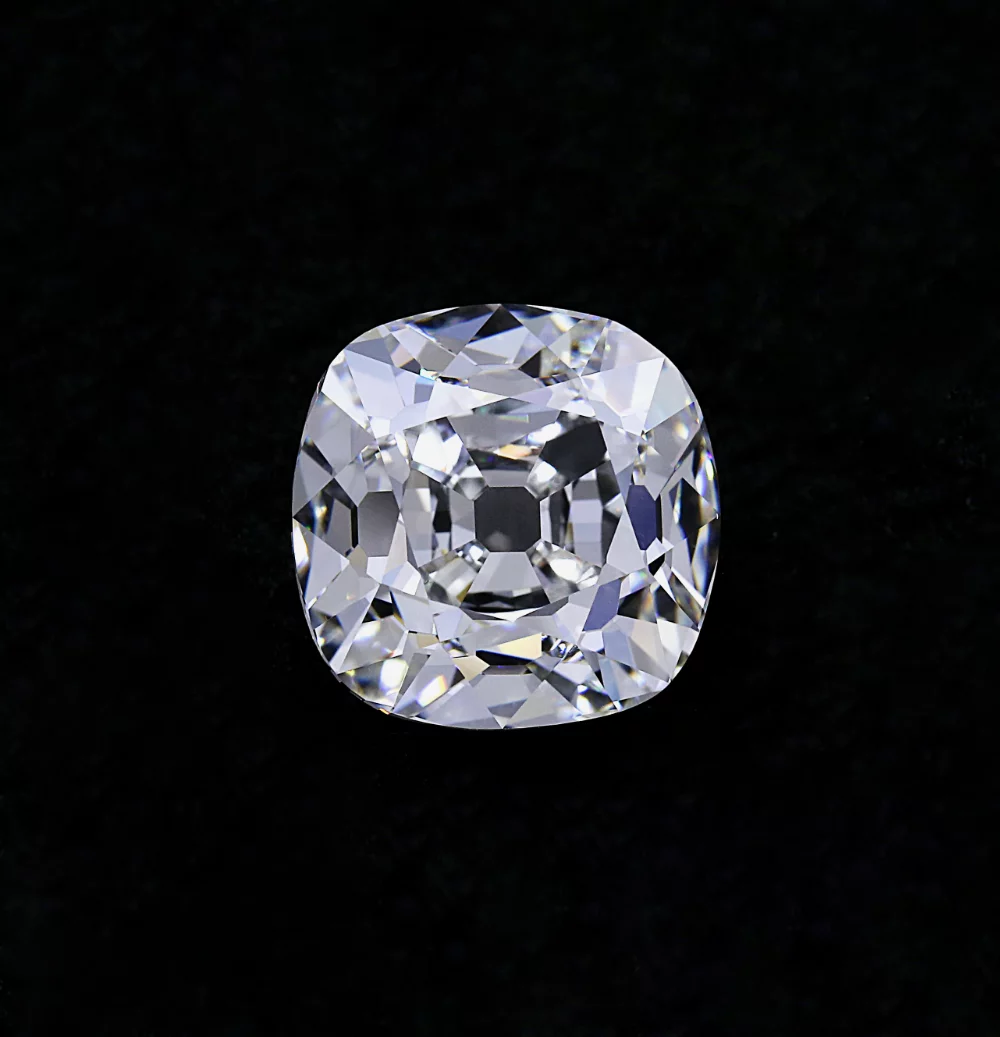
The five Imperial examples below move from almost square to clearly elongated. Their ratios tell you about length and width, but a ratio cannot show whether one corner looks pinched, whether the table sits to one side, or whether the facets send the eye around the face evenly. Look at the outer silhouette first. Only then let your attention move to the central pattern.
Outline and facet symmetry are different
Outline symmetry concerns sides, corners and overall silhouette. Facet symmetry concerns placement and alignment, including the table and culet. Length-to-width ratio only describes proportion. Examine the face-up view for corner shape and culet position, then watch the pattern in motion. GIA gives an overall cut grade only to standard round brilliants. Fancy shapes receive separate polish and symmetry assessments, so an Old Mine Cushion still needs visual and condition review.
Five current diamond outlines
These measurements show the range within the Old Mine Cushion family. The 8.01 ct example is close to square at a 1.01 length-to-width ratio, while the 5.03 ct and 5.16 ct examples extend to 1.32 and 1.34. Use the figures to compare squareness, elongation and face-up dimensions, then return to each photograph for the details that a ratio leaves out: shoulders, corners and table position.
| Diamond | Measurements | L/W | Use in comparison |
|---|---|---|---|
| 8.01 Ct. H VVS2 | 11.72 × 11.60 × 7.14 mm | 1.01 | Near-square corner and side comparison |
| 3.06 Ct. G VVS2 | 8.49 × 8.18 × 5.39 mm | 1.04 | Near-square footprint with movement video |
| 2.13 Ct. D IF | 7.74 × 6.52 × 4.68 mm | 1.19 | Moderately elongated outline |
| 5.03 Ct. F VS1 | 11.72 × 8.91 × 6.16 mm | 1.32 | Elongated face-up comparison |
| 5.16 Ct. G SI2 | 12.35 × 9.21 × 5.23 mm | 1.34 | Elongated comparison with different dimensions |
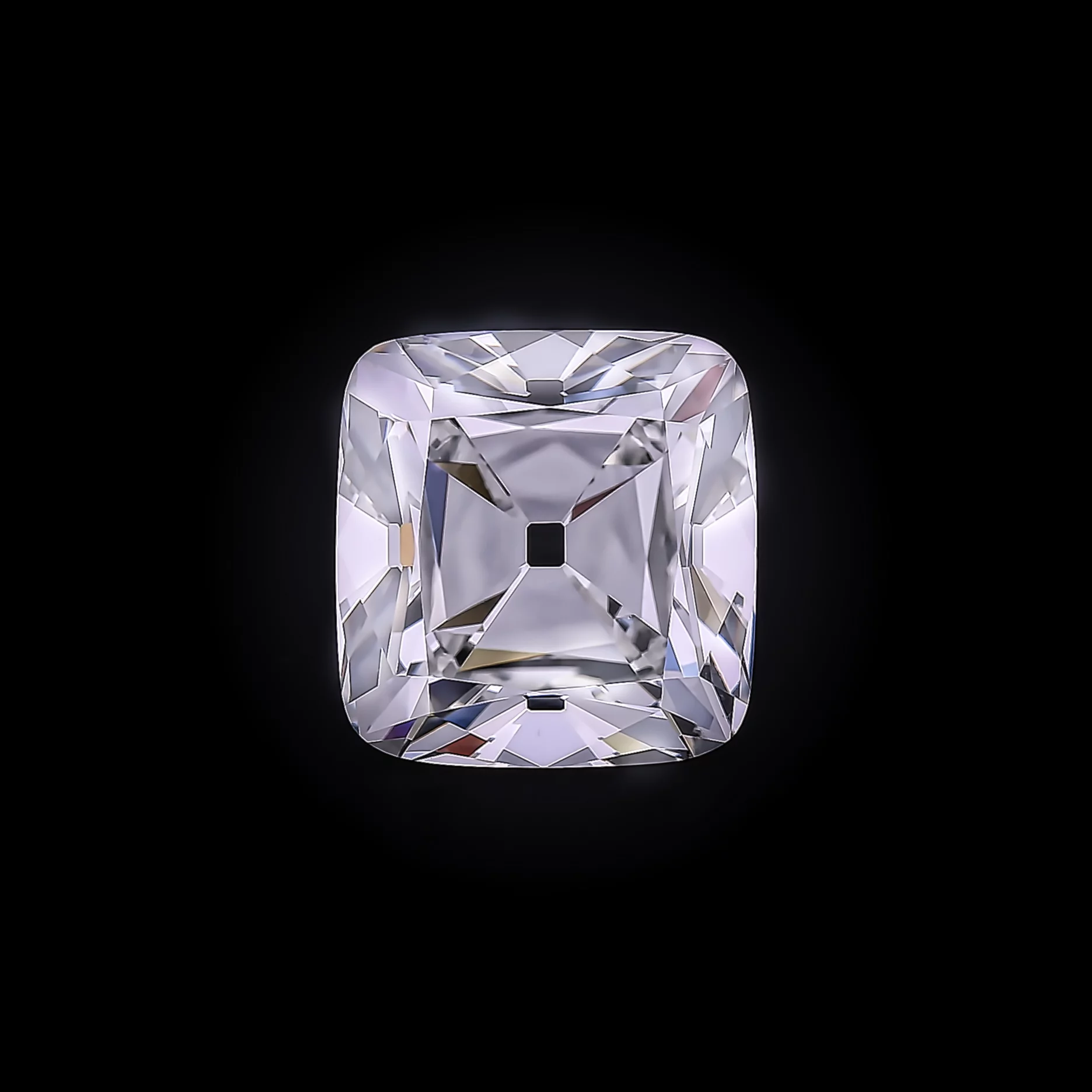
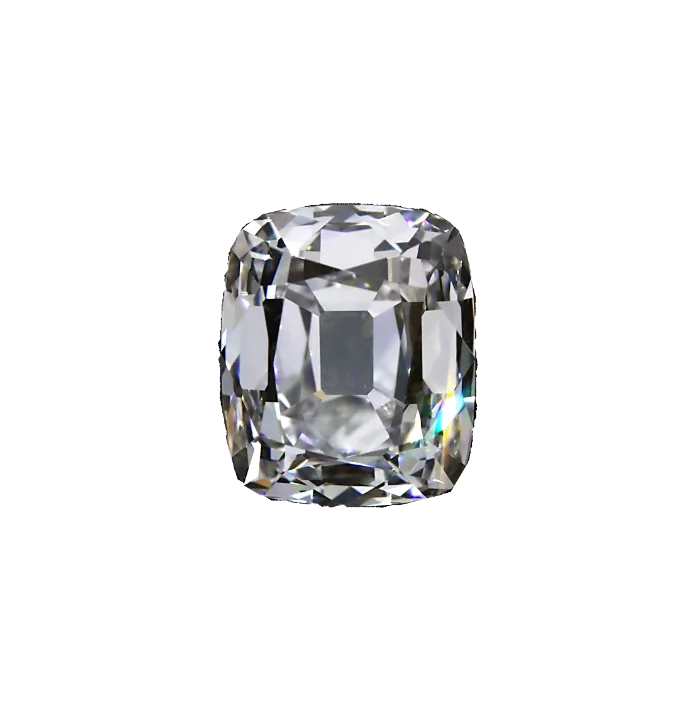
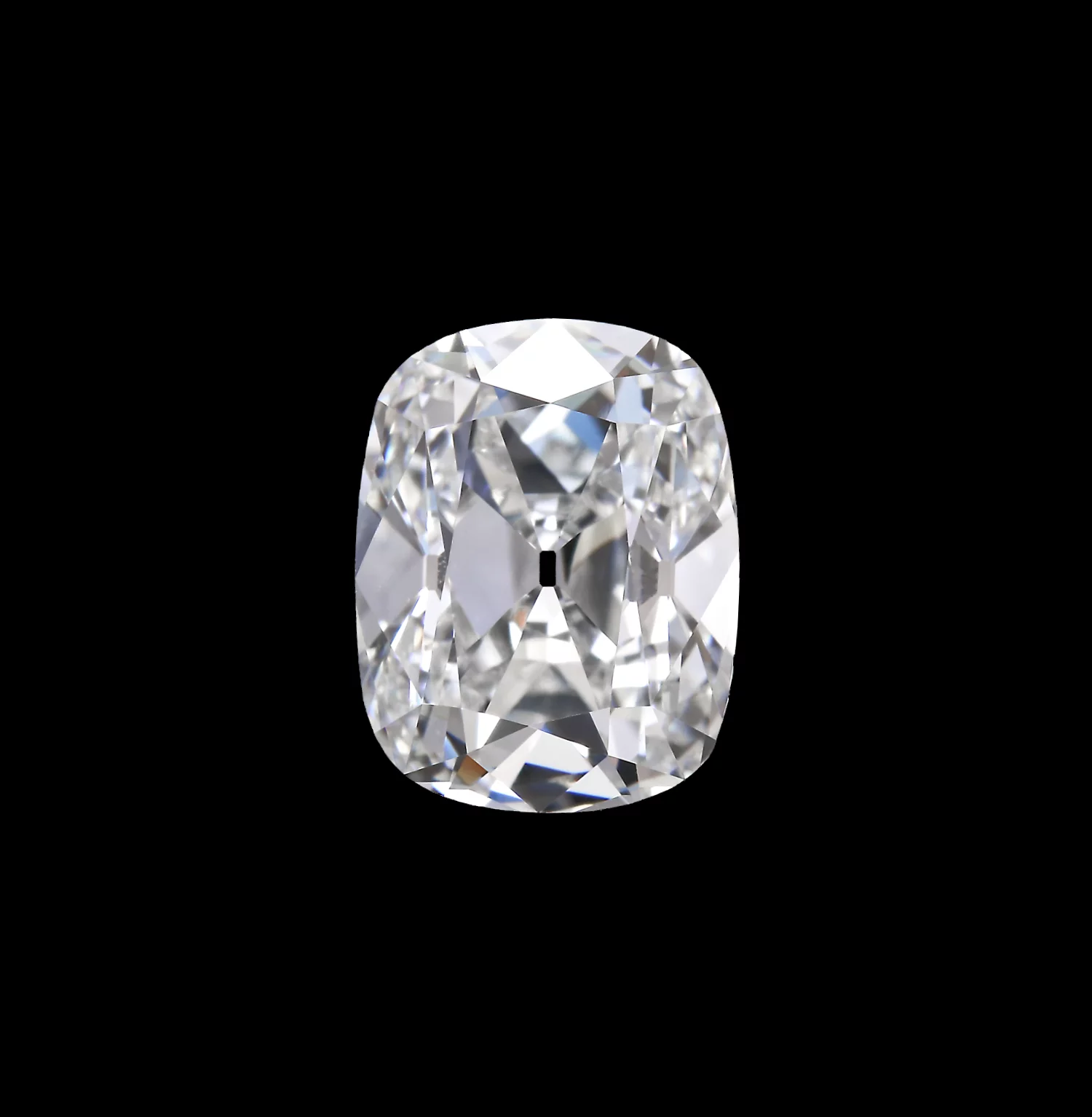
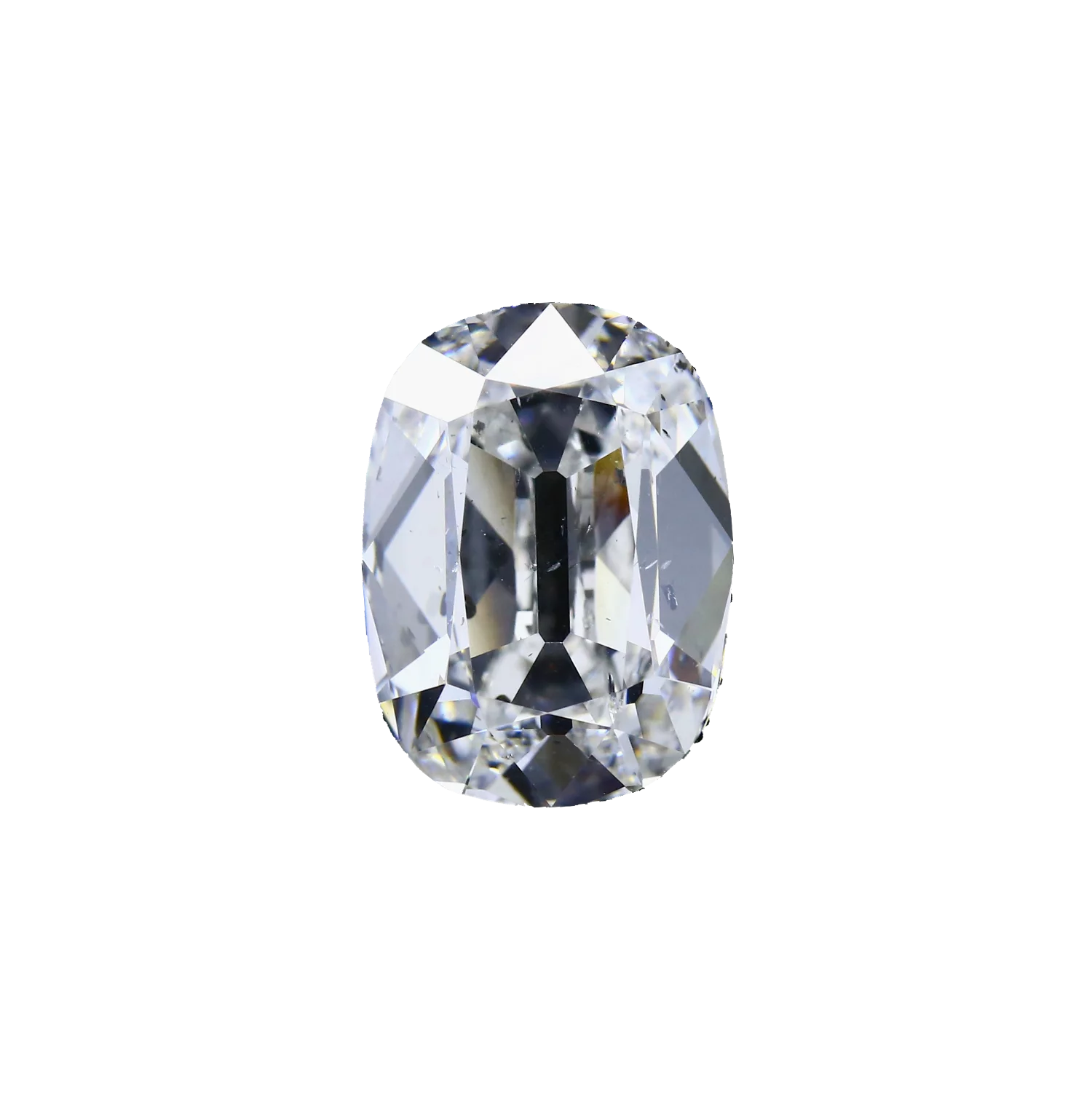
Use the gallery to compare outlines. The near-square stone gives the eye a compact frame; the elongated examples lead it along one axis. Scale, orientation and lighting differ between these published photographs, so the displayed sizes cannot be treated as a true-size lineup. A serious comparison needs equally scaled face-up images, a common orientation and matched movement video before anyone judges which asymmetry feels more noticeable.
The setting can make a small difference louder
A loose stone permits the eye to accept an irregular corner as part of its outline. A uniform halo may put that corner against a tight geometric border and make it conspicuous. A bezel might smooth a soft side, but it can also hide a feature a collector wanted to see. A prong placed over a vulnerable girdle needs a jeweller's condition assessment before it becomes a design choice. Sketch the setting around an aligned photograph of the actual diamond, then check the fit against the stone itself.
Movement offers another test. A slightly offset table may be hard to see at rest but can interrupt the sequence of flashes during a slow turn. Another stone with a visibly uneven outline may move beautifully. The report, measurements and video are complementary evidence. None can stand in for the rest.
When asymmetry works
It can work when the outline feels deliberate, the central pattern remains composed and contrast moves through the stone. It becomes a problem when it distracts, creates persistent darkness, complicates secure setting or signals damage. Pay particular attention to thin girdle sections, surface-reaching features and weakened corners. Document these areas in the condition examination.
Rotation tells you more
Align the long axis vertically and watch a full rotation. Repeat while tracking the culet, corners and centre. Then turn the stone 90 degrees. If the impression changes mainly with orientation, the outline may be driving the reaction more than the facet pattern. A bright central flash can also pull attention away from an uneven shoulder for an instant, so stop the video at several points and compare those frames with the still photograph.
Set the actual outline
A custom setting can place prongs around the real corners, support a delicate girdle and leave clearance under a deep pavilion or culet. The maker needs to know whether a seemingly broad corner is sound enough for a prong and whether the opposite shoulder needs a different seat. Ask for a face-up drawing traced from the measured outline, then review it beside a true side view of the loose stone.
Comparison checklist
- Match report, weight and measurements.
- Use the same scale, orientation, distance and light.
- Compare the outline separately from the facets.
- Track table, culet and contrast through movement.
- Inspect the loose girdle and map condition.
- Review support, prong positions and culet clearance.
- Separate personal shape preference from structural risk.
If alteration is being discussed, read Should You Recut or Preserve an Old Mine Cut? first.
Request a matched comparison
Ask for equally scaled face-up images, unedited rotation video, measurements, reports and condition notes. Request a private diamond search or ask about inspection.
Editorial attribution: Updated by Mortdechay for Imperial Cushions from published stone measurements and photography, 3 September 2026. Confirm the condition through loose-stone inspection.
Sources: GIA Guide to Old Mine Cut Diamonds; GIA Finish, Culet and Girdle Reference; GIA: How to Protect Your Diamond from Chipping.
See the details in a stone
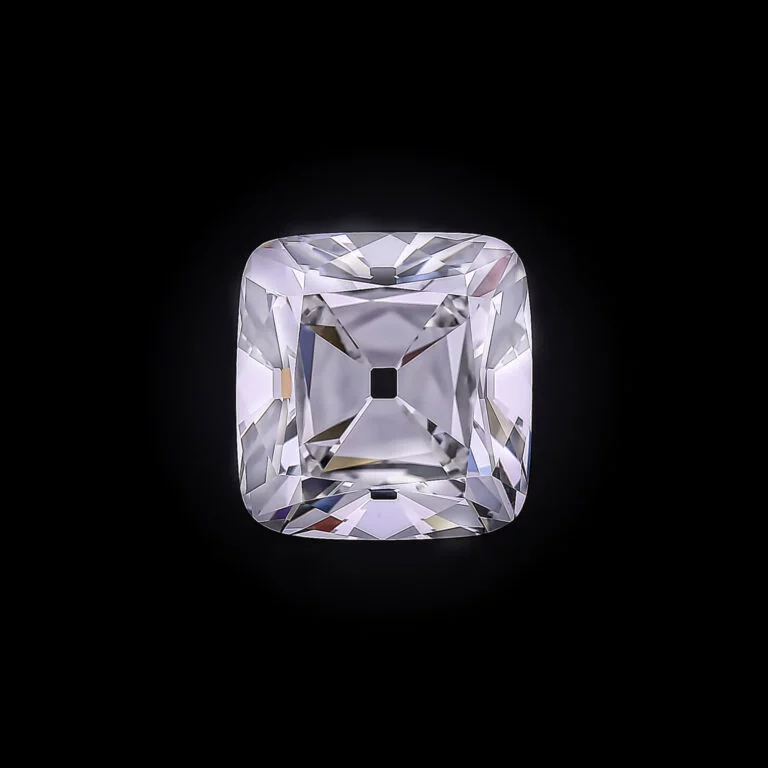
3.06 Ct. G VVS2 Old Mine Cushion Brilliant
Compare its near-square outline and individual facet pattern in motion.
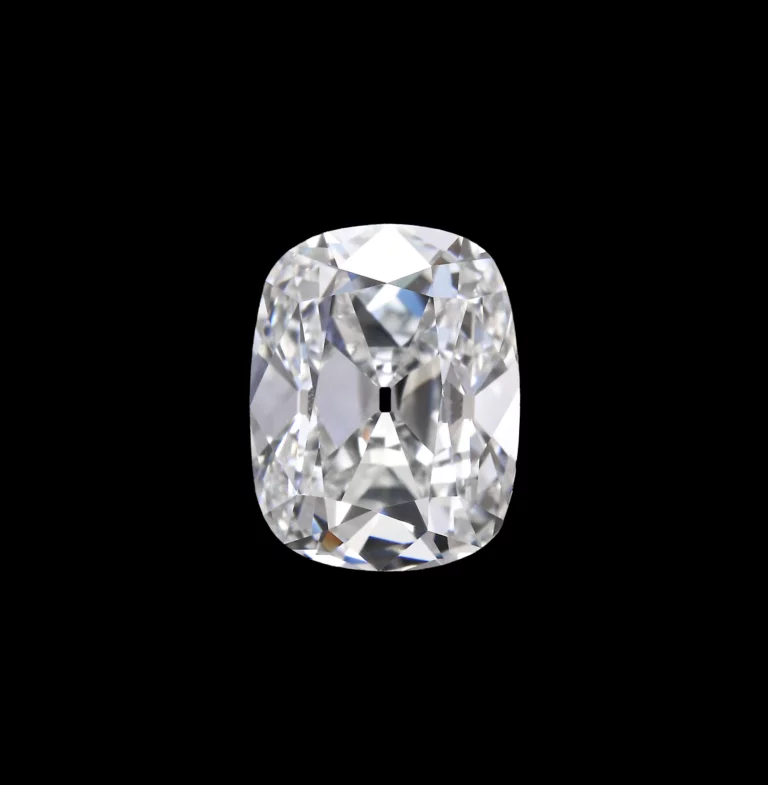
5.03 Ct. F VS1 Old Mine Cushion
An elongated cushion gives a second outline for examining symmetry and character.