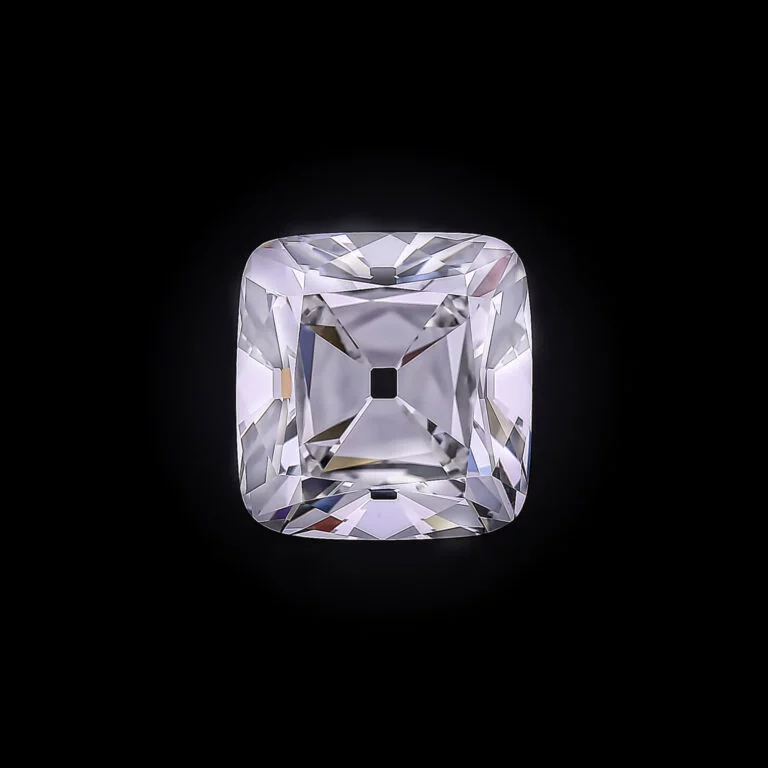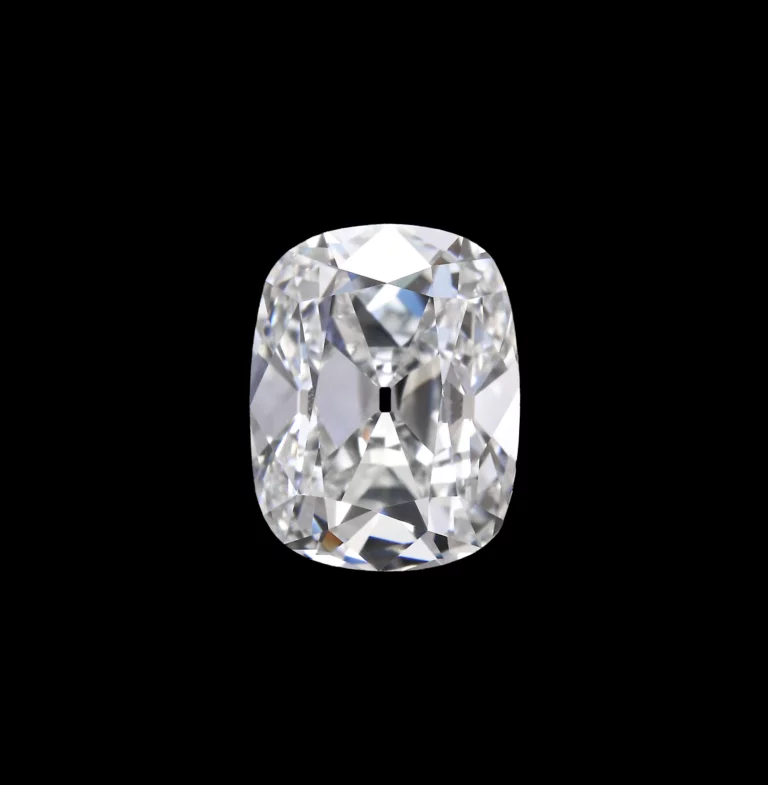
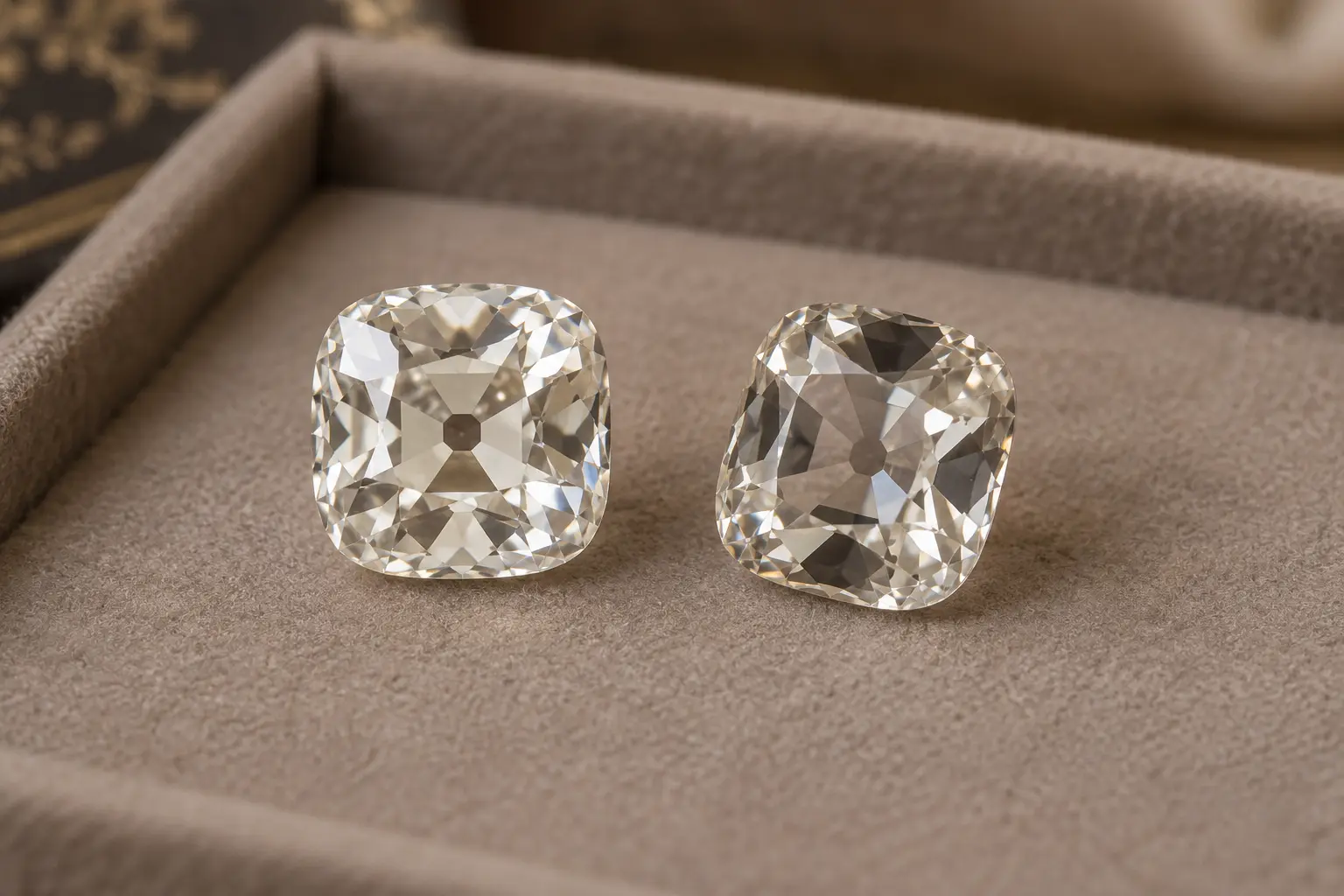
Dark patches in an antique diamond often change because the stone is reflecting the viewer and the room. Distance, tilt and lighting can reorganise the same broad facets in seconds. Test one variable at a time: start 35 to 50 centimetres away, rock the diamond through a shallow arc, repeat from closer range, then change the light. That short sequence helps separate observer obstruction, moving contrast, table or girdle reflection, a visible open culet and a persistent dark zone that deserves closer study.
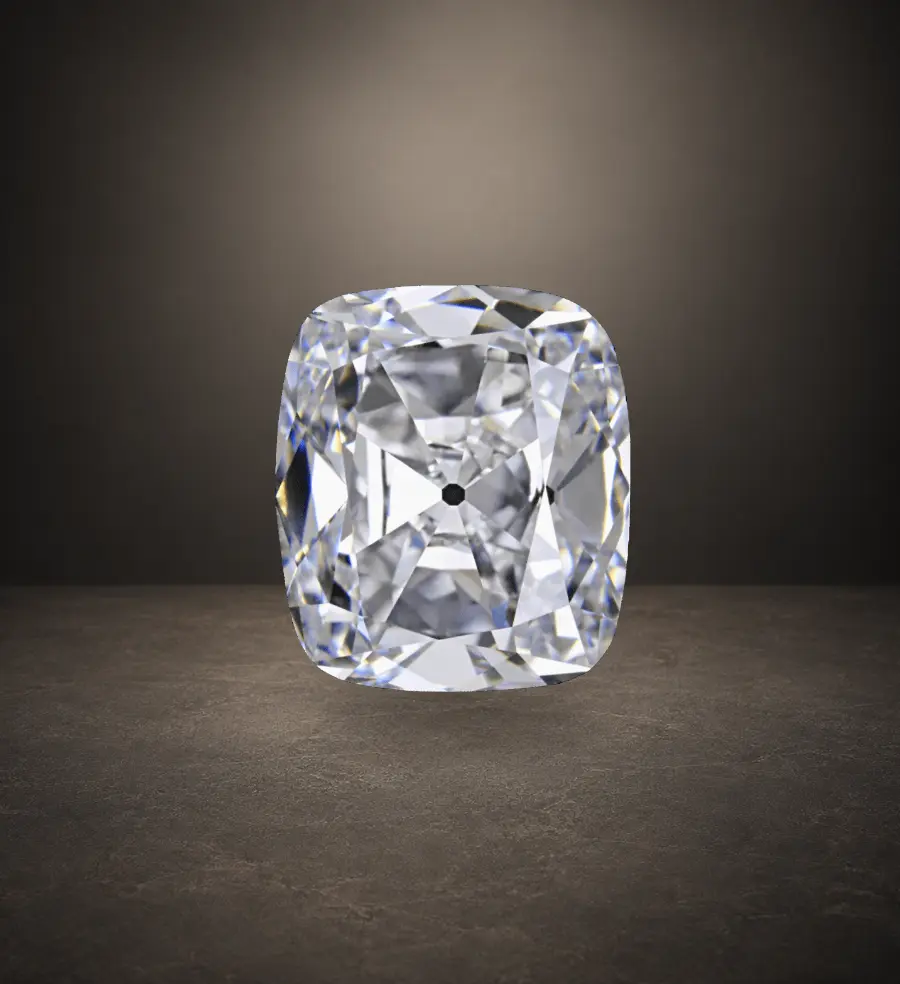
Give the dark area a useful name
| What you see | What may be happening | Next useful check |
|---|---|---|
| Darkness grows as the camera moves closer | The viewer, camera, clothing or hair is blocking overhead light and appearing in the diamond. GIA calls this obscuration. | Repeat the same angle from farther away. |
| A defined shape moves through the centre during a slight tilt | The table, girdle and pavilion facets are producing changing internal reflections. | Use a slow, matched rotation and compare the opposite direction. |
| The background appears through a concentrated area | GIA uses windowing for a concentrated area where the surface below the diamond can be seen. | View the loose stone over neutral light and dark backgrounds. |
| A small central opening stays in place | An open culet is a polished facet at the bottom of the pavilion. The surrounding light pattern changes around it. | Match the culet description to the report and pavilion view. |
These features can appear together. The job is to observe which part changes when distance, angle or lighting changes.
The room enters the diamond
A cut diamond is not a sealed lamp. It receives light from the room and returns a pattern shaped by its facets and by whatever blocks that light. A dark coat, a camera held close, a ceiling fixture and a window can each leave a different signature. Antique cushions often make those changes easy to notice because a broad facet can carry a large patch of contrast. A single still photograph freezes one relationship between stone, viewer and light; the next frame may look markedly different without any change to the diamond.
Start with distance
GIA describes obscuration as darkness created when the observer blocks light or appears in the diamond's reflections. It becomes more noticeable as the observer moves closer, especially in dimmer light or with dark clothing. GIA's trade observation research used a typical viewing distance of about 14 to 20 inches, roughly 35 to 50 centimetres. Begin within that range. Keep the camera centred over the table and use a broad, diffuse light. Then move closer while holding the angle as steady as possible. A dark patch that expands or shifts with the camera gives useful evidence about the viewing setup.
Dark contrast also helps the eye read a diamond's pattern. GIA's fancy-shape research found that the distribution of bright and dark elements contributes strongly to perceived brightness. Watch the balance and movement of the pattern across the full tilt.
Then change the tilt
A table reflection is an internal image of the table facet seen within the diamond's face-up pattern. Girdle reflections may also appear through the table. Their size and position depend on facet geometry, viewing angle and the surrounding light. GIA research on round brilliants uses table and girdle reflection as appearance factors. An earlier GIA study also showed how a slight tilt can separate different kinds of central darkness. The numerical angles and proportion thresholds in that work belong to round brilliants. For an Old Mine Cushion, the useful method is controlled movement.
- Hold the diamond face-up at a normal viewing distance.
- Rock it a few degrees in one direction.
- Return to centre, then repeat in the opposite direction.
- Keep the light, background and camera exposure unchanged.
Track the boundary of the dark area. A moving boundary belongs to a changing reflection pattern. A zone that holds its position through several distances, angles and lighting conditions calls for matched video or direct inspection.
A real example: the 7.51 Ct. D IF Cushion Brilliant
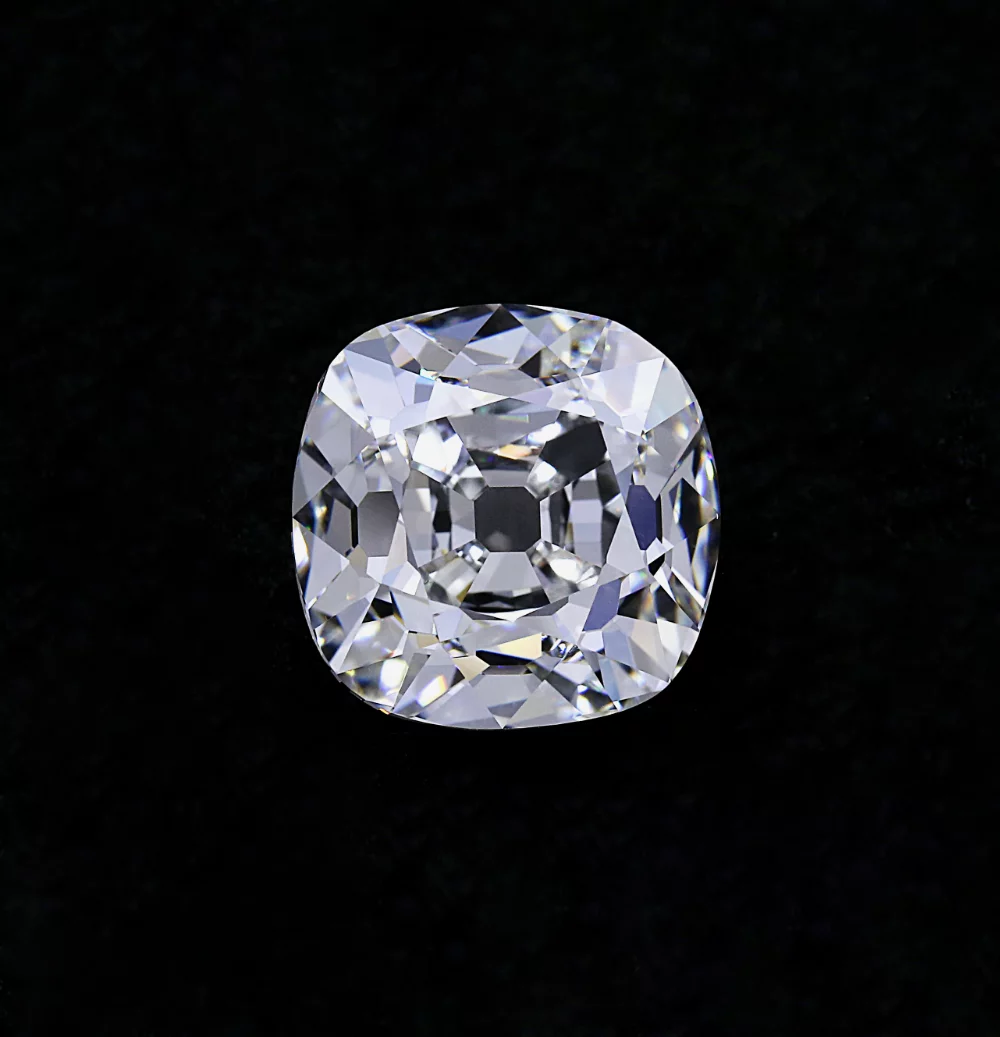
Its 1.13 length-to-width ratio gives the face a softly rectangular outline. The small central culet and the surrounding facet pattern give the eye useful landmarks as bright and dark areas move across the stone.
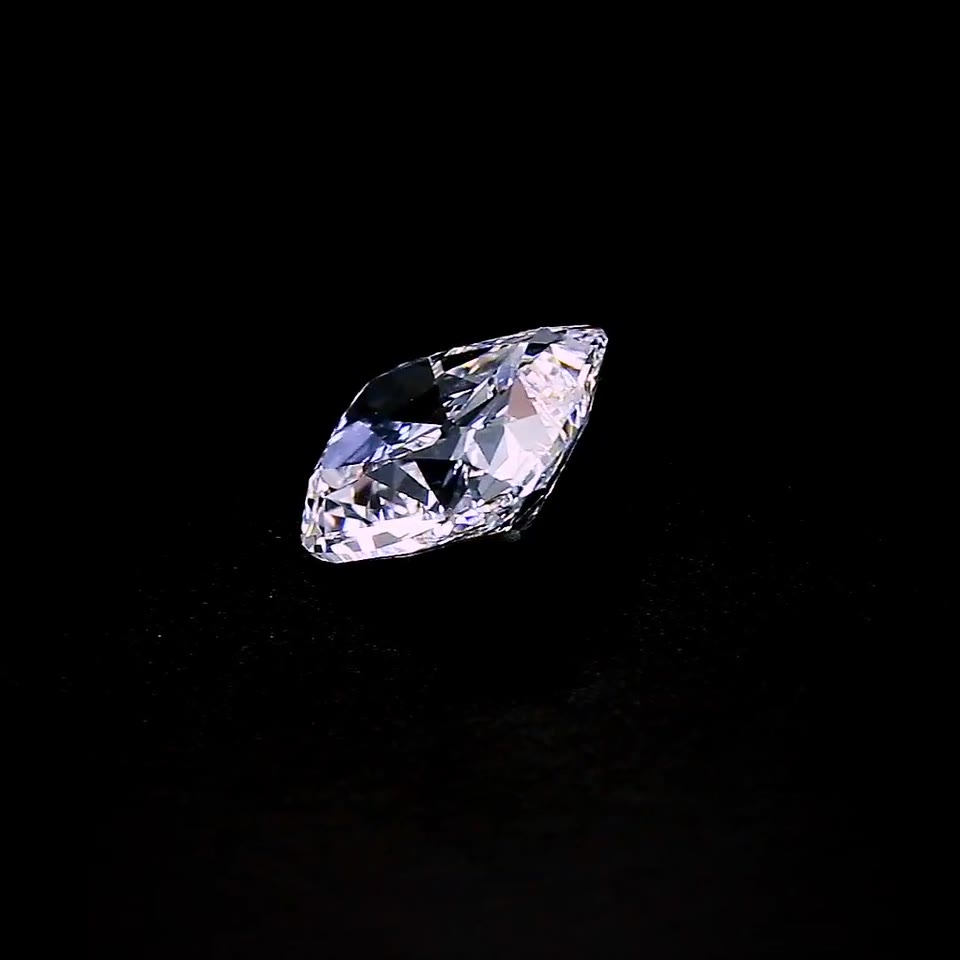
The two recorded settings show how quickly the same diamond's pattern can change. To isolate the cause of a specific dark zone, request matched clips at two distances with the light, angle path and exposure held steady.
Use three passes through the same movement
| Pass | Setup | What to record |
|---|---|---|
| 1. Diffuse light | 35 to 50 cm away, neutral surroundings, one slow tilt in each direction. | Overall brightness, moving contrast and any area that stays dark. |
| 2. Closer view | Keep the light and angle path; reduce only the camera distance. | Any darkness that grows, contracts or shifts with the observer. |
| 3. Small directed light | Return to the first distance and repeat the same movement. | Fire, larger flashes and changes around the table and culet. |
Finish with ordinary room light at the distance where the diamond will usually be seen. That final view brings the test back to daily wear.
What the report adds
The IC-01706 stone record links to GIA report 6197517643 and records 7.51 ct, 12.75 x 11.29 x 6.57 mm measurements, a 55% table, 58.2% total depth, D colour, Internally Flawless clarity, no fluorescence and Type IIa classification. Those fields identify the diamond and describe its proportions. The videos record its changing pattern in two real settings. Direct inspection shows how it behaves at normal viewing distance under matched lights.
GIA's overall cut grade covers standard round brilliants in the D-to-Z colour range. The IC-01706 report identifies this stone as Cushion Brilliant, while our description characterizes its appearance as having antique character. Its 55% table records one proportion. Pavilion geometry, crown arrangement, tilt and the room shape the reflection seen through it.
When to request more evidence
- A dark zone remains in the same place through several distances, tilt directions and lights.
- Two candidate stones were recorded with different backgrounds, exposure or camera distance.
- The background appears through an area wider than the open culet.
- The setting will sit low and may change access to light around the pavilion.
Ask for matched face-up and tilted clips, the report, a pavilion view and current condition notes. For a high-value decision, Imperial Cushions can arrange a private presentation and an independent inspection. Request inspection details or ask for a private diamond search. For the wider optical background, read Why Antique Diamonds Return Light Differently. The Old Mine Cushion proportions guide explains how table, depth, culet and outline fit into the same review, and the open-culet guide covers the physical centre facet.
Editorial attribution: Prepared by Mortdechay for Imperial Cushions from the published IC-01706 details and its inventory footage. Technical definitions were checked against the GIA sources below. Reviewed 14 September 2026.
Sources: GIA, The Transformation of Diamond Cut Quality Grading; GIA Gems & Gemology, A Foundation for Grading the Overall Cut Quality of Round Brilliant Cut Diamonds; GIA Gems & Gemology, Observations of Oval-, Pear-, and Marquise-Shaped Diamonds; GIA Gems & Gemology, Winter 1962 table-reflection study; GIA, Guide to Old Mine Cut Diamonds.