The Prestige of Golconda Diamonds
Golconda once stood at the centre of India’s diamond trade. Stones from mines in the surrounding region travelled through courts and collections for centuries. The Hope Diamond and the Koh-i-Noor are among the famous examples linked to the area in GIA’s historical account.

A SUPERB 12.60 DIAMOND RING, BY CARTIER
The Legacy of Golconda Diamonds
Mining around Golconda reaches back to antiquity. The city also served as a trading centre, where diamonds passed through merchants’ hands. Historical accounts use the name for both the mines and the diamond market.
Some diamonds associated with Golconda are Type IIa. In GIA’s classification, that means no measurable nitrogen or boron. Type IIa diamonds occur in deposits around the world; the classification describes the material, while a Golconda attribution depends on the stone’s historical record.

THE PINK GOLCONDA DIAMOND, A COLORED DIAMOND AND DIAMOND RING, JAR
Golconda Diamonds and Their Historical Significance
Diamonds from the region reached Indian royal treasuries. GIA illustrates a Mughal-era necklace and earrings from the family of the Nizam of Hyderabad, set with diamonds described as Golconda.
A stone can change shape and setting over a long life. Old portraits, auction catalogues and inventories sometimes preserve an earlier view. When those records survive, they make the passage of a diamond through different hands easier to follow.
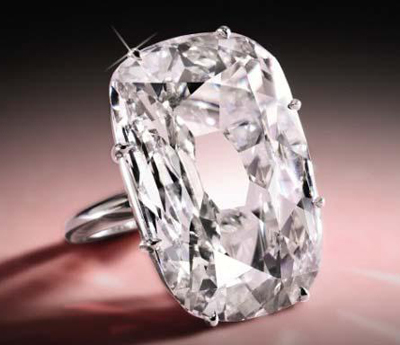
A 23.15 GOLCONDA DIAMOND RING BY SIEGELSON, NEW YORK
Examining a Historic Diamond
Start with the stone itself: its colour, clarity, measurements and cut. Then look at it in daylight and interior light, checking the facet pattern, transparency and any wear. A report records laboratory observations; a specialist can assess condition at the girdle and in an older setting.
Read the ownership records beside the diamond. Dated catalogues, invoices and photographs are most useful when measurements or distinctive details connect them to the stone in hand. Keep those records together so the history can be checked again.
The Unique Characteristics of Golconda Diamonds
Golconda diamonds are often admired for their transparency. Their colour and cut vary from stone to stone. A slow turn in ordinary light reveals each diamond’s facet pattern more clearly than a still photograph.
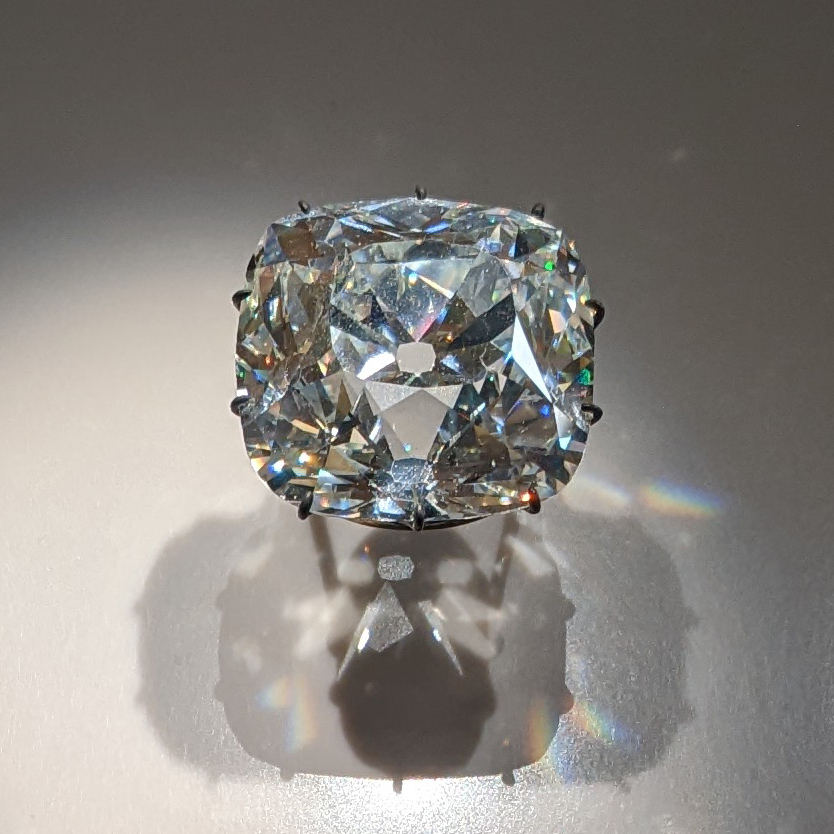
The historic mines around Golconda are largely exhausted. The Regent pictured above travelled from India to France, where it appeared in crowns, a sword and a diadem. The Louvre now holds it in its collection.

THE ARCHDUKE JOSEPH DIAMOND, CHRISTIE'S, 2012
Where Golconda diamonds were mined
Golconda names a historic kingdom and a diamond-trading centre near present-day Hyderabad. The stones were mined across a wider territory beyond the fort. Merchants brought them into a market whose name travelled with the gems. That distinction helps when reading an old description: a reference to Golconda may describe a region or trading history rather than identify one mine. GIA's account of the mines and market places the workings outside the fortress and describes their varied terrain. The fort was where diamonds changed hands; it was not itself the diamond deposit.
A history that includes coloured diamonds
The reputation for transparent, colourless stones is only part of the story. The blue Hope Diamond and pink Princie Diamond bring different colours and ownership histories into the discussion. GIA notes that most blue diamonds are Type IIb, while pink diamonds can be Type I or Type II. Colour and diamond type describe the material. They need to be considered separately from the evidence connecting a particular stone with historic Indian mining.
What a documented diamond history looks like
The history of the Golconda Blue gives that paperwork a human scale. Christie's 2025 account records a 1923 Chaumet bracelet commission using the Maharaja of Indore's blue diamond, a later Mauboussin necklace worn by the Maharani, and Harry Winston's purchase in January 1947. A portrait preserves the necklace in wear. Across those records, the setting changes and the diamond passes between owners. Such evidence can follow a jewel through a later period of its life, while the question of its original mine requires its own support.
For a diamond you are considering, ask which documents belong to the stone in front of you. Compare measurements, shape, photographs, inscriptions and report references wherever the records provide them. A catalogue name alone leaves much to resolve. Our Type IIa guide explains the laboratory classification; the historical file should show how each ownership claim was reached. Bring both to a viewing so the conversation can move between the diamond and the evidence.
Explore the history further
Read about the Hope Diamond and its Golconda history, follow the Princie Diamond’s provenance, or explore Type IIa classification in antique diamonds.