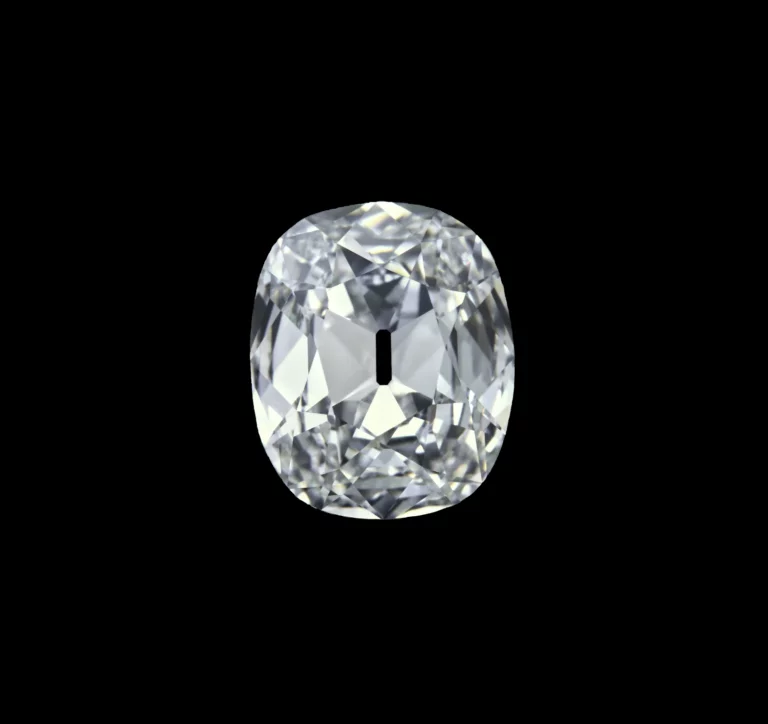
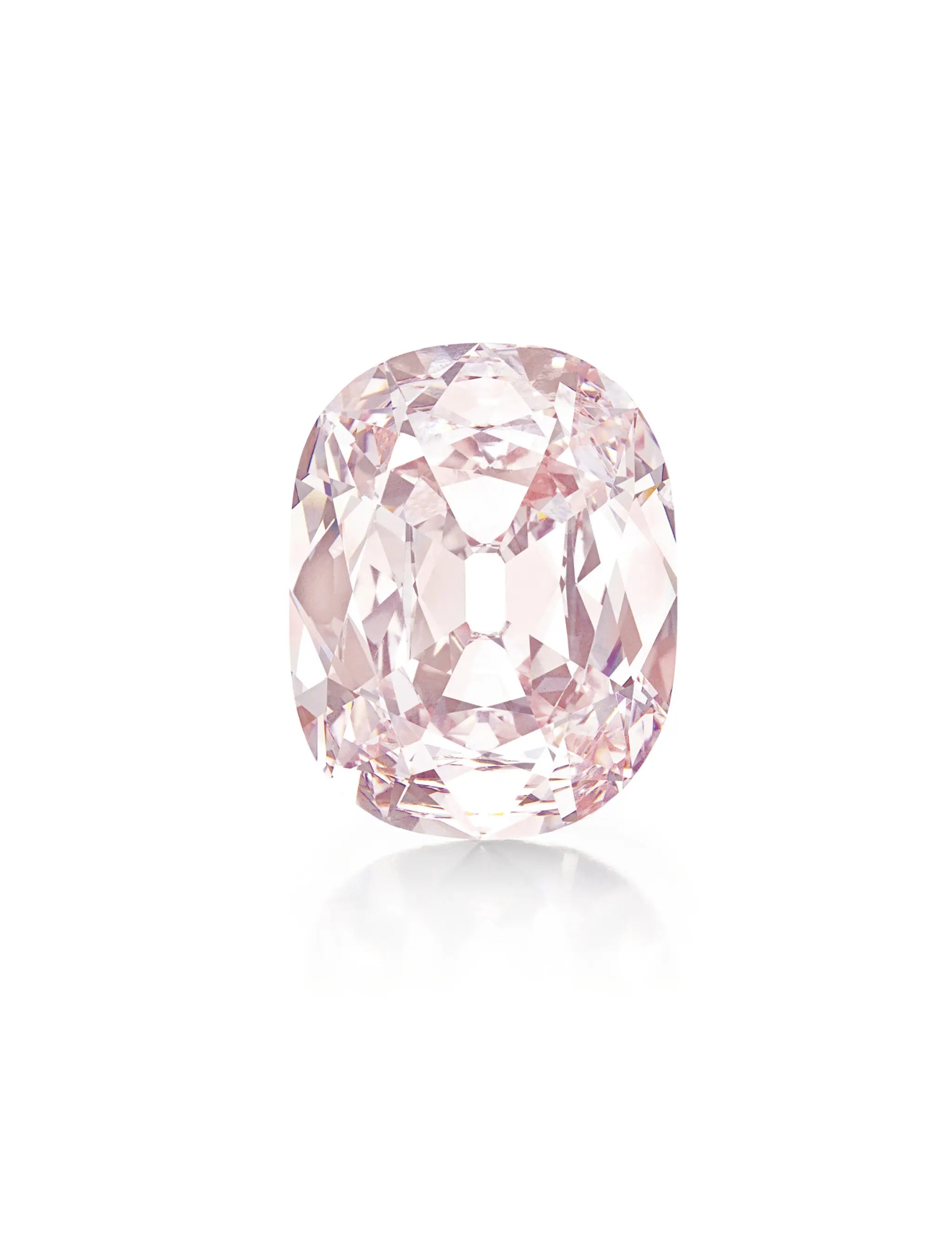
In 1960 a large pink diamond appeared at a London auction under the discreet description “Property of a Gentleman.” Van Cleef & Arpels bought it, carried it to Paris and gave it a name at a party on Place Vendôme. Decades later the Princie Diamond returned to an auction room as a 34.65 carat Fancy Intense Pink cushion. Its history connects the Hyderabad court, a London sale and a Paris jeweller; its colour also has an unusually specific scientific explanation.
A pink diamond before the name
“Princie” is a twentieth-century name for a much older diamond. Christie’s says the stone was first recorded in the holdings of the royal family of Hyderabad and associates its origin with the ancient Golconda mines. The Hyderabad rulers governed a region that encompassed those mines. That setting makes the history plausible, but the published auction account does not give a mine extraction record or a continuous, dated custody list back to the earth. A regional connection, a royal holding and a precisely identified mine are three different levels of claim.
Hyderabad gives the early history a human setting, even where dates are scarce. Golconda was a centre of diamond trade under rulers who understood the political and ceremonial force of exceptional gems. A pink cushion of the Princie's size could travel between collections while retaining its individual appearance. Christie’s account supplies the royal connection; the surviving public account becomes much more precise at the twentieth-century auction.
The 1960 sale supplies names and a number
On 17 March 1960 the pink diamond came to auction as “Property of a Gentleman.” Christie’s later identified the seller as the Nizam of Hyderabad. Van Cleef & Arpels paid £46,000 for it, according to Christie’s 2013 release. The Maison remembers Jacques Arpels returning from Sotheby’s in London with the stone. In that instant a diamond held within a royal collection entered the public life of a named jewel, photographed, discussed and prepared for a Paris audience.
The jeweller sent the stone to its Paris store and gave it a new public identity. Christie’s says it was christened “Princie” for the fourteen-year-old Prince of Baroda, who attended the party with his mother, Maharani Sita Devi. A nickname can feel ancient once it is repeated in catalogues; here its origin belongs to a particular event in Paris. That detail gives the diamond a social history as memorable as its earlier royal association, while leaving the much earlier mining date open.
What the 2013 catalogue could say
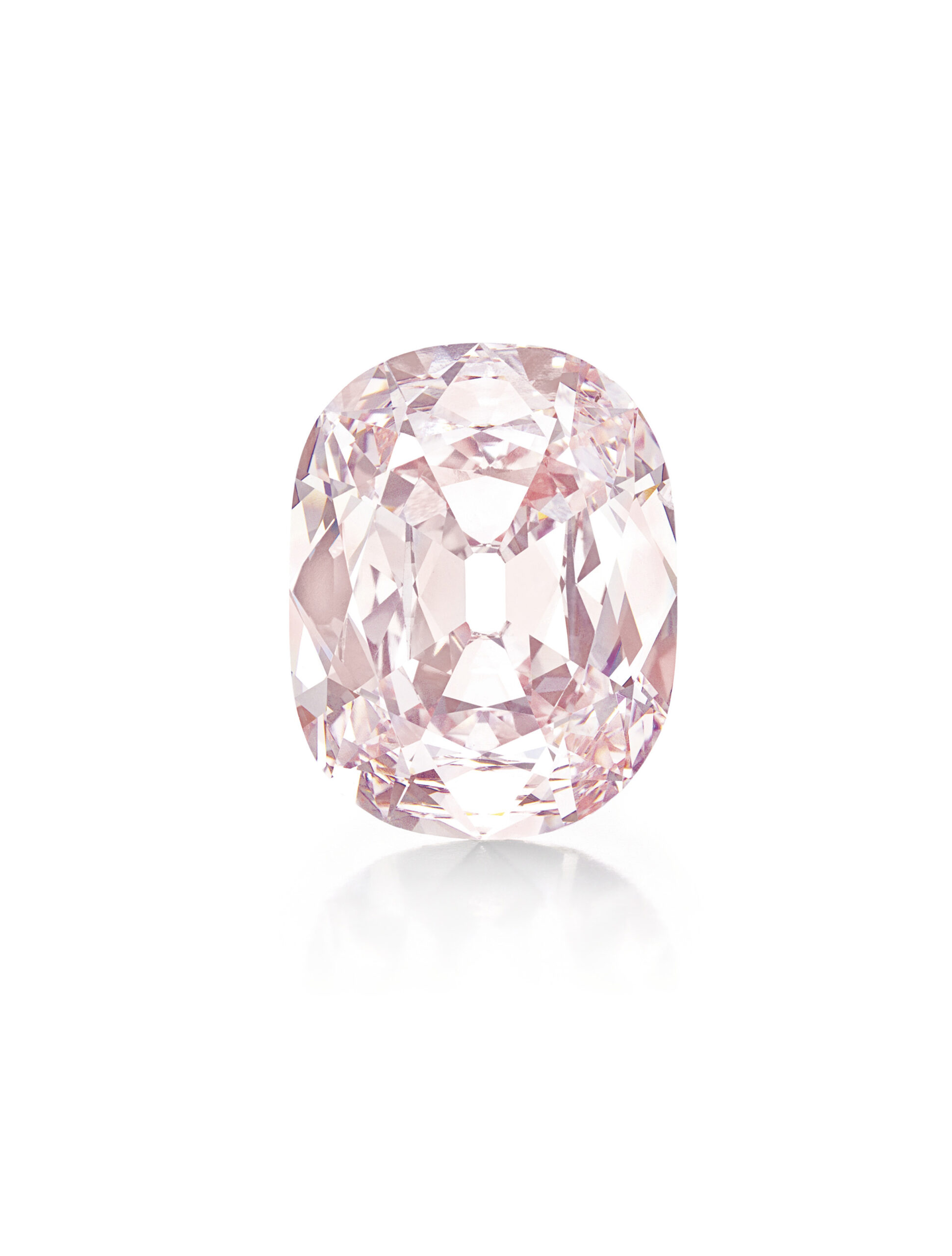
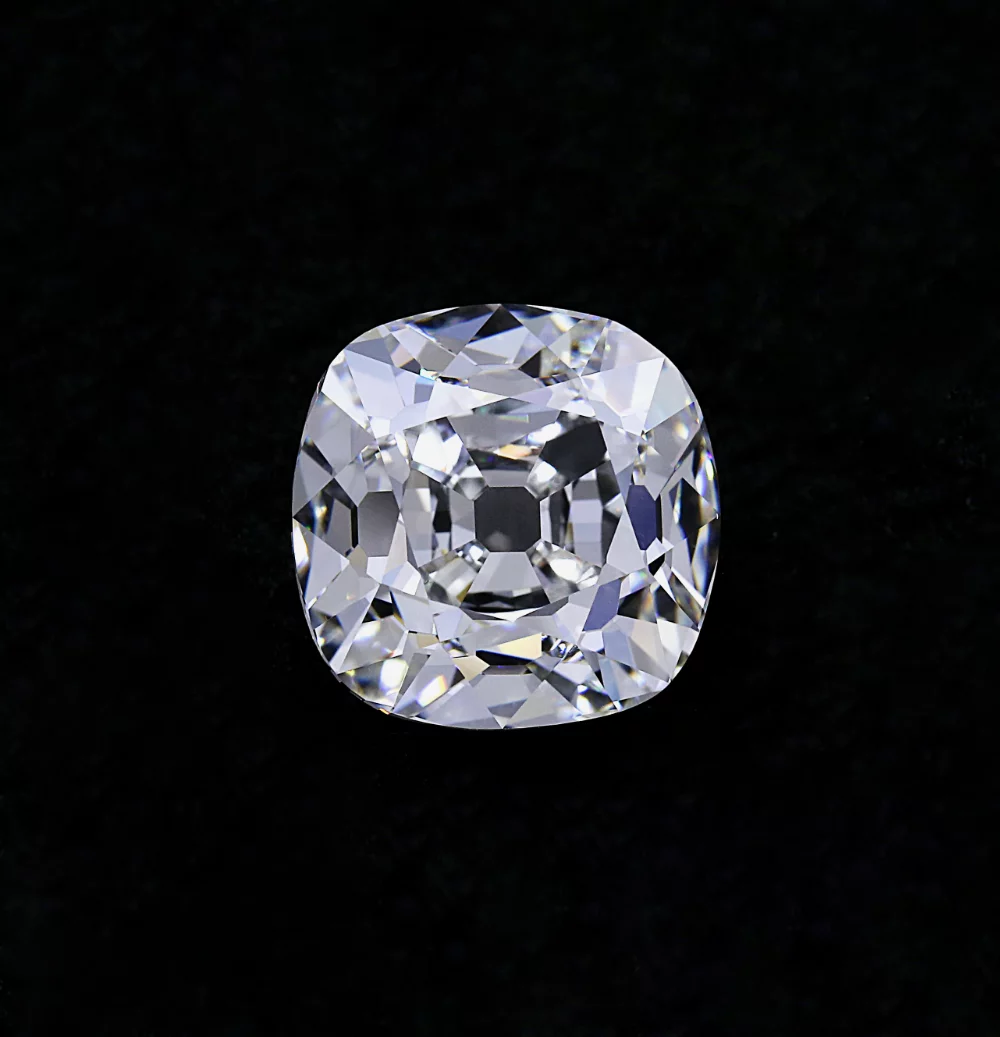
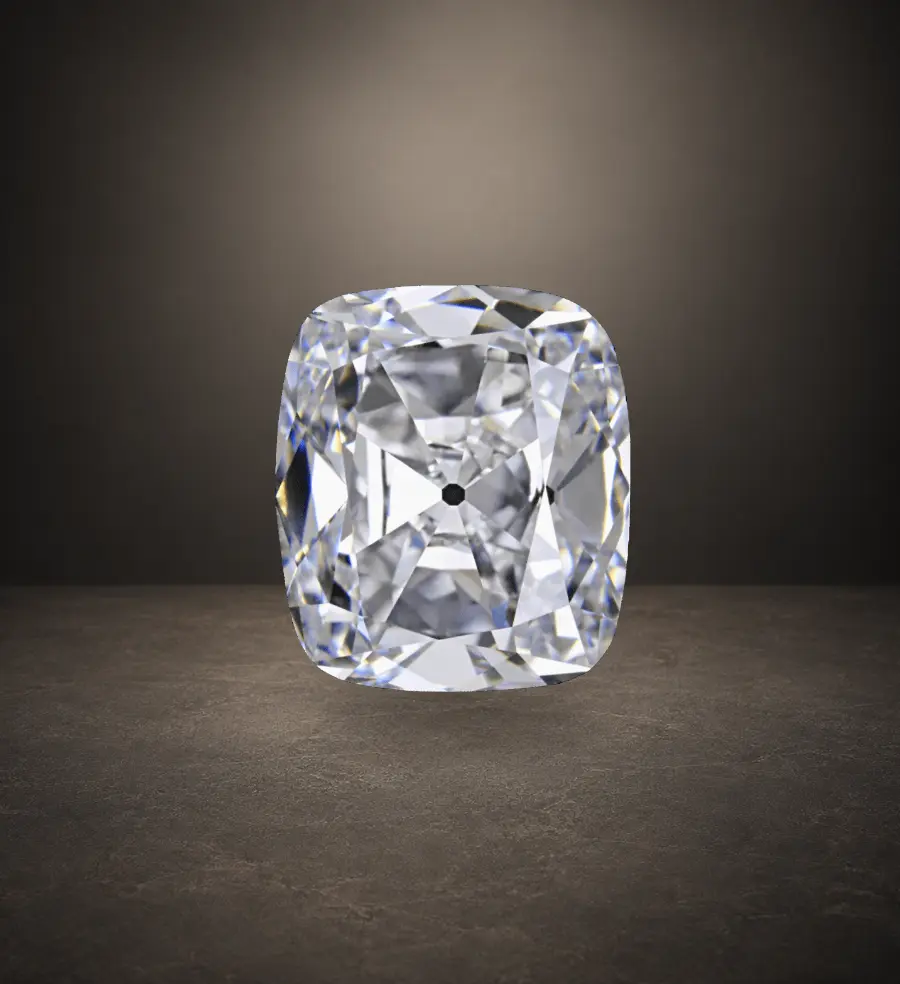
More than fifty years after the London sale, Christie’s offered the stone in New York on 16 April 2013. It described a 34.65 ct Fancy Intense Pink cushion and called it the largest Golconda Fancy Intense Pink diamond offered at auction. Christie’s later recorded a sale price of $39,323,750. The earlier Maison archive calls the stone 34.64 carats; the difference is a reminder that published weights can vary by record and period. The slightly rounded cushion face and saturated pink colour remained its identifying visual signature.
The New York catalogue attached the Golconda and Hyderabad story to the named stone, while the Paris jeweller's archive supplied a photograph and a firsthand account of the christening. These records allow a reader to move beyond a single auction headline. The shift from an unnamed London seller to a celebrated diamond with an illustrated Paris chapter is part of the Princie's history, not merely a change in marketing.
Why this pink is unusual
GIA researchers identify the Princie as an example of pink colour associated with nitrogen-vacancy centres in the diamond. Their 2018 study explains that this cause is rare among natural pink diamonds; a different absorption feature accounts for most of the pink stones in the study. The Princie's colour therefore has a laboratory story as distinctive as its social one. The scientific term “Golconda pink” is sometimes used for this colour mechanism, but GIA warns that the term does not, by itself, establish an Indian mine for another diamond.
The effect is best understood in the face of the stone. Pink colour fills a broad cushion rather than appearing as a small accent in a setting. Facets can lighten and deepen the visible colour as the stone moves, while the grade Fancy Intense Pink describes the assessed overall colour. Its 34.65 carats give that play of pink a remarkable area. The chemical explanation does not make the visual experience less curious; it gives a precise reason why this pink differs from many others.
Where the Golconda account rests
Christie’s and Van Cleef & Arpels both describe the stone as coming from Golconda and connect it with Hyderabad. The public accounts do not reconstruct every earlier transfer or name an extraction record. GIA explains that colour and diamond type cannot independently confirm a polished stone's geographic source. The Princie's regional history is thus an attributed historic account, accompanied by a much fuller record of its 1960 sale, Paris name and 2013 appearance.
The wider history of Golconda diamonds puts that account in context. The Princie adds its own sharply drawn scenes: an anonymous London lot, a pink stone carried back to Place Vendôme, a naming for the young Prince of Baroda, and a New York auction half a century later.
Further reading
Christie’s 2013 Princie release; Van Cleef & Arpels, Legendary Stones; GIA research on natural pink diamonds; GIA on geographic origin.