PART 1
THE MAGNIFICENT COLOURLESS CUSHION DIAMONDS - THE "OLD MINE" CUT
" ... The most perfect diamonds are crystalline, and resemble a drop of clear springwater, in the middle of which you will perceive a strong light playing with a great deal of spirit. " W .H. Pepys On Gems 1803The name "Old Mine" cut, refers to a particular style of early brilliant cut diamond (circa 1850) which featured a cushion or square shaped outline with rounded corners and curves, and a unique set of proportions. these actually produced an extraordinary blend of "brilliance" (i.e., white light) and ~'fire" (i.e. rainbow colours)
The name "Old Miner" was essentially a trade term, used by diamond dealers ( circa 1750-1880).
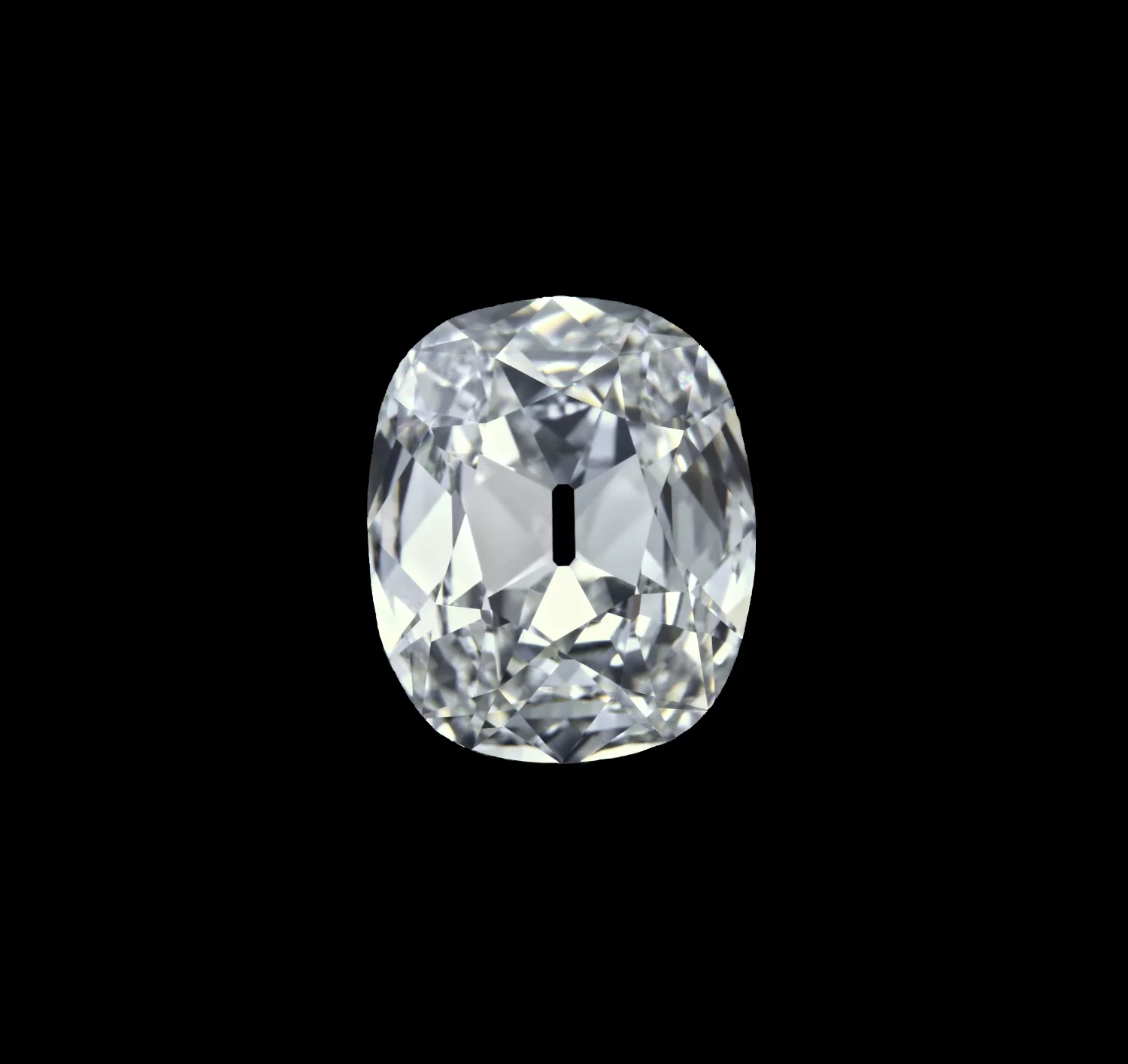
Today. the circular brilliant cut is the standard, and other shape outlines (e.g., cushion) are only applied when the rough favors them. However, during the last three hundred years. a number of large cushion-shaped brilliants have been fashioned, including the Tiffany (yellow), the Regent (colourless), Polar Star (colourless), Queen of Holland (colourless), Jubilee (colorless), Emperor Maximillian (colourless), and the Cullinan II & Cullinan IV (colourless) diamonds (Ayer 1971; Balfour 1997; Copeland 1974).
" ... The Regent diamond ... because of its excellent proportion and exceptional symmetry, it was regarded for centuries as unrivalled in every aspect .... this obviously resulted in uniform brilliance - virtually unheard of in cushion shaped diamonds." 11. Tillander diamond cuts in historic Jewelry 1995 .
An excellent example is the famous Cullinan II diamond, the largest and most celebrated cushion cut colourless diamond among the English Crown jewels (Balfour 1997). Polished between March and September 1908, the cushion-shaped Cullinan II is one of the most recognizable and valuable colourless diamonds in the world and a major attraction at the Tower of London, where it is set in the brow of the Imperial State Crown (Blair 1998). "
The Cullinan, thanks to its exceptional qualities of water /i.e., colour/ and cut, is considered the finest diamond in the world, and its glorious history, added to its qualities, make it assuredly the most costly gem in existence." I. Balfour Famous Diamonds 1997
The slight differences between the older and modern "old mine" cuts (i.e .. perfection of faceting), adds considerable "life" (i.e. brilliance and scintillation) to these one-of-a-kind diamonds. The result is a breathtaking, undulating, and restless mosaic of white and neutral colours. that truly is an artistic crystalline creation which features superb brilliance. magnificent dispersion and excellent scintillation for such beautiful colourless diamonds.
" ... Capturing tire prismatic wonder of rainbows, diamonds cast their spell by reflecting light from dozens of minute mirrored surfaces... " F. Ward Diamonds 1993
On the next article we will discuss color characteristics such as hue, lightness, saturation and face up color. as well as the different names and terms that were used to describe these magnificent and magical stones. Stay Tuned!
Mort Mord
Looking at the diamond behind the words
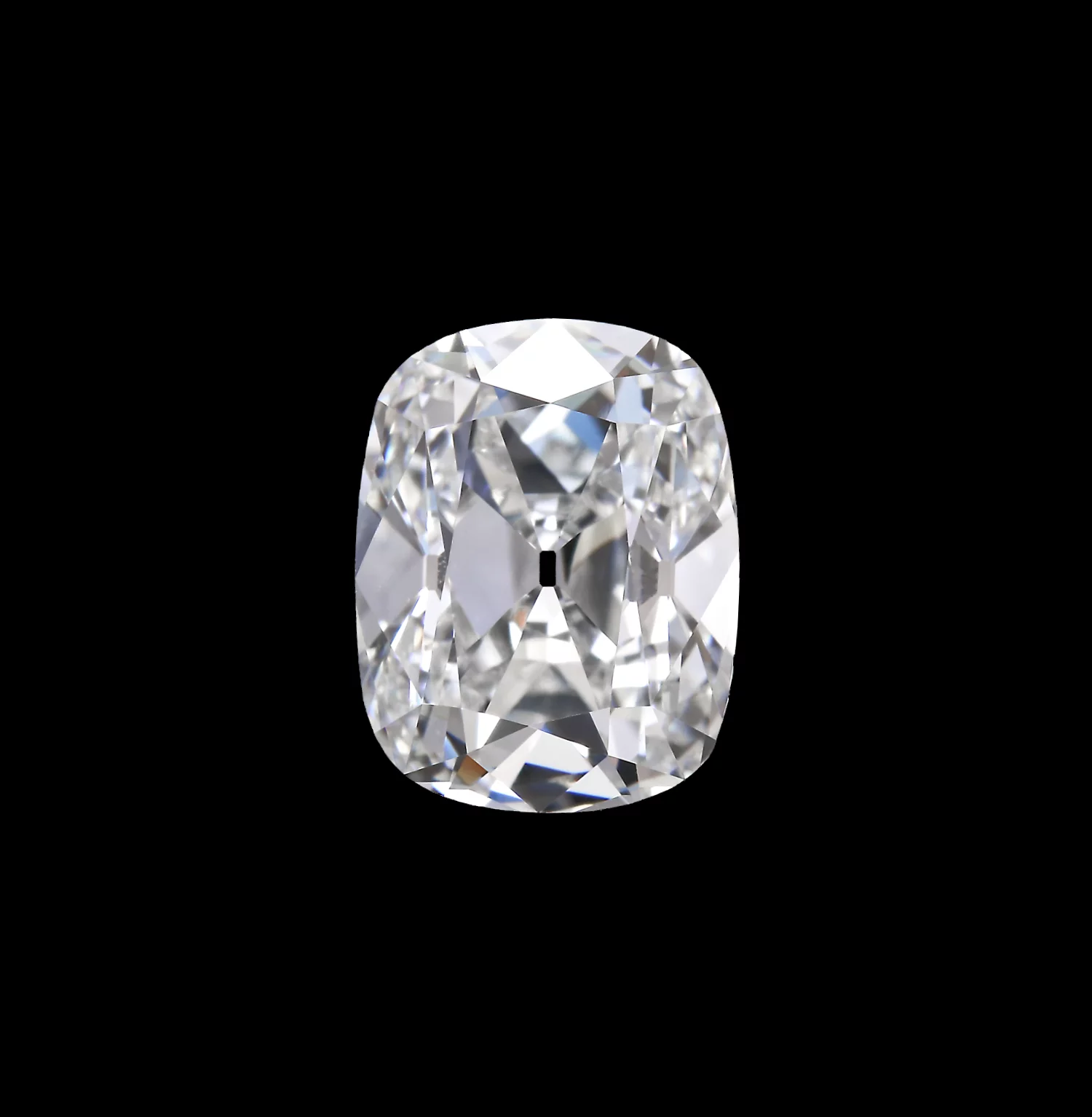
The pleasure of an old mine cushion begins with looking closely. A small table leaves room for the crown facets to show their shape, and a visible culet gives the centre a feature that can seem unfamiliar on a first encounter. Turn the stone slowly and the same facets take on quite different tones. A pale area may become a dark triangle, then brighten again as the viewing angle changes. That changing pattern is part of the subject explored in the original introduction above. A still photograph catches one moment; a short video helps you follow what happens next.
An old cutting style and an individual history
Historic names can invite a reader to imagine a long journey from the mine to the cutting wheel, then into a jewel. An individual stone needs its own evidence before that journey can be described. GIA explains that newly fashioned diamonds can also reproduce an old mine style, so a cushion outline and broad facets alone cannot establish a cutting date. A documented jewel, an earlier catalogue, an inscription or a reliable ownership record can contribute to the history of a particular piece. The cutting pattern belongs to the visual examination; the age and ownership story require a separate investigation.
For a closer study of the features mentioned in this introduction, continue with our article on open culets and the comparison between old mine and old European cuts. When choosing a stone, ask for a face-up view, a profile view and a slow movement under agreed lighting. The profile shows how the crown and pavilion occupy their space, while the moving view lets you watch the broad facets change. These are useful companions to the report when you want to understand the diamond itself.
Further reading: GIA's guide to old mine cut diamonds. The original introduction and its historical quotations are retained above; the photographic study and accompanying sections were added in October 2026.
See the details in a stone
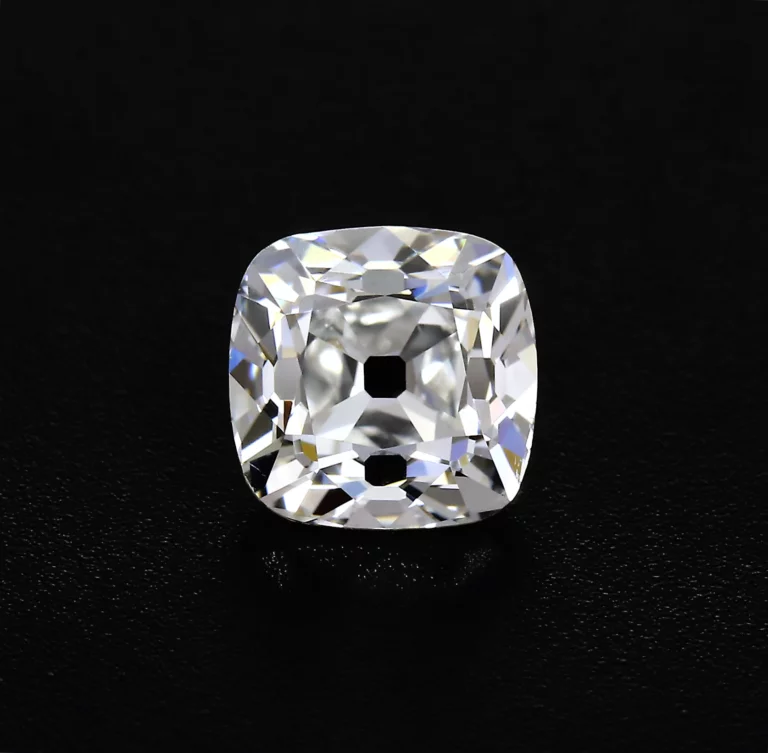
3.01 Ct. G VS2 Old Mine Cushion Brilliant
A near-square, 3.01 ct old mine cushion with a 51% table.
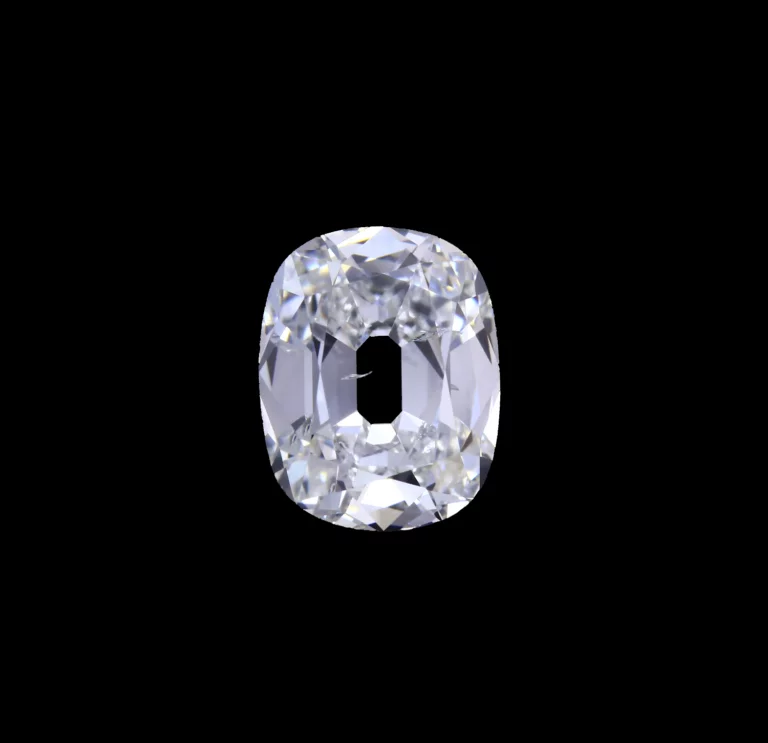
3.09 Ct. F SI2 Old Mine Cushion Brilliant
A 3.09 ct old mine cushion with a longer outline and 55.2% depth.