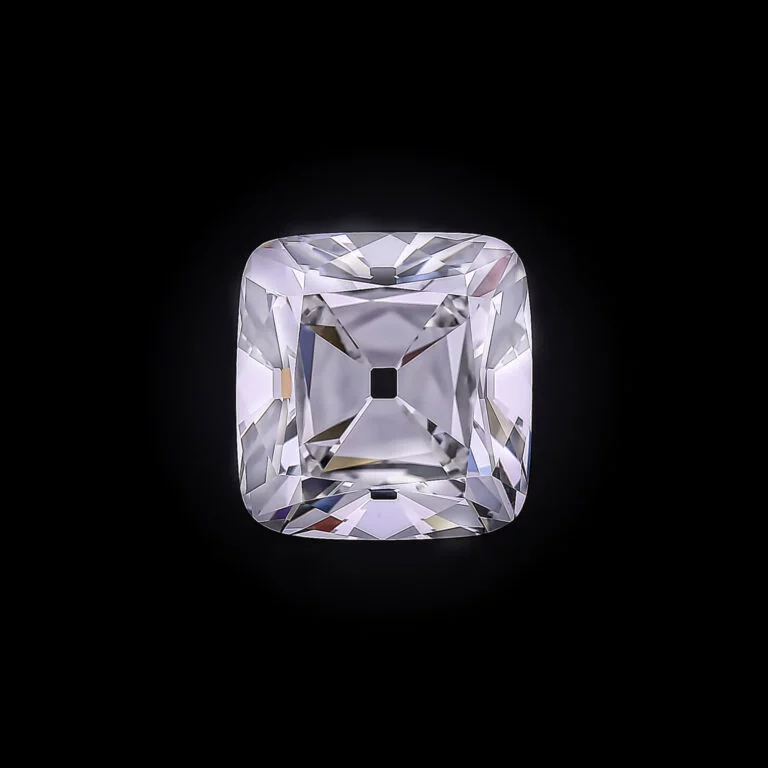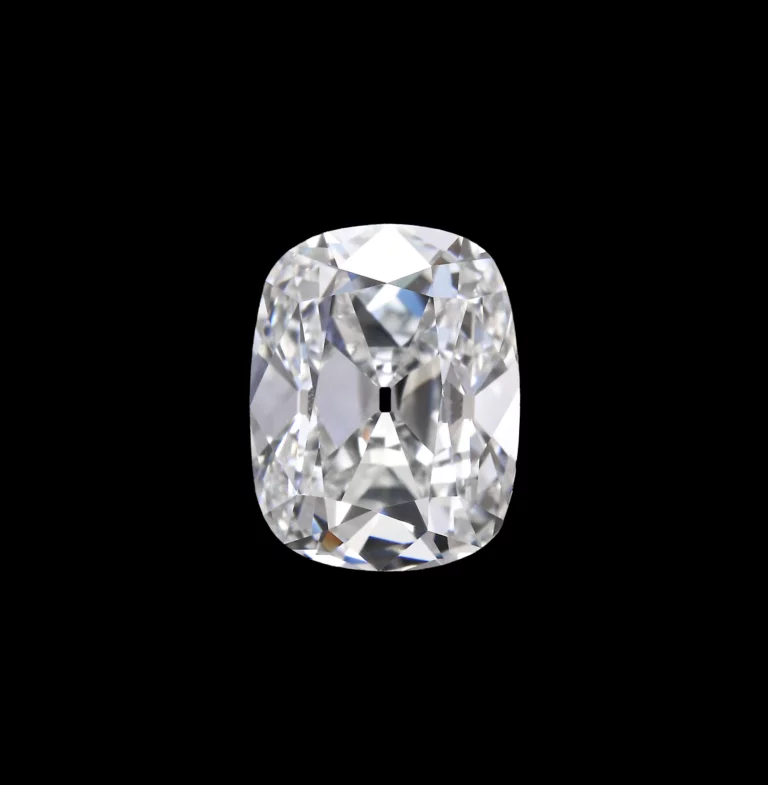
An Old Mine Brilliant entry on a diamond report describes the stone's cutting style. It does not give the date on which a cutter shaped it. That distinction matters because original eighteenth- and nineteenth-century old mine diamonds, later recuts, and newly cut stones with antique-style facets can look related face-up. A buyer can enjoy the style in any of them, but an assertion that a particular diamond is antique needs more evidence than a familiar silhouette.
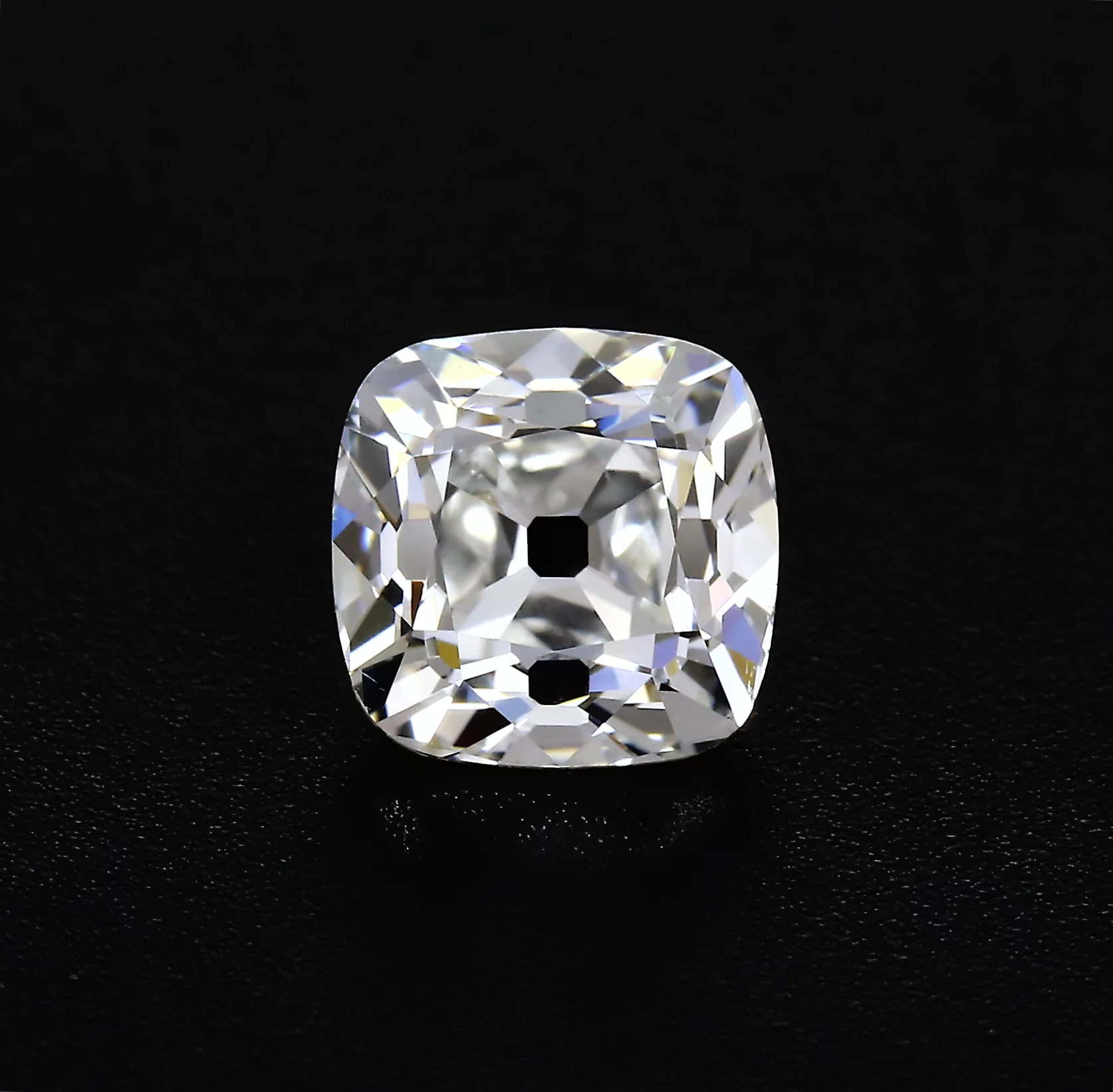
What the old mine style describes
GIA's old mine cut guide describes a soft, squarish outline, high crown, small table, deep pavilion, short lower-half facets and often a large culet. The cutting style was common from the early eighteenth to the late nineteenth century. Historic cutters worked with the form of the rough and the tools then available; retaining weight could leave unequal corners or an off-centre pattern. Those features help identify a visual family, but they are not timestamps etched into the diamond.
The modern trade also uses "antique cushion" more broadly for cushion-shaped stones with vintage-looking facet patterns. GIA's guide to historic shapes explains the overlap in language. A seller may use old mine, antique cushion, old cut or vintage style with different degrees of precision. Ask whether the phrase refers to facet architecture, a documented cutting period, or merely the ring design. The written description should answer that directly.
What a grading report can establish
A laboratory report can record the diamond's shape and cutting style, measurements, colour, clarity, finish and identifying characteristics. GIA's report-reading guide defines the shape-and-cutting-style field. Read that field exactly. "Old Mine Brilliant" is a useful observation about how the facets are arranged; "Cushion Brilliant" may describe another stone whose face-up pattern still feels antique to a viewer. Neither entry, by itself, establishes when or where cutting took place.
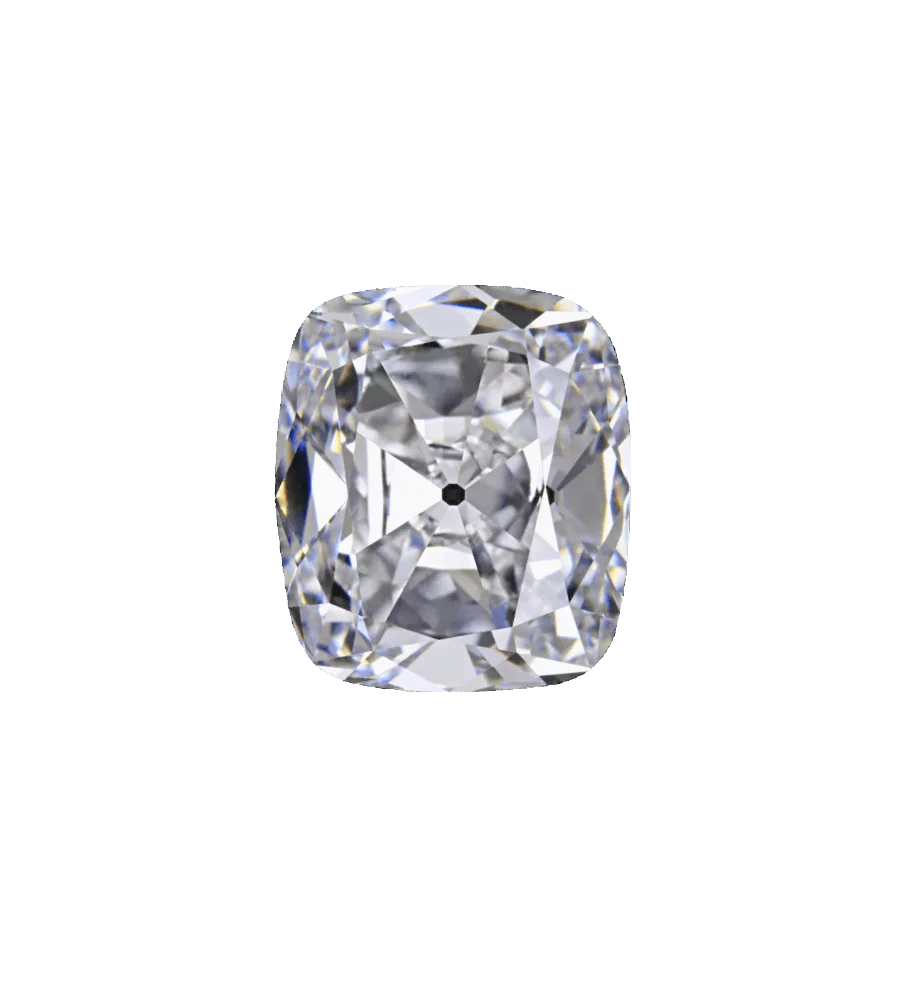
Matching the report to the diamond remains essential. Confirm the report number if inscribed and compare listed dimensions, diagram and visible features with the actual stone. A report issued recently can describe an older diamond, while an old-looking cut can be fashioned recently. The report date tells you when the lab examined the submitted stone, not when it first acquired its facets.
What can support an antique attribution
A reliable chain of documentation can take the argument further: a dated invoice, a historic photograph showing the same jewel, an auction record with identifying measurements, or family records that can be tied to the object. An original period mounting may offer context through its construction and hallmarks. A specialist must still ask whether the centre stone has ever been replaced or recut. Mounting and diamond can have different histories.
Surface wear can be a clue, but it is ambiguous. Abrasion on a facet junction may reflect many years of use, poor handling during a shorter period, or a later intervention. Conversely, a careful repolish can erase wear from a genuinely old stone. A thin girdle or uneven outline can fit historical practice yet be copied intentionally. Assess the entire pattern of evidence, keeping a record of the limits of each clue.
The wording on an appraisal deserves the same care. "Antique-style" says something about appearance. "Antique diamond" asserts age. "Old Mine Brilliant" may be the laboratory's description of facet arrangement. If a seller moves between these phrases, ask them to choose the one they can support for this particular stone. A precise description protects the charm of the cut from a historical story that the evidence cannot bear.
Questions worth putting to the seller
Ask for the exact lab report and the seller's basis for dating the stone. If the claim rests on the ring, ask whether the setting is original to the diamond and how that connection was established. Request clear photographs of the crown, pavilion, girdle and any damage or repair. If a historical attribution affects the price or your decision, ask for it in writing with the supporting documents and any important uncertainty stated plainly.
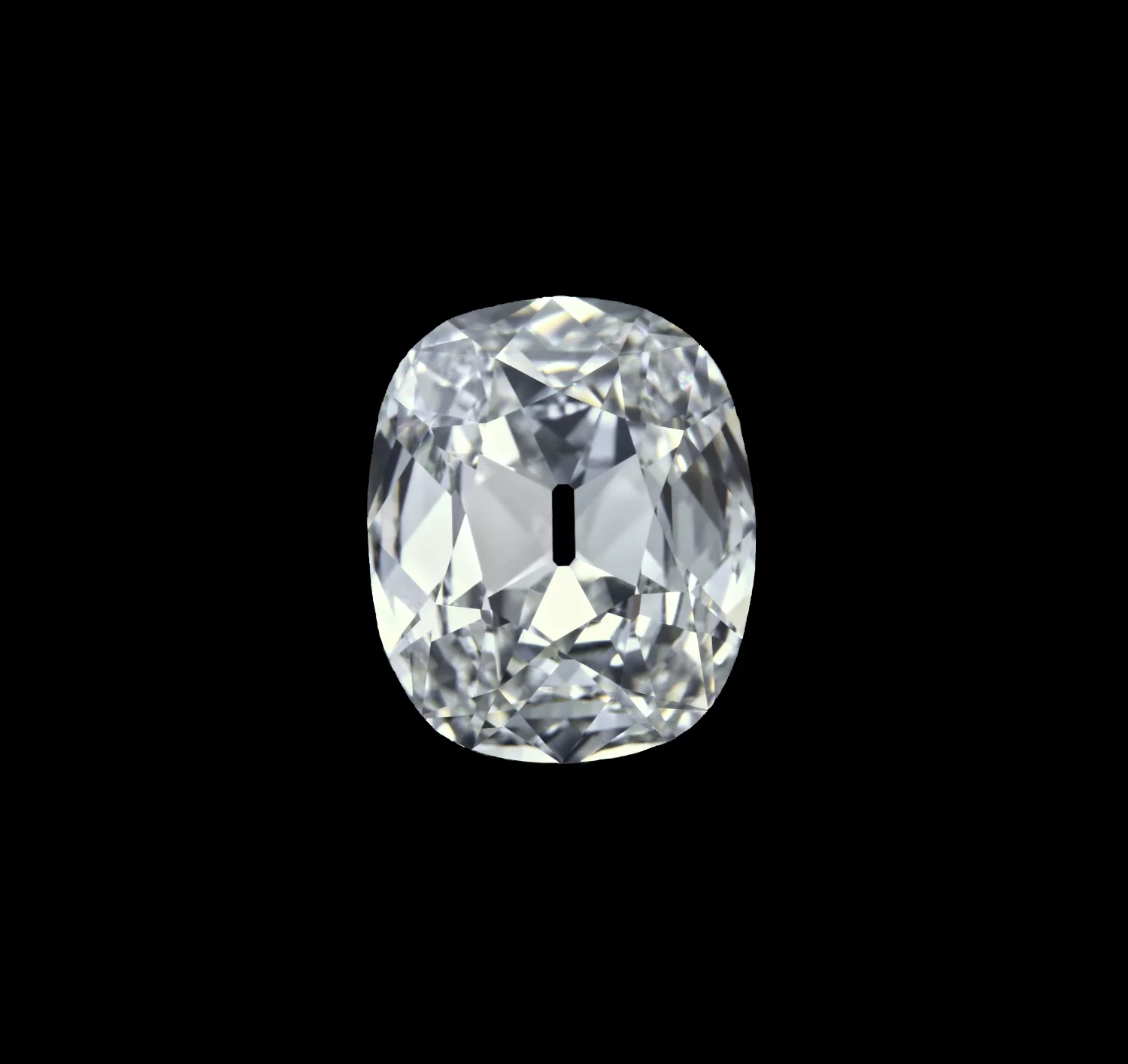
The Old Mine Cushion guide and the IC-05912 stone page let you start with observable shape, facets and measurements. Those observations are enjoyable in their own right. If you are seeking an original antique stone specifically, let the documentary evidence carry the date claim, and let the photograph show you the cut.
If the ring and diamond have travelled together for generations, preserve the evidence before any reset. Photograph the mounting from all sides, record inscriptions and hallmarks, and keep dated correspondence with the invoice. Ask the jeweller to note whether the diamond was removed and whether the girdle shows signs of earlier work. These records may not answer every historical question, but they keep later owners from having to reconstruct the relationship between stone and setting from memory alone.