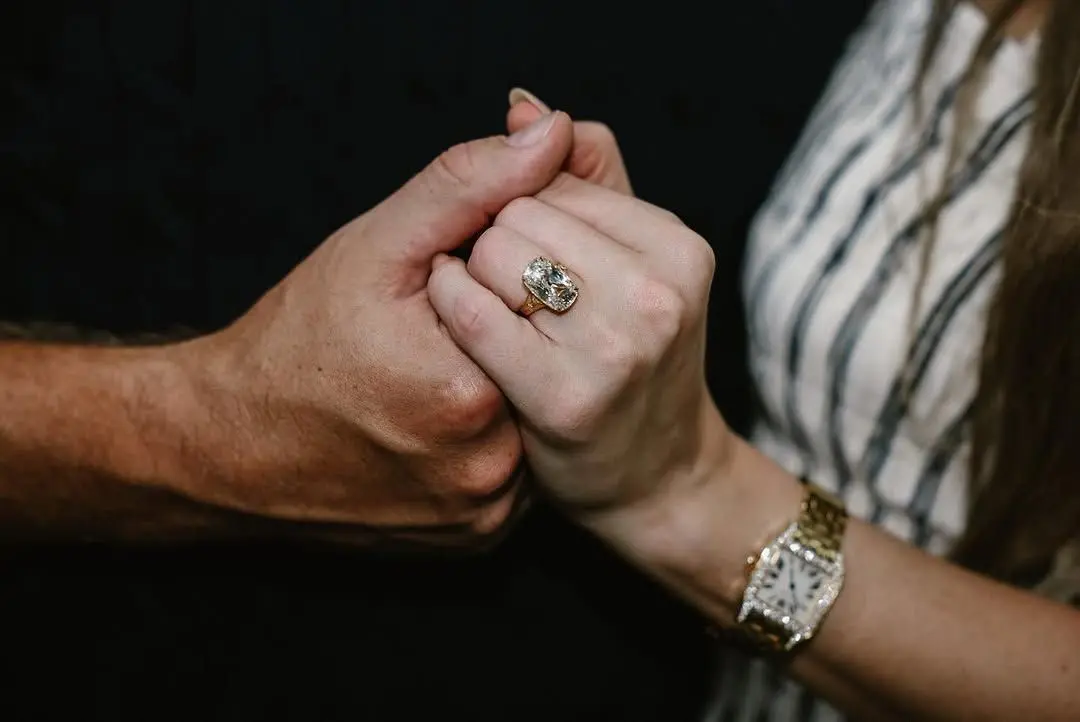
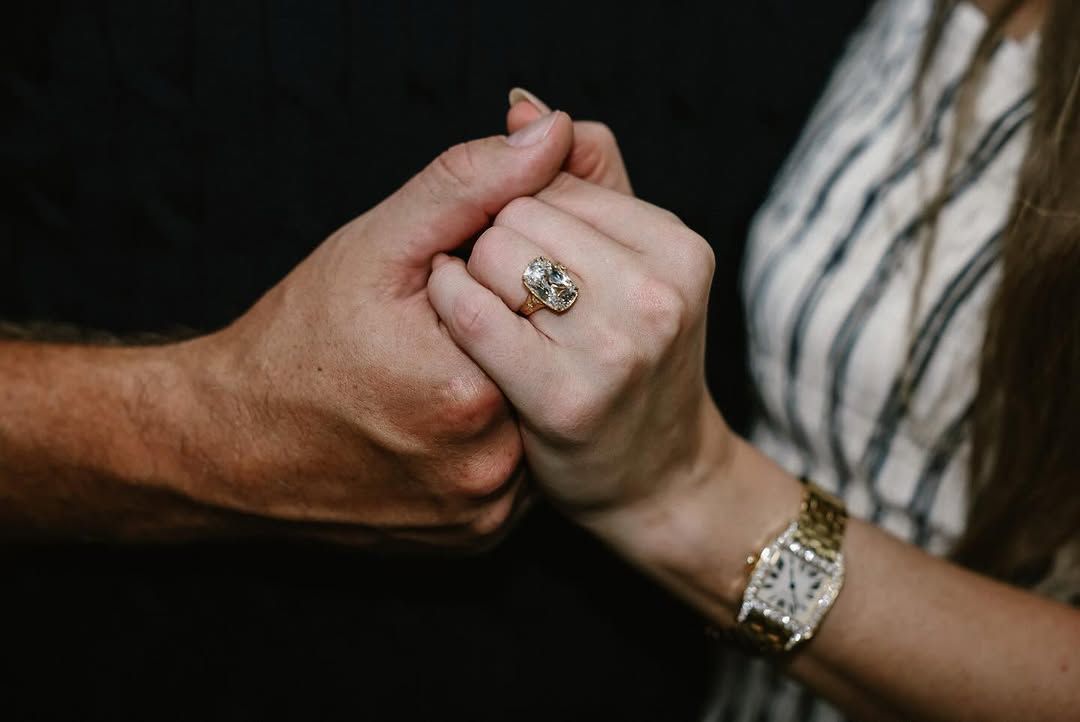
Taylor Swift's engagement ring places a broad-faced old mine diamond inside warm yellow gold worked with hand engraving. When she and Travis Kelce announced their engagement in August 2025, the photographs brought a historic cutting style to millions of screens. Swift's publicist identified the centre stone as an old mine brilliant cut for the Associated Press. Kindred Lubeck, founder of Artifex Fine Jewelry, designed the ring. The close-up is attractive because the diamond, metal border and engraved band speak the same visual language without looking like a period reproduction.
The cut has a history longer than the news cycle
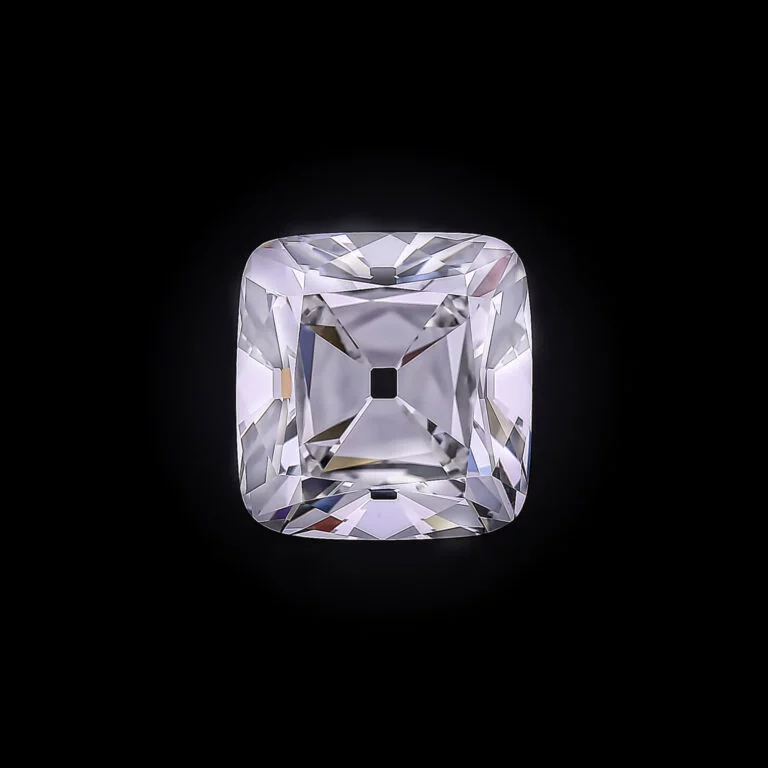
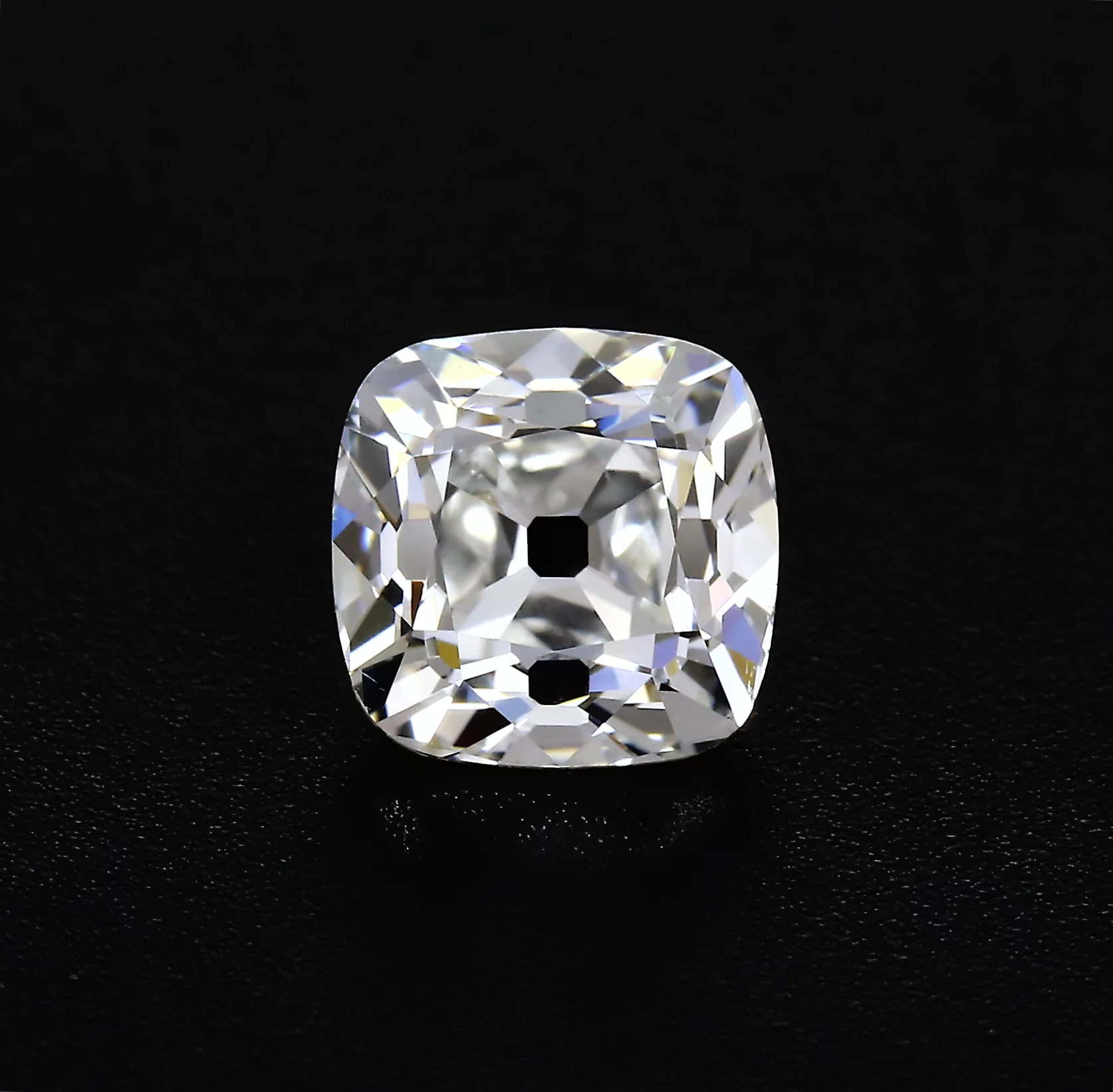
Old mine cushions belong to a family of early brilliant cuts associated especially with the eighteenth and nineteenth centuries. GIA describes the typical combination: a softly square or cushion outline, high crown, smaller table, deeper pavilion and a visible culet. The facets often look broad rather than tightly patterned. A cutter worked with the shape of the rough and the tools available, so two stones of the same weight can have different shoulders, corner shapes and face-up light. A modern cutter can also make a stone in an old mine style. The cut name alone cannot date Swift’s particular diamond.
The name describes a cut, not necessarily a cutting date. A newly fashioned diamond can follow old mine proportions, and an antique diamond may have been reset many times. Swift's public ring details identify the style but do not establish the individual stone's age. The stronger visual story lies in its broad facets and softened shape, surrounded by Lubeck's crafted gold rather than a stock mounting.
Read the centre before judging the sparkle
An open culet is a polished facet at the bottom of the pavilion. Viewed through the table, it may appear as a small central shape or opening. Around it, larger facets move from light to dark as the diamond tilts. On an old mine cushion the sequence can feel slower than the quick, fine scintillation associated with many contemporary cuts. GIA's guide describes the structural features; the pleasure of a particular stone must still be tested in motion and in several lights.
In a close photograph, the broad pattern can look almost architectural: a bright plane beside a darker one, with the gold tracing an outer boundary. A loose old mine stone tells the next part of the story. As it turns, the same central facet can brighten, darken and release a small flash of colour. A video of an Imperial study stone lets the eye follow that motion without confusing it with the ring's reflections or the camera's exposure.
Outline changes how a ring reads
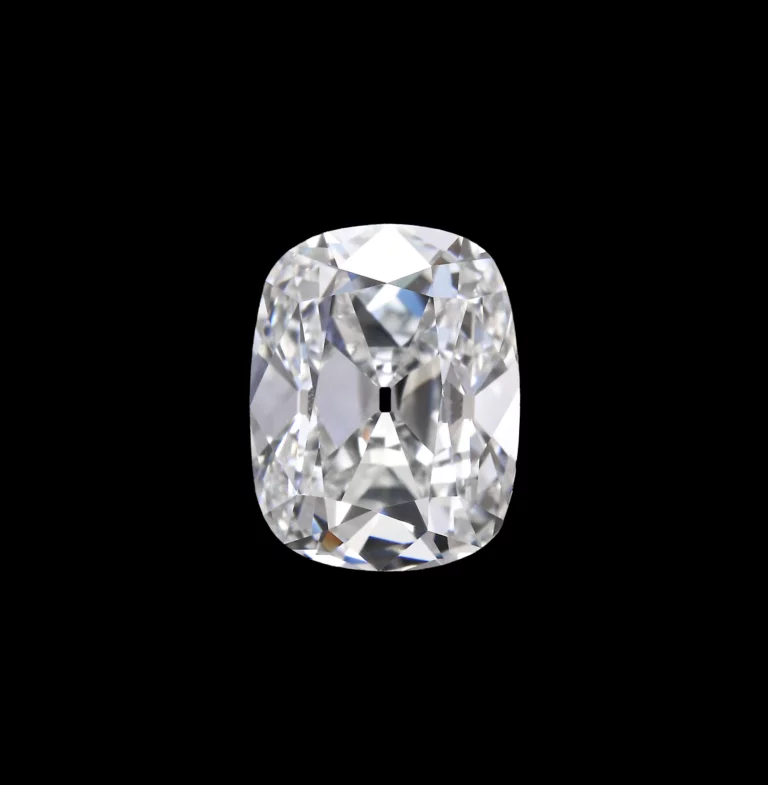
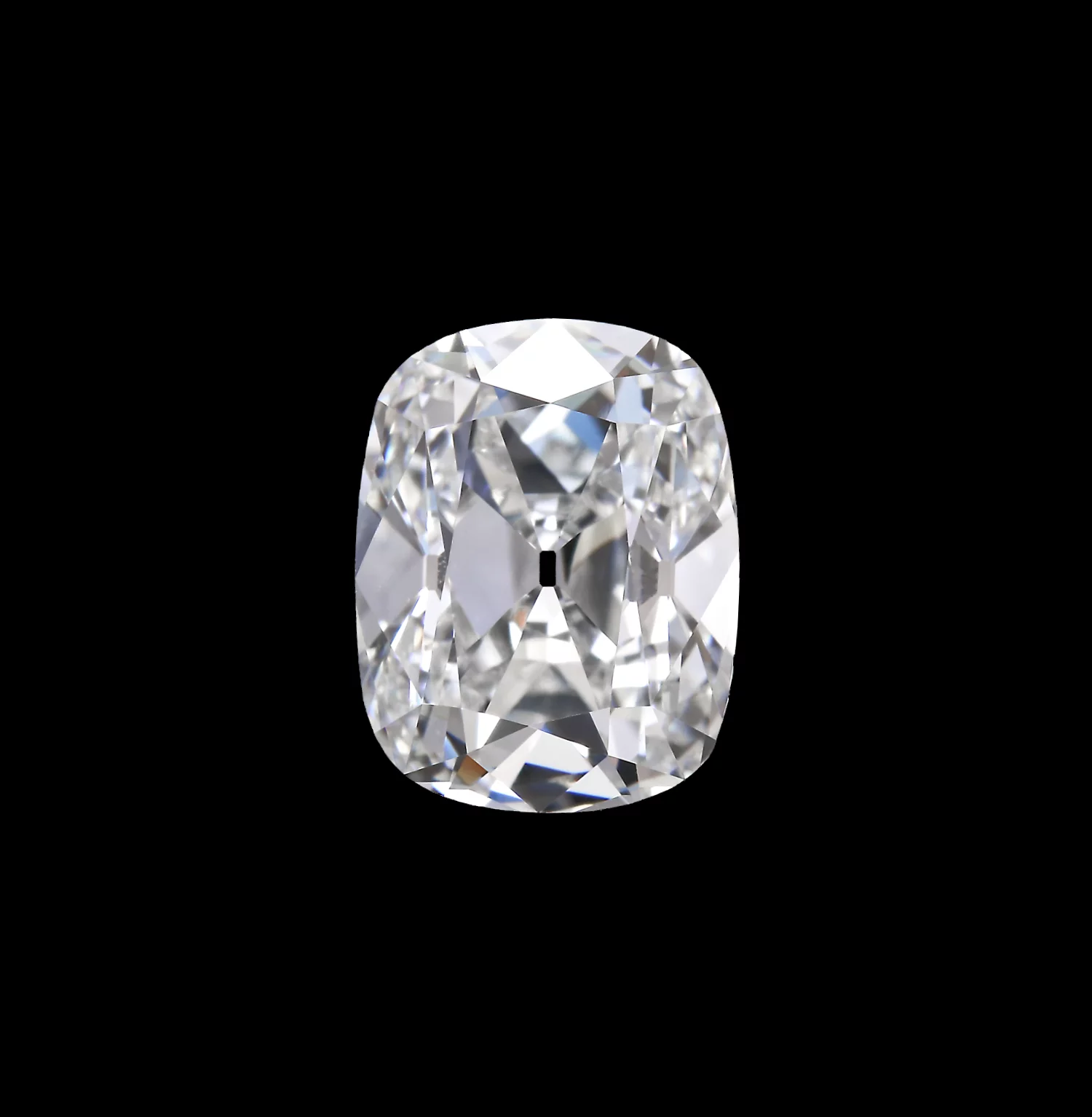
The word “cushion” covers many silhouettes. The 3.01 ct Imperial example measures 8.24 x 8.05 mm, a nearly square face. A separate 5.03 ct old mine cushion measures 11.72 x 8.91 mm, making its length much more prominent. These are different diamonds, and neither is a replica of Swift’s. The rounded corners draw the eye around the compact stone; the elongated one sends it along a longer axis. That change in outline affects how a band appears under the diamond before any difference in setting style enters the picture.
The maker and the metalwork matter
AP identified Kindred Lubeck of Artifex Fine Jewelry as the designer. Vogue later described the ring's hand-engraved yellow-gold band in an interview about Lubeck's bridal work. Engraving gives the surface a changing texture beside the larger flashes of the diamond. The gold around the stone defines its visible border and influences how high it sits. These are the decisions that make the setting recognizable even when the diamond's report details are private.
On another old mine diamond, the design would have to begin again with that stone's own corners, girdle and profile. A thin place at the edge calls for care. An open culet needs clearance. A high crown can rise above the metal in a way a flat photograph barely reveals. Lubeck's ring works as inspiration for a relationship between cut and goldsmithing, rather than a fixed set of dimensions to copy.
Finding a personal version of the idea
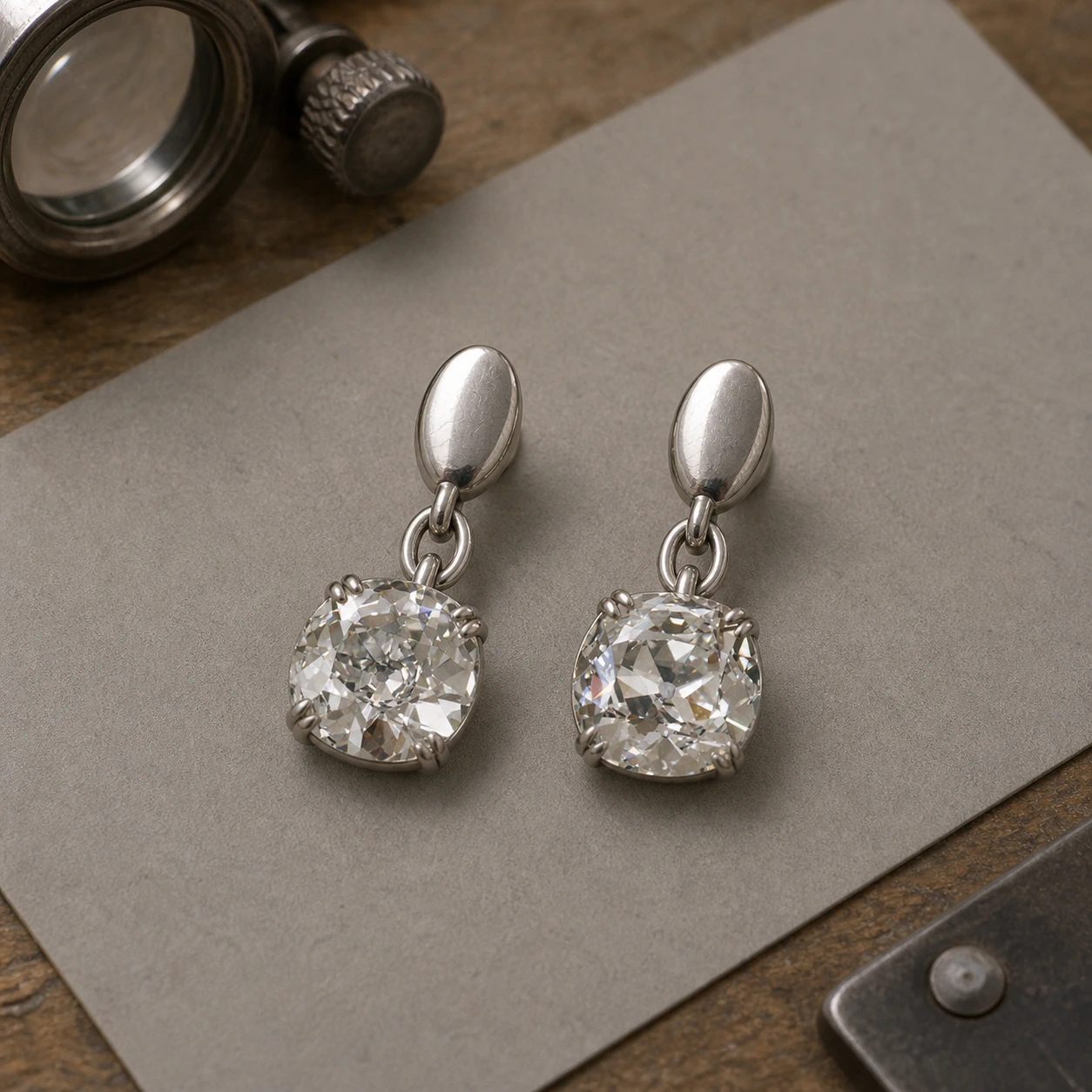
A collector drawn to the ring can begin by choosing between a compact or elongated outline, then watch how individual stones move. Some show a strong central culet; others keep it quiet. Crown height, facet size and the sweep of the shoulders make each cushion distinct. Once the stone is chosen, the goldsmith can draw the metal around its actual edge and decide where engraving will catch light without competing with the diamond.
For a historic stone, a condition review should precede the setting. For a newly cut old mine style, the same face-up and side views still matter. The age of Swift's diamond and its report details have not been made public in the cited accounts, so the photographs are a design reference rather than a specification. Imperial's old mine cushion guide follows the cut from rough-inspired outline to moving light.
Further reading
Associated Press on the ring and designer; Vogue interview on Lubeck's bridal work; GIA guide to old mine cuts.