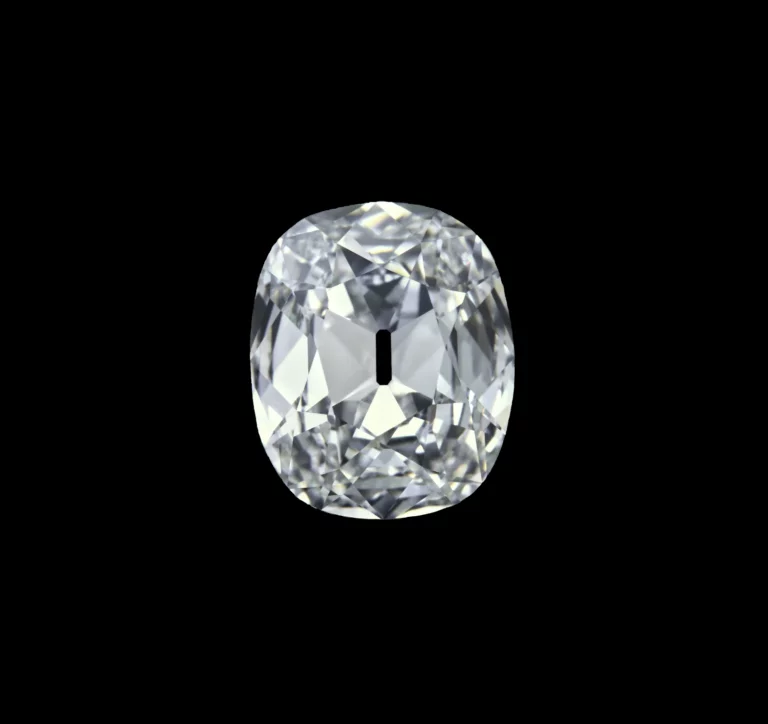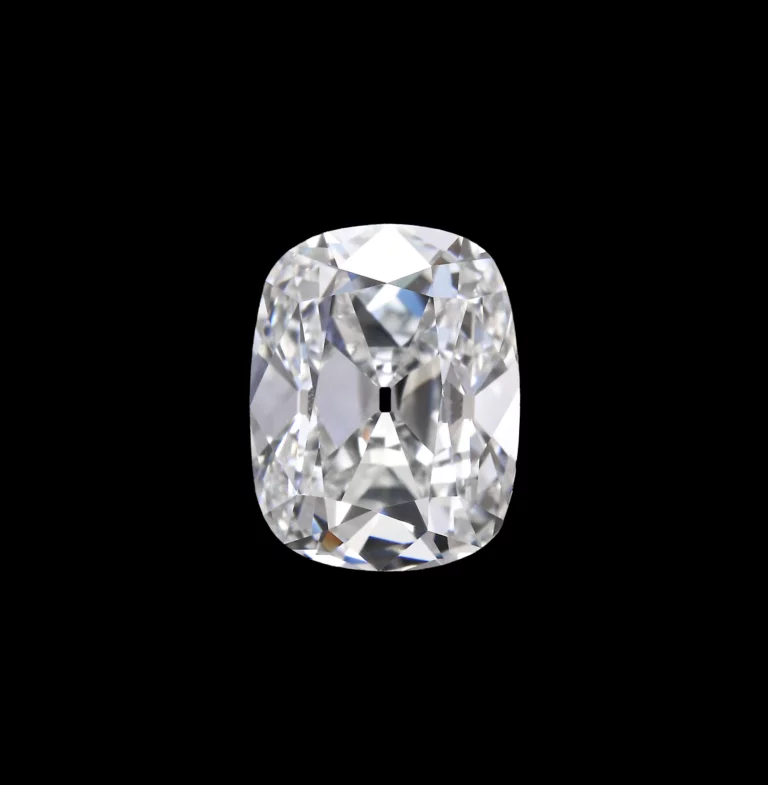
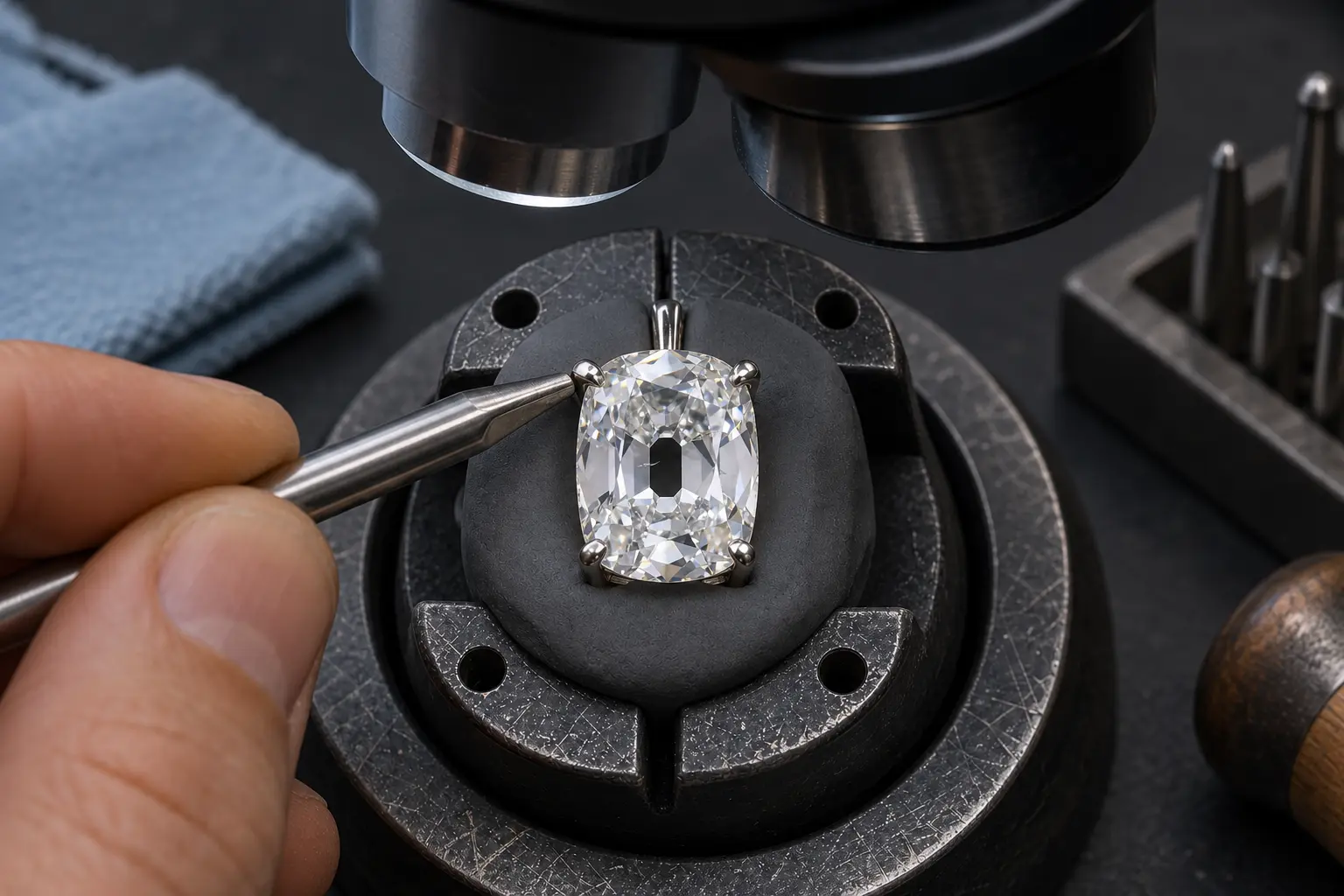
An elongated old mine diamond gives a ring a strong direction. Its long axis can follow the finger or cross it, while rounded corners, a high crown and a deep pavilion set the practical limits of the mounting. The choice between prongs and a bezel starts with the diamond's actual edge, not a drawing of an ideal cushion. A setter needs to see where the girdle is thin, whether a corner is chipped, and how much room the pavilion and culet require below.
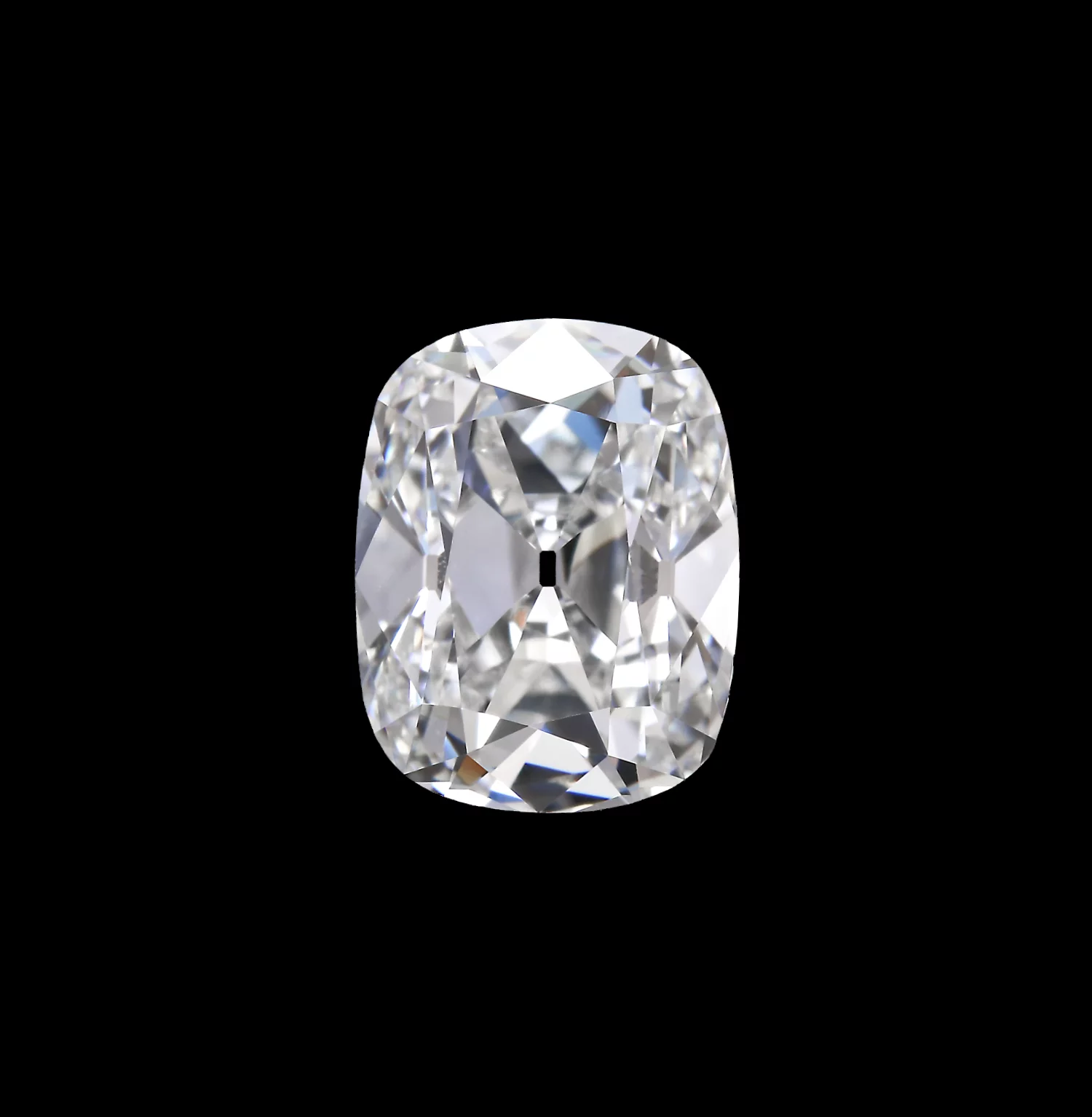
Map the stone before choosing metal
GIA describes old mine cuts as often having very thin girdle sections. Its guide also notes the high crown, deep pavilion and open culet common in the style. Those features can vary around one stone. Ask for an examination that marks each vulnerable segment, natural, abrasion or old repair on an oriented image. The setter can then decide where metal can safely touch the diamond and whether any edge requires more shelter.
The top view determines the ring's outline, but the profile determines its clearance. A deep pavilion may need a higher gallery. An open culet should not touch a bridge or finger when the ring is worn. The setter should examine the diamond at its intended orientation, draw the seats and check how the head meets the shank before fabrication. A low-looking rendering may need more height in metal to protect the point and allow the stone to sit level.
What prongs can show and protect
Prongs expose much of the outline and side view. They can make the high crown of an old mine diamond easy to see, but their positions must follow the actual corners and straight sections. Four corner prongs may be enough for one stone; a longer outline or vulnerable edge may call for a different arrangement. Extra prongs do not automatically make a ring safer. Their seats, thickness, alignment and future ability to be serviced all matter.
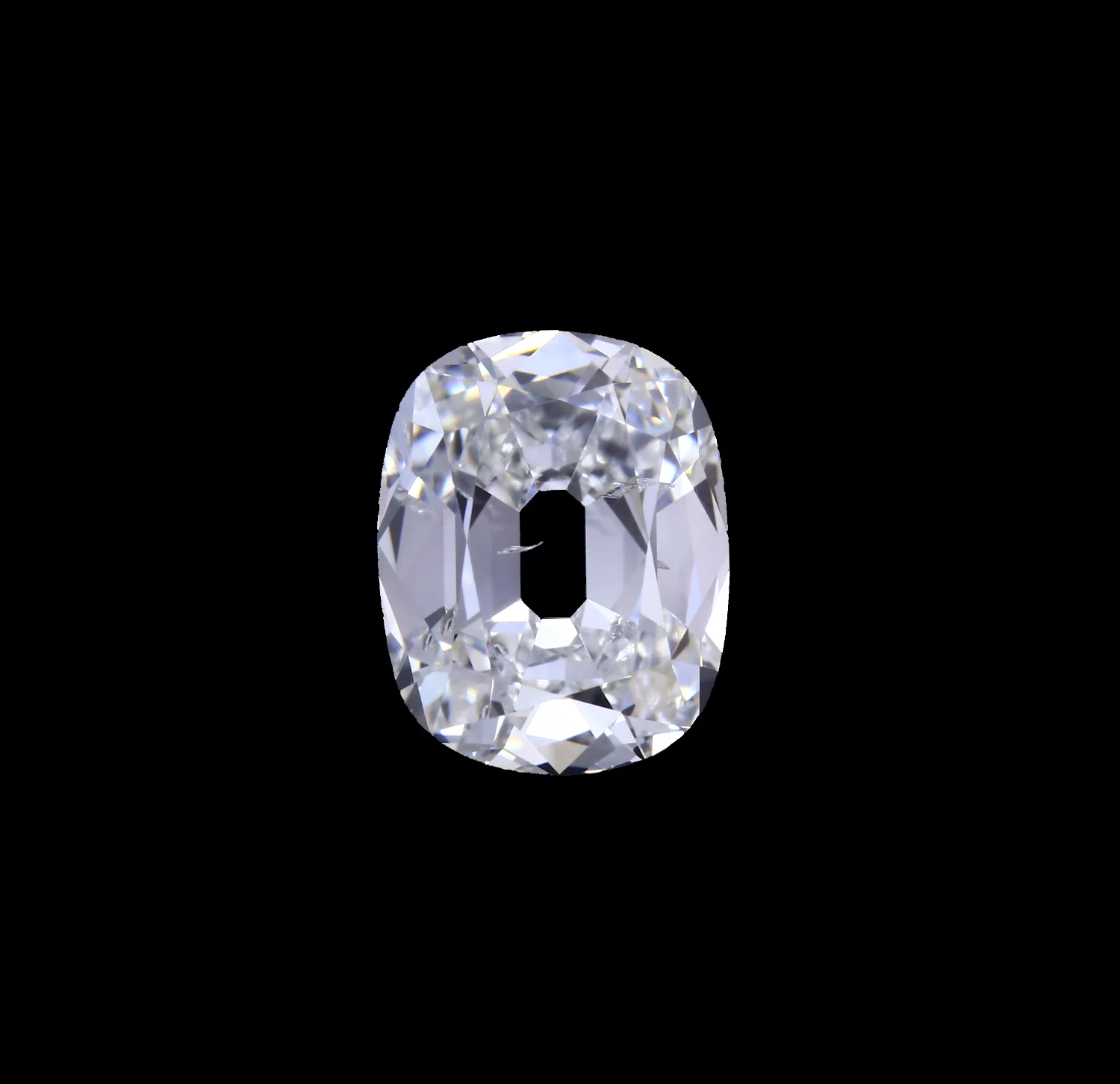
GIA's ring-protection guide explains how exposed girdle sections can be more vulnerable and how additional prongs or a bezel can add coverage. The best position for that coverage depends on the individual stone. A prong placed over a chip without proper planning can hide the problem without solving it. Ask to see the condition map and the proposed seat positions together.
What a bezel changes
A bezel wraps metal around the perimeter, covering more girdle and smoothing the ring's outer edge. It can be attractive for a diamond with thin girdle intervals, yet the metal must be fitted to a potentially uneven cushion outline. A heavy, uniform rim could conceal the curved shoulders that attracted you to the stone. A finely judged bezel can follow those curves while protecting them; its feasibility depends on the edge condition and the setter's workmanship.
Because a bezel covers part of the girdle, request photographs and measurements before setting. Those records will help future repair, appraisal and identification. Ask how the jeweller will clean beneath the stone and whether the design gives access without forcing metal against vulnerable points. If a client wants more visible profile, a partial bezel or carefully placed prongs may be worth discussing after the stone has been examined.
The choice also changes how the long outline reads. A continuous rim draws a second line around the diamond; prongs punctuate the corners and leave the curves open. Ask for both options drawn to the same scale with the actual measurements. Compare how much metal appears at the short ends, where elongation is easiest to exaggerate or mute. The rendering should show real seat depth and girdle coverage, not a decorative line around an imaginary stone.
Keep the culet visible where you want it
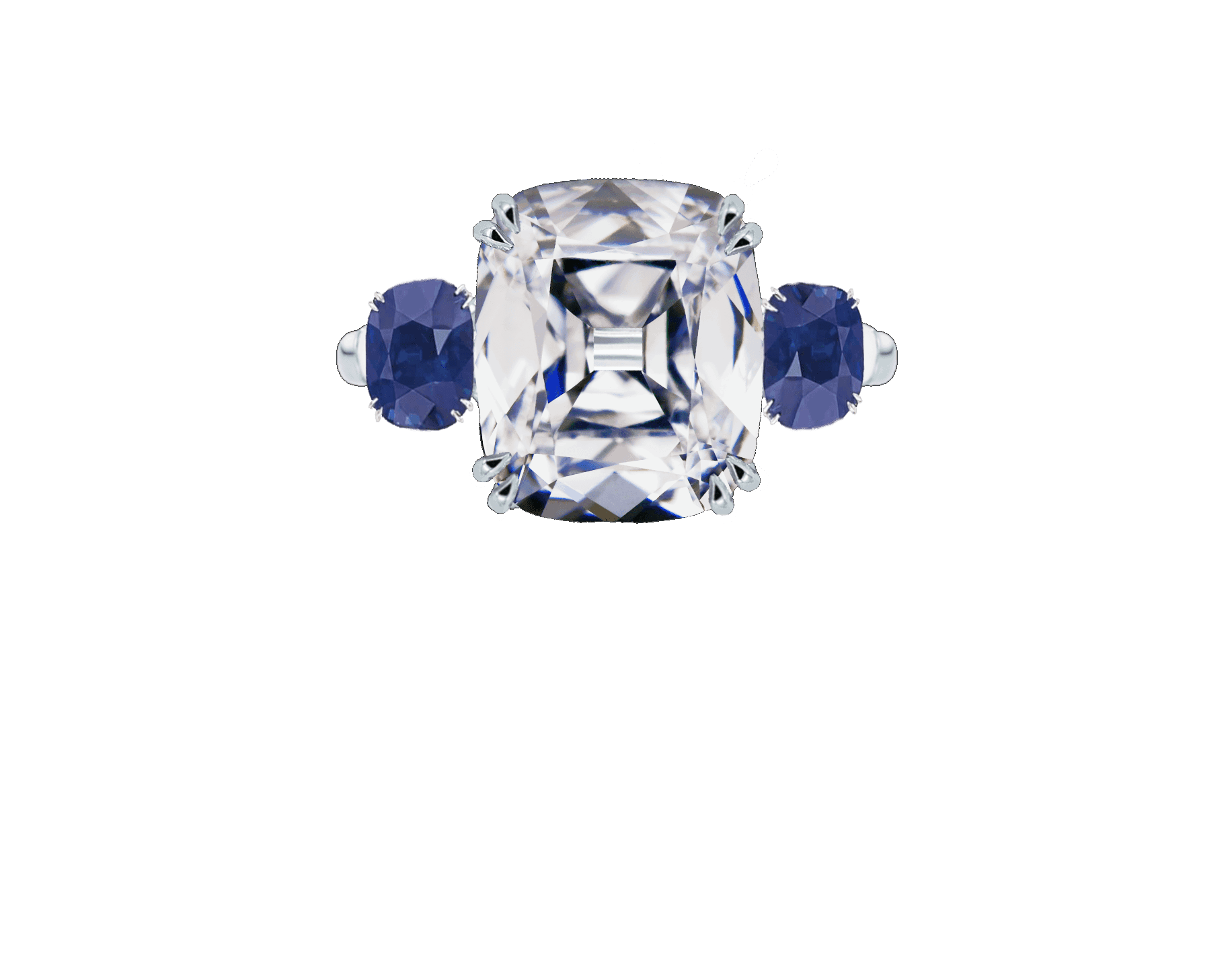
The open culet is part of the old mine face-up pattern. It can appear to shift or disappear as the angle changes, and a dark backing or a metal element placed close beneath it may alter what the eye sees. Ask for the stone to be viewed in a temporary setting or model with the planned gallery before the final build when the central appearance matters to you. Side light, skin tone and the amount of metal beneath the pavilion can change the view without changing the diamond.
The Tiffany Setting history explains how a raised prong head became familiar for round brilliants. An elongated old mine needs its own solution to corner support and balance. Its long axis, weight distribution and wearer's hand all affect how the head meets the shank. A careful drawing should show top and side views, the prong or bezel contact points, and the clearance under the pavilion.
For a concrete starting point, review the IC-06215 stone page and request a current condition examination before commissioning a setting. The finished design should be approved against that diamond's real measurements and edge, with the intended culet view checked in the proposed gallery.