In 1886 Charles Lewis Tiffany introduced a ring that lifted a round brilliant diamond above the band on six slender prongs. From the side, the diamond sat visibly apart from the shank; from above, the metal receded. Tiffany & Co. still describes the Tiffany Setting as the design that made the raised solitaire its signature. The change seems familiar now because so many later rings borrowed the arrangement. Its importance is easiest to see beside the lower, more heavily worked mountings common in the nineteenth century.
Why the six-prong head looked new
Tiffany's own heritage timeline dates the design to 1886. Its collection history describes a diamond raised above the band at a time when many rings placed stones lower amid more ornamental metal. The six points of contact created a fine crown around the stone. A visitor seeing the ring in profile could understand the engineering immediately: prongs held the girdle while leaving the side of the diamond in view.
The appeal did not depend on a large amount of ornament. The narrow shank, elevated head and round brilliant formed one clear silhouette. Light could reach the stone from more directions, although no setting can repair a diamond's own optical limitations. The practical achievement was visual restraint married to a serviceable way of holding a round stone. Prong placement, seat cutting and metal quality remained as important as the number six.
The name has a specific owner
The Tiffany Setting is a named Tiffany & Co. design. A ring described as "Tiffany-style" in ordinary retail language might use a raised six-prong head without having been made by Tiffany. For a signed ring, ask a qualified specialist to examine the marks and construction and review the accompanying documentation. A resemblance in silhouette cannot establish maker, date or authenticity. This Imperial Cushions article is a history and setting discussion; it is not a Tiffany product listing or an affiliation claim.
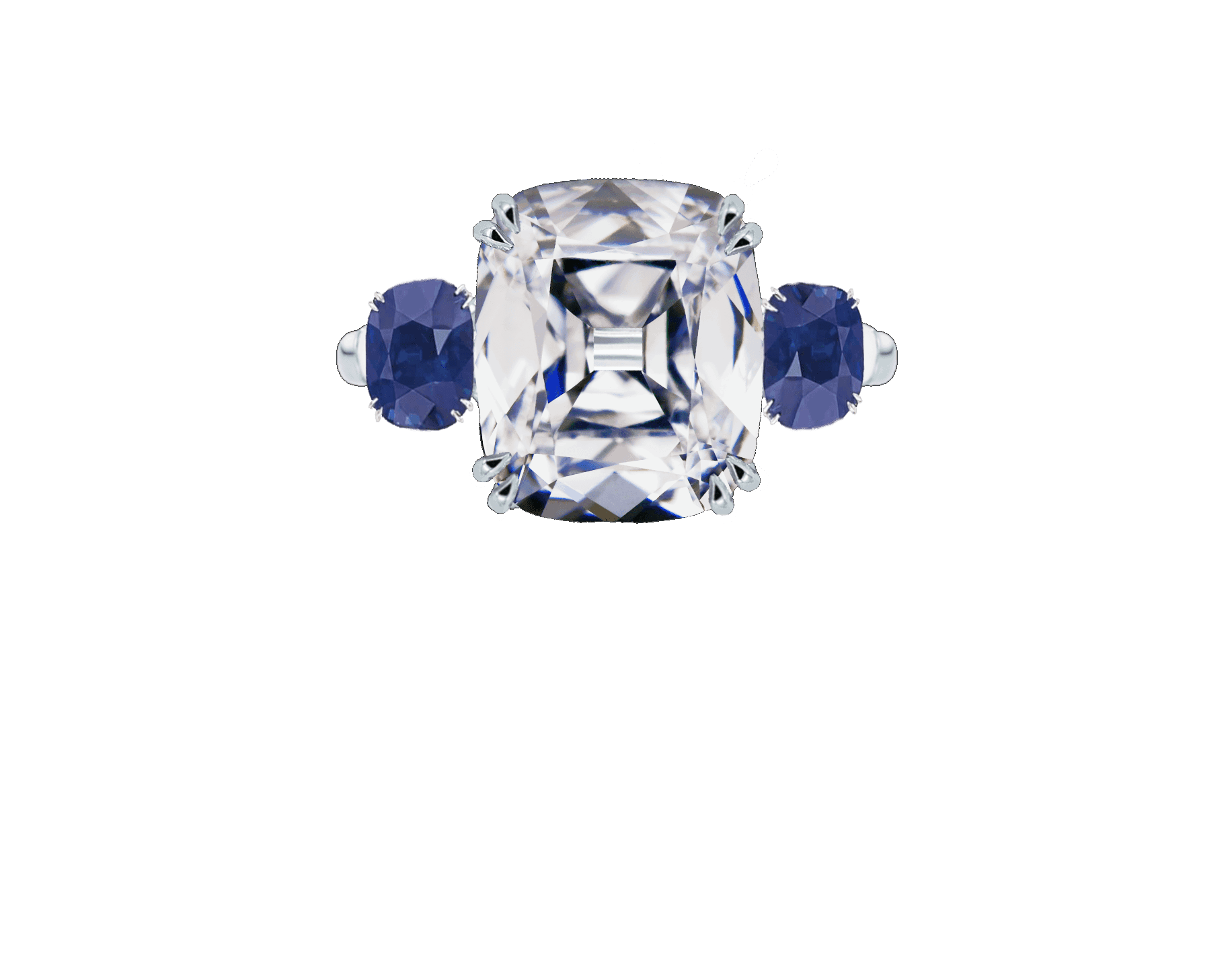
The distinction becomes clearer once the diamond shape changes. Tiffany's original concept centred on the round brilliant. An old European round can share some of that geometry, but its crown, pavilion and girdle still need to be measured. A cushion, with rounded corners and perhaps an uneven outline, calls for a head designed around its actual perimeter. Copying six equally spaced round-diamond prongs onto a different shape can leave the wrong areas exposed or force the setter to compromise the seats.
Antique diamonds call for a different drawing
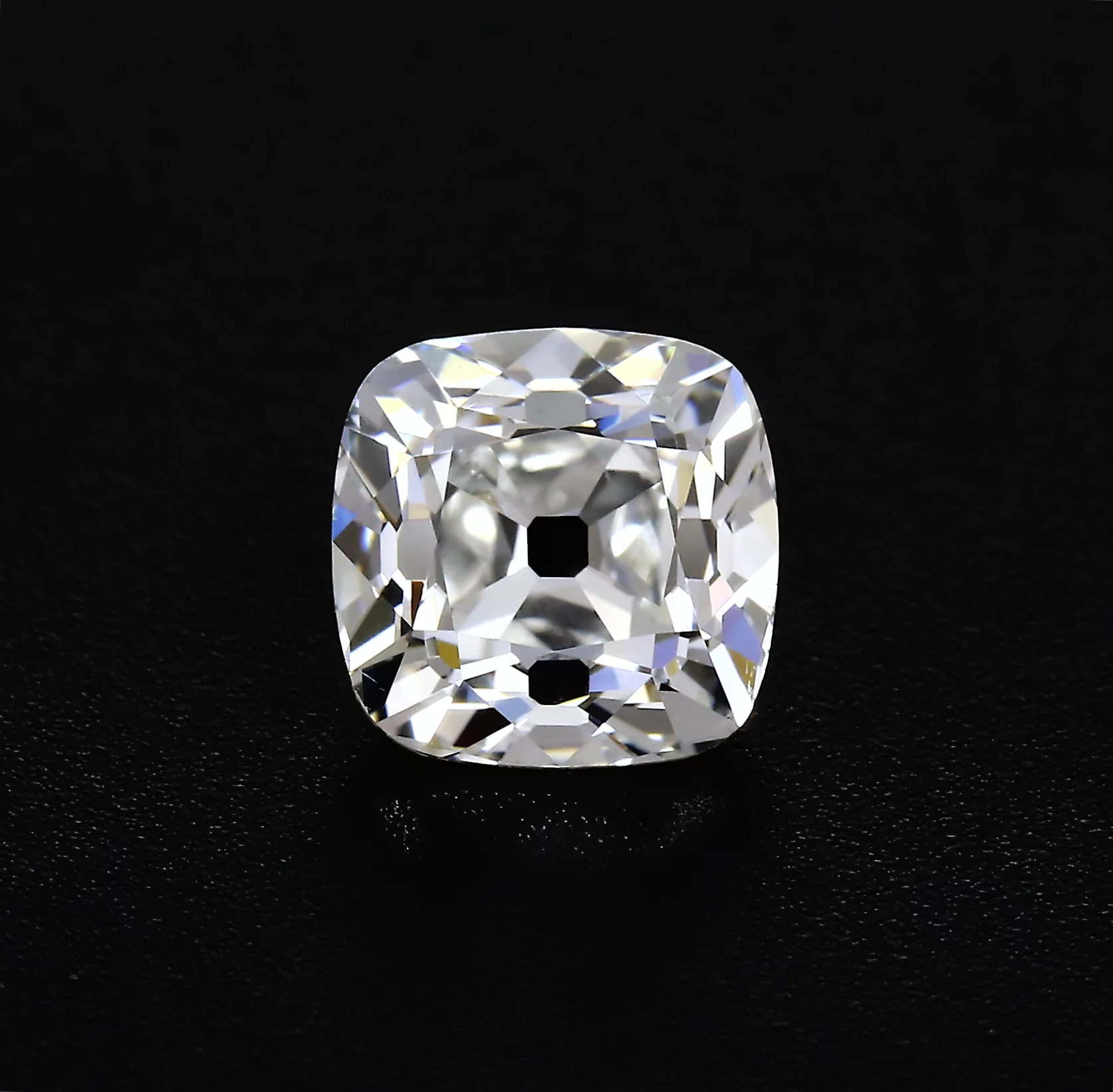
An old mine cushion can have a high crown, deep pavilion and an open culet. Its girdle may vary greatly in thickness. Before selecting prongs, the setter should examine thin sections, chips, naturals and the positions where metal can safely bear on the stone. The open culet also needs clearance below; a low gallery that looks elegant on paper may put the pavilion too close to metal. GIA's ring-protection advice explains how prongs and bezels affect exposure, while its antique-ring guide calls attention to worn settings.
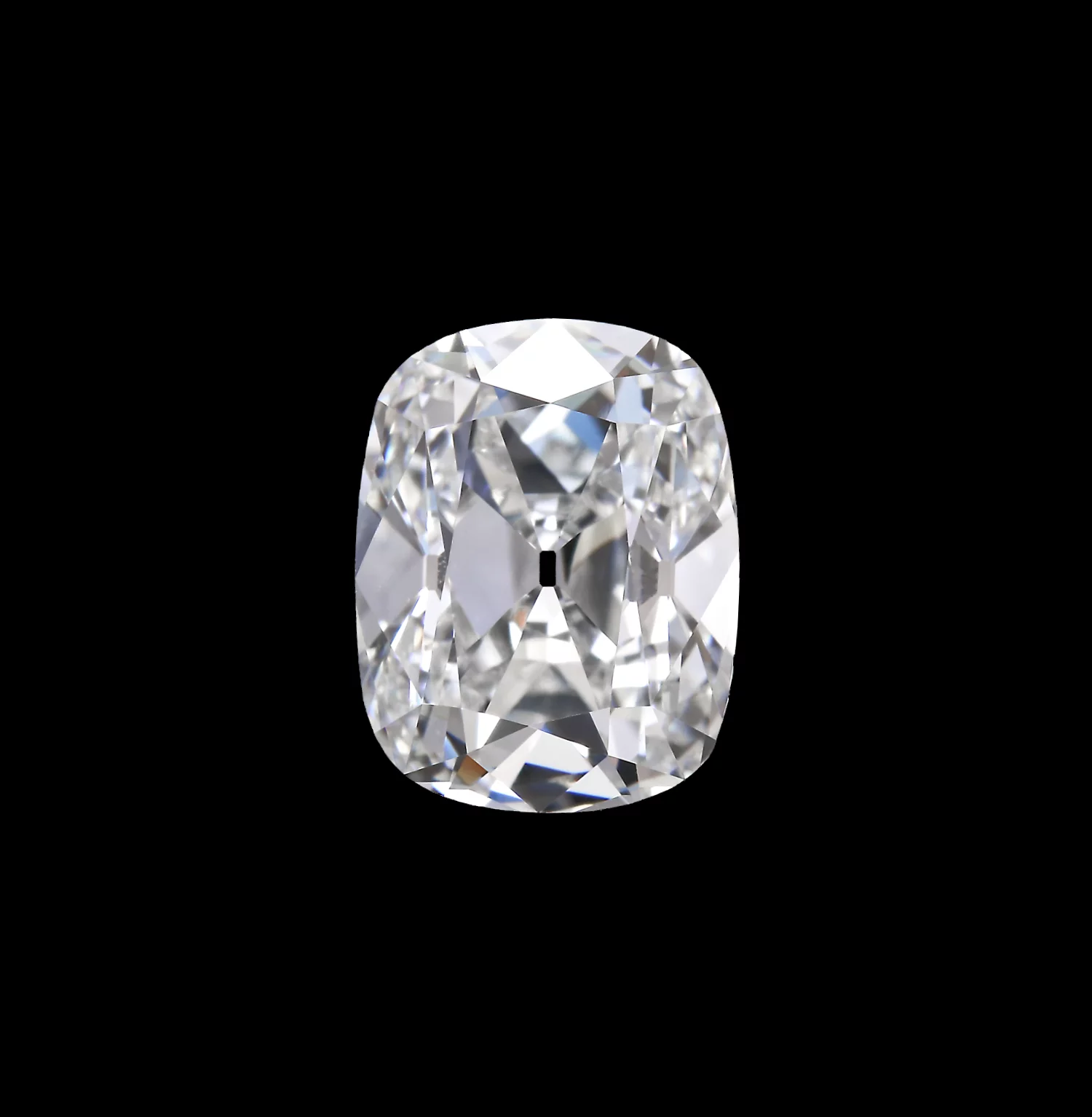
An elongated stone makes the design problem still more visible. IC-06215 measures 11.72 × 8.91 mm. If its long axis runs with the finger, the head must support both ends and keep the ring balanced during wear. If the stone is set across the finger, the shank and gallery require a different distribution of support. The decision belongs to the individual diamond and its wearer, not to a fixed prong count borrowed from a round solitaire.
Preservation changes the brief
An original antique mounting can be as significant as its centre stone. Removing the diamond to create a raised solitaire may change the jewel's identity and destroy evidence in the old metalwork. Document the existing setting, its repairs and its condition before asking for changes. If prongs are worn, ask whether they can be repaired without obscuring characteristic workmanship. If a new ring is the right choice, the old mounting and the new design should be described separately in the records.
The six-prong idea survives because it gives a clear view of a diamond with relatively little visible metal. Its historical form, however, was drawn around a particular round-brilliant silhouette. A well-made ring for an antique cushion takes the same care with proportion and security, then lets the old stone's own outline lead the drawing.
See the details in a stone
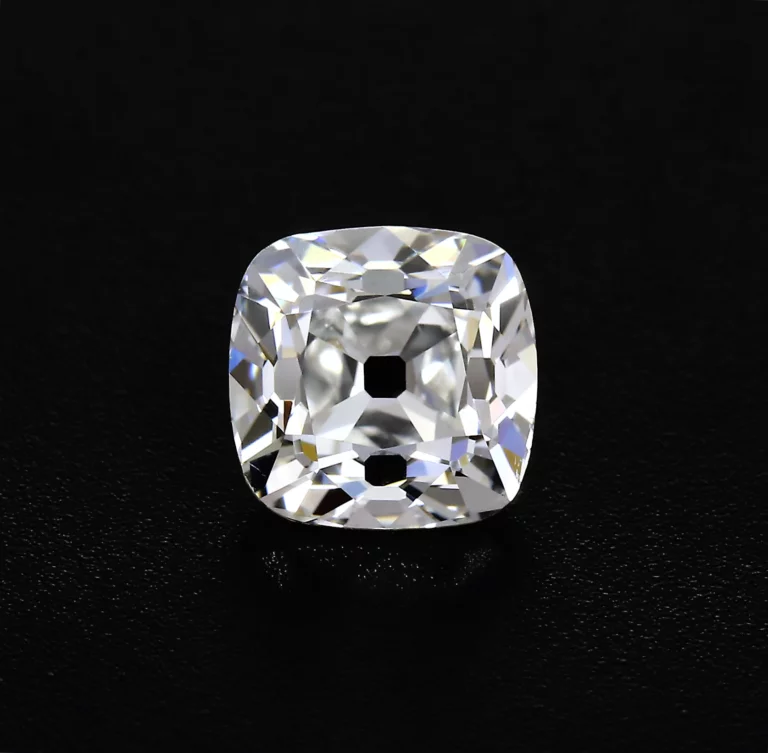
3.01 Ct. G VS2 Old Mine Cushion Brilliant
A near-square, 3.01 ct old mine cushion with a 51% table.
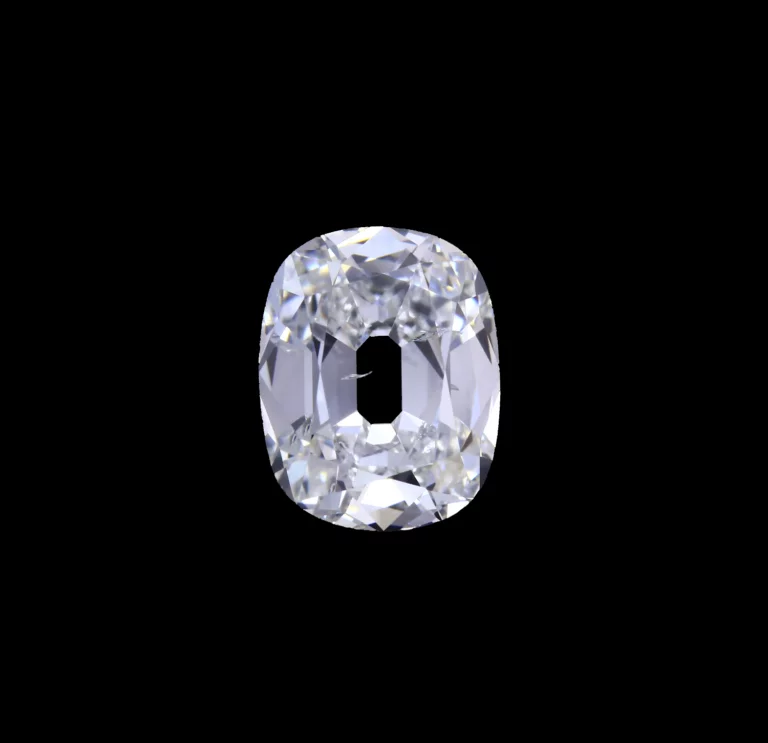
3.09 Ct. F SI2 Old Mine Cushion Brilliant
A 3.09 ct old mine cushion with a longer outline and 55.2% depth.