Prepared by the Imperial Cushions editorial team. Laboratory terminology is retained where a report is cited; historical context and dealer judgment are identified as interpretation.
Design a modern setting around the antique diamond’s actual outline and condition. Start with accurate face-up measurements, side views and a map of the girdle so the setter can plan the seats and protection.
Resolve height early
The 5.02 ct H VS2 old mine cushion measures 10.39 × 9.11 × 6.41 mm. Its depth makes the side view particularly useful when planning a ring intended to sit close to the finger. The design needs room for the pavilion and clearance beneath the culet.
Place support where the stone needs it
Hand-cut corners and shoulders may differ. A thin girdle section, natural or earlier repair can affect prong position and bezel coverage. Mark these areas before approving the drawing, then agree how they will be protected during setting and daily wear.
Compare white and yellow metal beside the loose diamond. Keep side-stone scale and gallery detail in proportion to its face, and check how a wedding band will sit beside the finished ring.
Bring the condition notes to the workshop discussion. Our high-jewelry page shows the design and setting process.
Start with the stone, then design around it
Antique diamonds were not cut to modern standards, so a setting designed for a modern brilliant may not fit them. The best results come from measuring the stone first and designing the head, basket and gallery around its exact dimensions, crown height and total depth.
Protecting an antique diamond
- Corners. Cushion corners are the most exposed point. Claws or prongs should sit over the corners, not beside them.
- Girdle. Hand-cut girdles can be thin in places. A setter should check the girdle all the way round before tightening claws.
- Open culet. The culet is not a weak point in the way a pointed culet is, but the pavilion still needs clearance inside the setting.
- Existing chips. Small historic chips can often be hidden under a claw. Tell your jeweller about them before the design is fixed.
Height and comfort
Old Mine cuts often have a deep total depth. That can make a ring sit higher on the finger than expected. Discuss the overall height, whether a wedding band will sit flush, and how the gallery can be shaped to keep the profile elegant without crowding the pavilion.
Choosing the metal
Platinum and white gold keep a white stone looking white and suit higher colours. Yellow and rose gold flatter warmer stones and give a softer, period feel. Many clients choose a platinum head on a yellow gold band: the diamond stays crisp, and the hand still sees warm metal.
Claws, bezels and side stones
Four double claws or eight claws suit most cushions. A bezel offers the most protection but hides more of the outline and reduces light from the sides. If you add side stones, match their cut to the centre: small old-cut or rose-cut diamonds sit more naturally beside an Old Mine centre than modern brilliants do.
Avoid recutting
Recutting an antique diamond to “improve” it usually costs weight and removes the character you chose it for. A good setting can make an antique stone look its best without changing it.
Work with someone who knows old cuts
Ask your jeweller whether they set antique diamonds regularly. If you are designing a jewel around one of our stones, we can share exact measurements, profile photographs and setting notes with your jeweller, or develop the design with our own workshop.
See the details in a stone
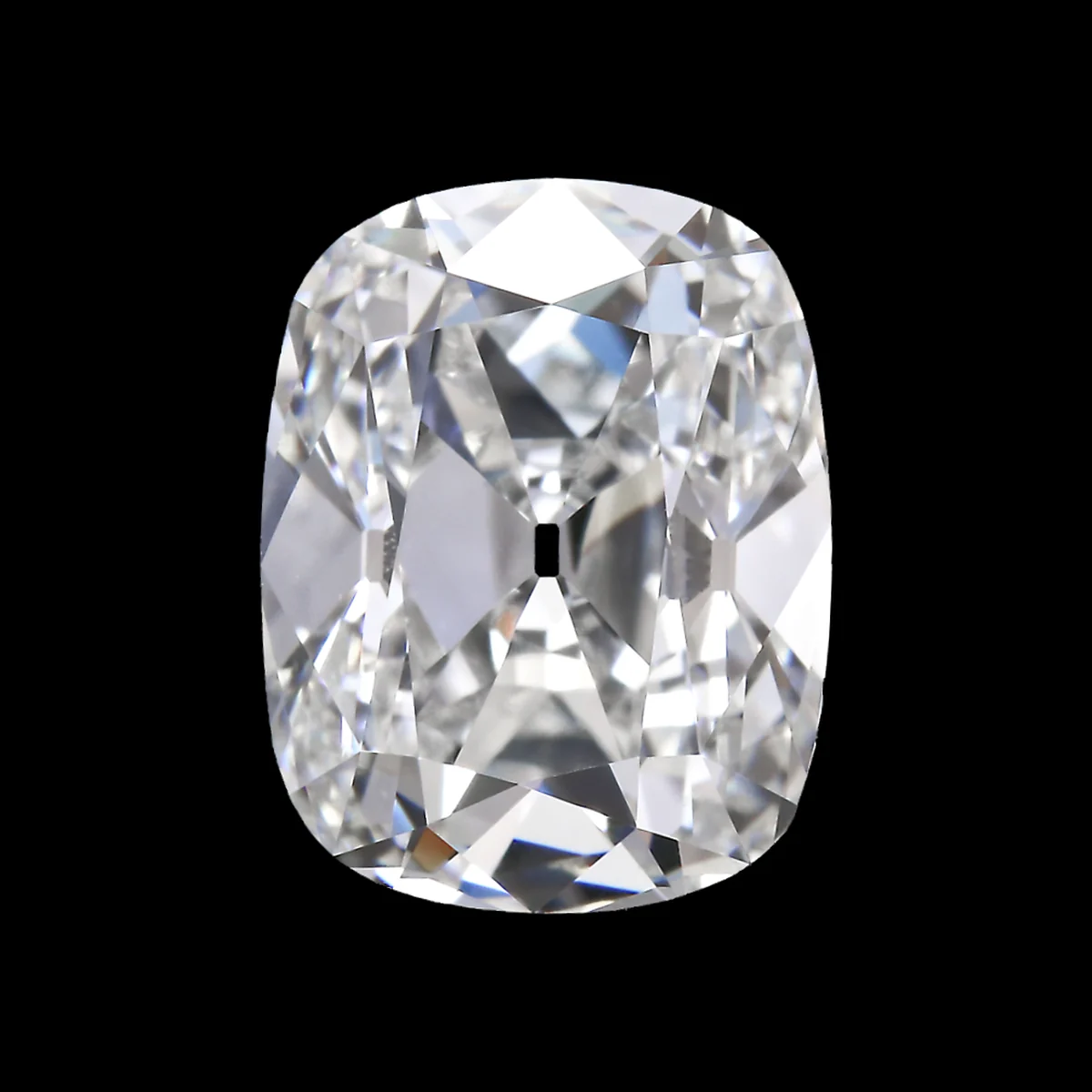
5.03 Ct. F VS1 Old Mine Cushion
A 1.32 length-to-width ratio and softly rounded cushion ends.
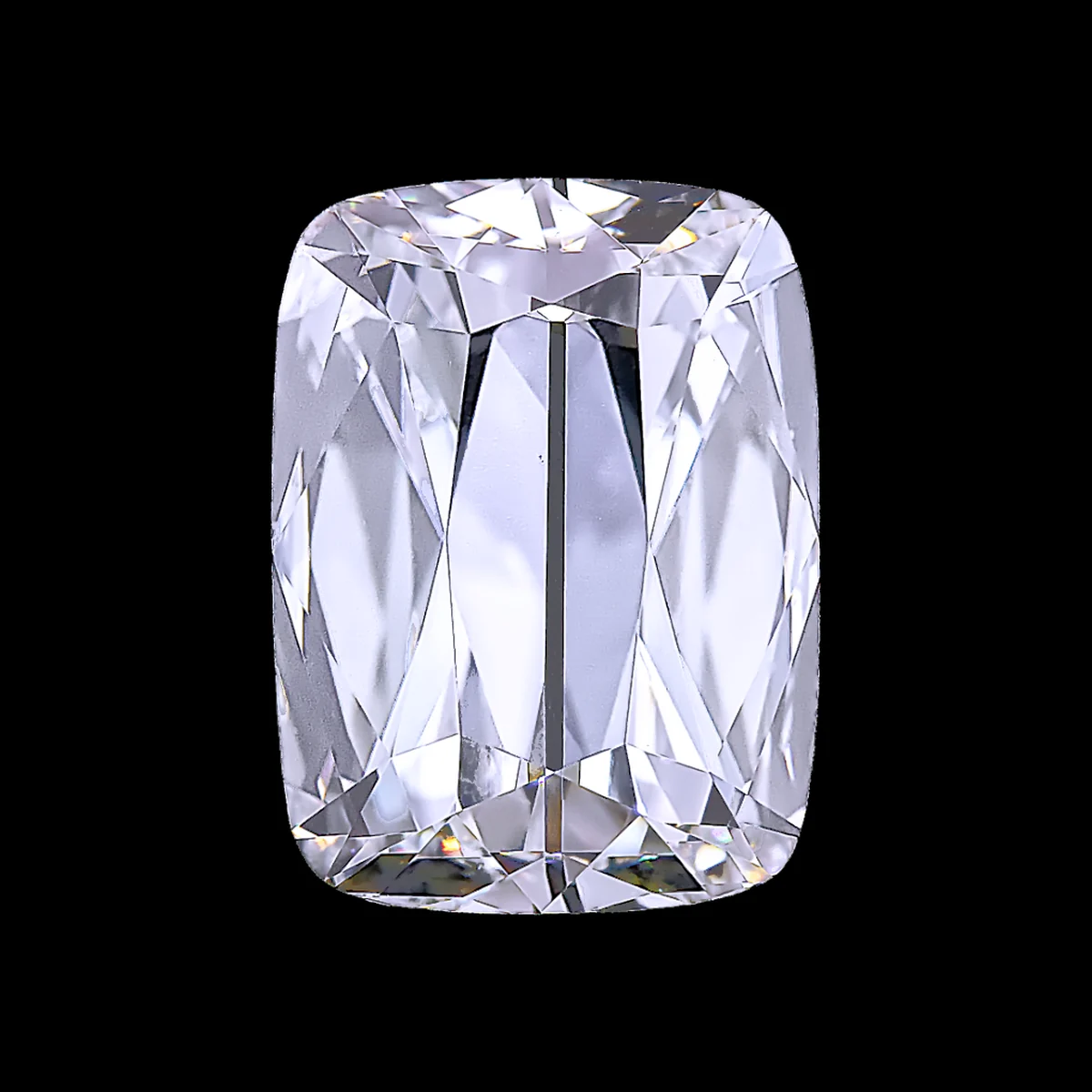
6.71 Ct. G VS1 Old Cut Cushion
A longer cushion outline with a 36% table and broad central facets.