Prepared by the Imperial Cushions editorial team. Laboratory terminology is retained where a report is cited; historical context and dealer judgment are identified as interpretation.
A dealer’s assessment should explain why a particular diamond holds the eye. Useful observations describe the outline, transparency, facet pattern, condition and how the stone could work in a finished jewel.
Make the comparison specific
The 8.01 ct H VVS2 cushion has a nearly square 11.72 × 11.60 mm face. The 9.04 ct F IF cushion is more elongated at 14.45 × 12.02 mm. Their outlines suggest different proportions for a ring, even before comparing colour or clarity.
Ask the dealer to point to the features behind an opinion. Which corners give the outline its shape? Where do the largest flashes appear? How visible are the clarity features in ordinary light? A demonstration makes the assessment useful.
Discuss the trade-offs
One stone may offer the shape you love with a more visible inclusion. Another may have a cleaner appearance and a deeper profile. Bring those details together with the setting, condition and price before deciding what matters most to you.
Use the evaluation guide to keep your own comparison notes, or request a private presentation of the stones that interest you.
See the details in a stone
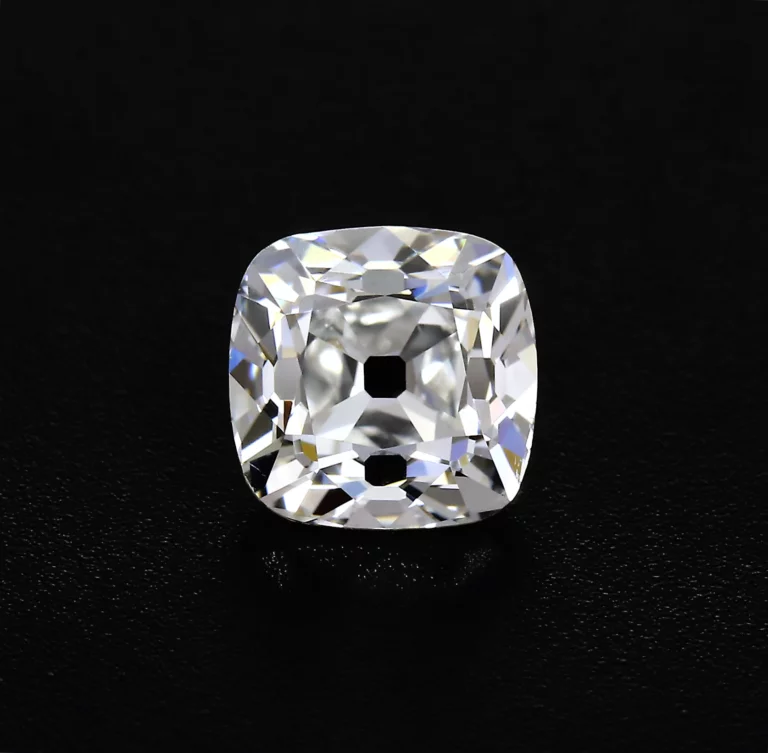
3.01 Ct. G VS2 Old Mine Cushion Brilliant
A near-square, 3.01 ct old mine cushion with a 51% table.
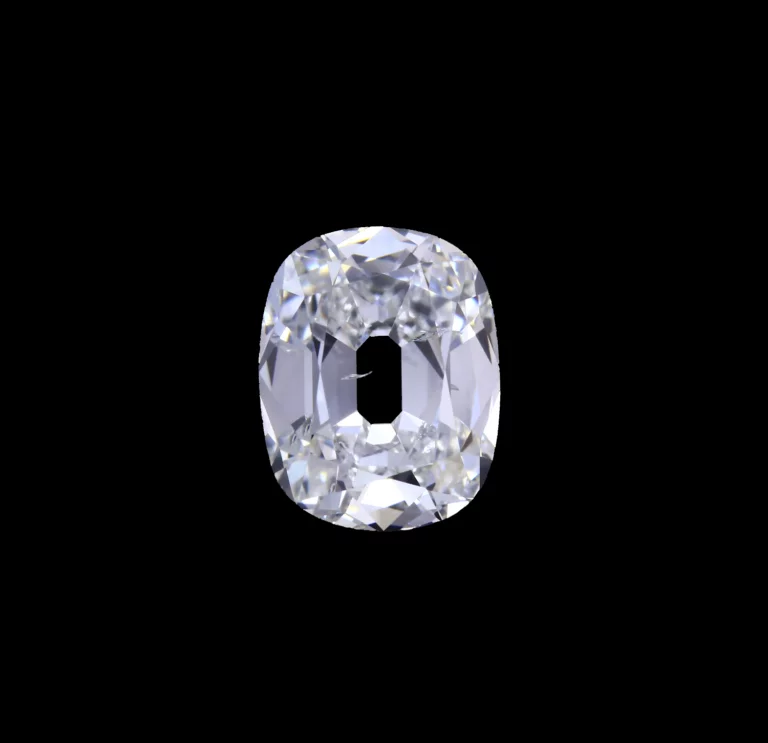
3.09 Ct. F SI2 Old Mine Cushion Brilliant
A 3.09 ct old mine cushion with a longer outline and 55.2% depth.