Prepared by the Imperial Cushions editorial team. Laboratory terminology is retained where a report is cited; historical context and dealer judgment are identified as interpretation.
Fluorescence is the visible light a diamond emits under ultraviolet illumination. A report records its strength and, where applicable, colour. To understand its effect in everyday wear, view the stone under light with different UV content.
Check the ordinary view first
Look at face-up colour, transparency and contrast in daylight and indoor light. Then use controlled UV illumination to observe the fluorescence itself. GIA’s fluorescence research summary explains that most fluorescent diamonds retain their transparency; light-scattering defects account for the haziness seen in a small minority.
A stone to use in the comparison
The 2.13 ct D IF old mine cushion has strong blue fluorescence recorded by GIA. A useful viewing would compare its colour and transparency in daylight and ordinary room light while keeping distance and camera exposure consistent.
Record what changes and what stays steady. Include those observations with the report, condition notes and your preferred setting metal when deciding whether the stone suits you. Request a matched-light presentation through Inspection and Service.
See the details in a stone
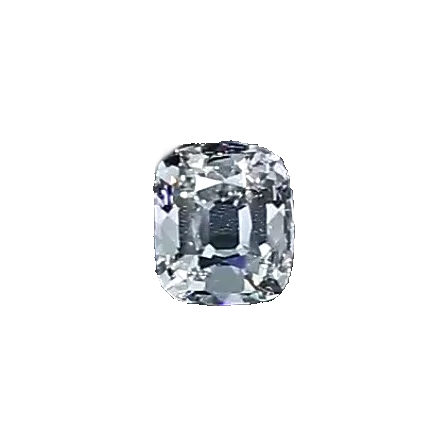
2.01 Ct. D VS2 Old Mine Cushion Strong
The report records strong fluorescence. Ask to compare its appearance in agreed lighting.
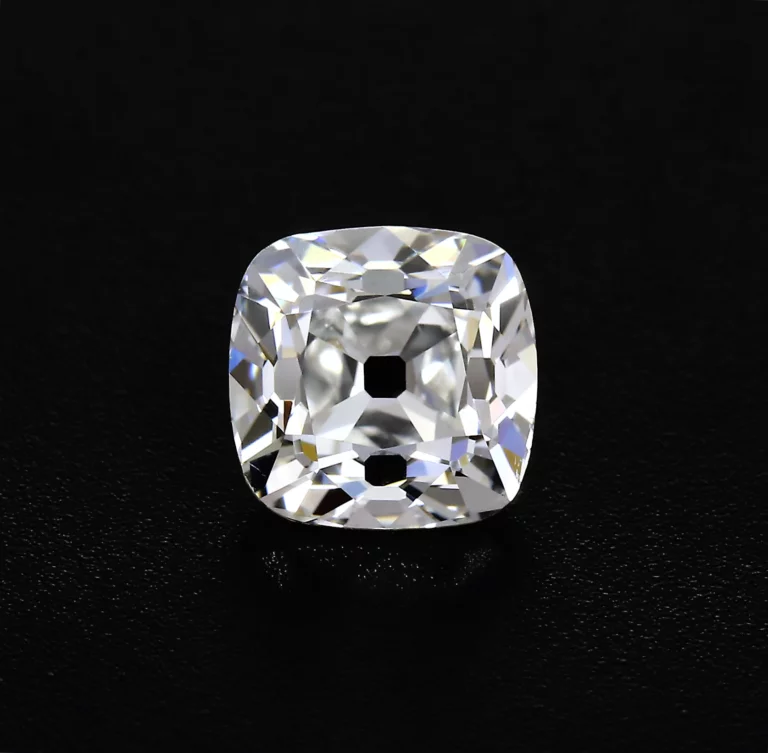
3.01 Ct. G VS2 Old Mine Cushion Brilliant
The report records no fluorescence. A contrasting report, rather than a matched lighting test.