Reviewed 11 August 2026

Prepared by the Imperial Cushions editorial team. Laboratory terminology is retained where a report is cited; historical context and dealer judgment are identified as interpretation.

Above five carats, an antique diamond becomes easier to study and harder to generalize. Facet relationships are more visible, outline decisions carry greater visual weight and small differences in condition or documentation can have substantial practical consequences. The buying process should become slower, more documented and more independent.

The purpose of this guide is not to suggest that size alone creates rarity or quality. It explains the additional diligence appropriate for a significant old mine cut, antique cushion or related historic-style diamond.

Define the object before discussing the story

Begin with verifiable facts: natural-diamond status, carat weight, measurements, color, clarity, fluorescence, laboratory report number and current condition. Confirm the report with the issuer and match the stone through measurements, inscription and identifying characteristics.

Descriptions such as “old mine,” “historic,” “Type IIa” or “Golconda” can carry emotional and commercial weight. Each term must be supported at the level claimed. Type IIa is a diamond type, not a geographic certificate. A historic provenance requires a documented chain of evidence.

Face-up presence becomes a primary comparison

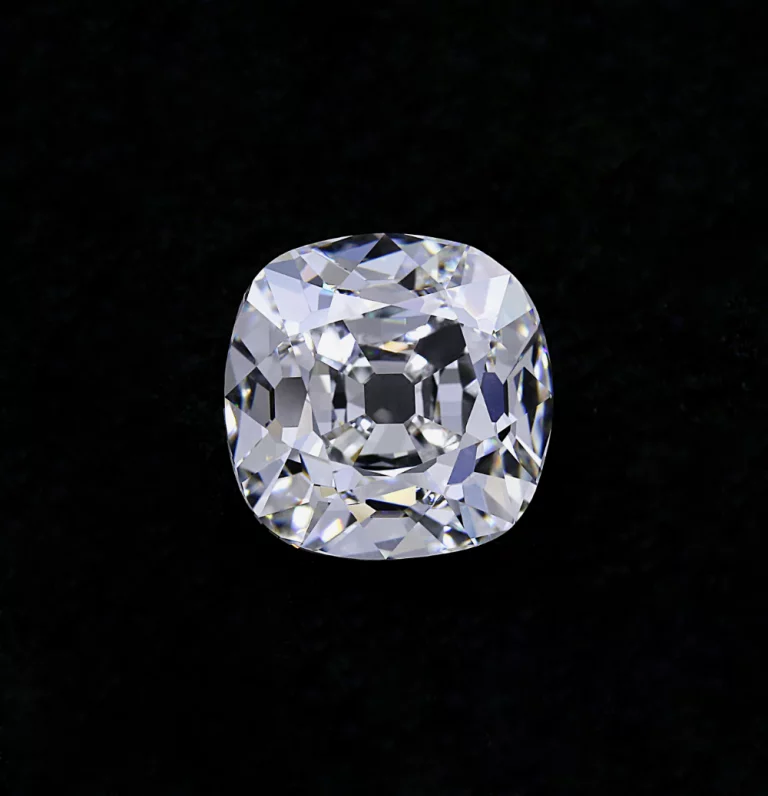
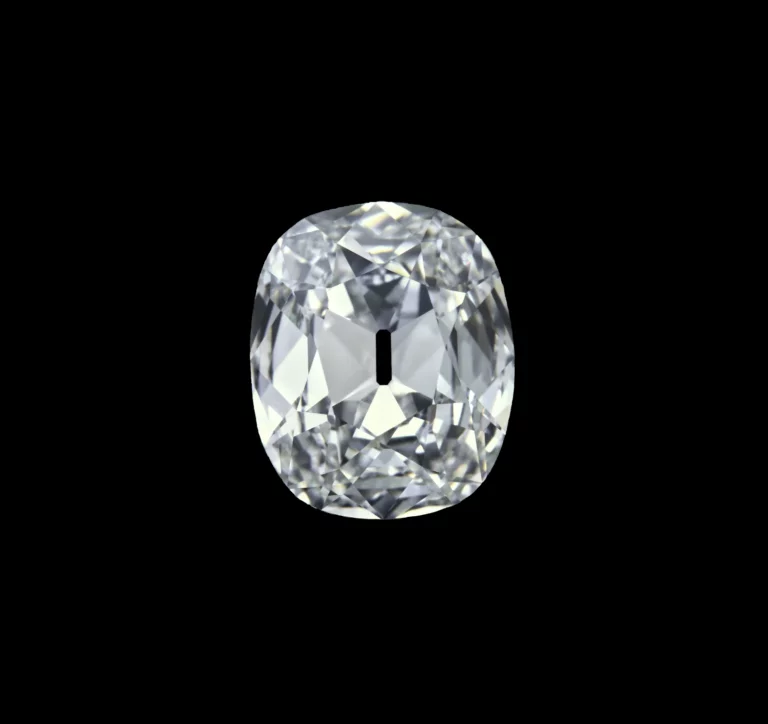
Large antique diamonds can distribute weight very differently. Record length, width, total depth and length-to-width ratio. Compare the face-up dimensions with stones of related shape and style, not only with modern round brilliants.

A deep profile may support a high crown and distinctive optical behavior, but it can also retain weight below the girdle. View the stone from the face and side. Ask whether its dimensions, architecture and appearance feel coherent for the carat weight.

The outline must work at normal distance

Minor irregularities that are charming in a smaller old cut may become prominent in a large stone. Study the relationship between corners, shoulders and side curvature. Then step back. The outline should be assessed at the distance at which the finished jewel will actually be seen.

Elongation also becomes more expressive. A numerical ratio is useful, but the corners and shoulders determine whether the silhouette appears elegant, broad, narrow or uneven.

Large facets reveal both strengths and weaknesses

Broad antique facets can produce expansive flashes of brightness and fire. They can also reveal persistent dark regions, strong obstruction or an incoherent central pattern. Inspect the diamond while it moves slowly through several lighting environments.

  • Diffuse daylight or a large soft source for overall brightness.
  • Small point sources for fire and scintillation.
  • Mixed indoor light for realistic daily behavior.
  • Neutral video with the exposure held steady for remote review.

Do not judge from a rotating spotlight video alone. Camera exposure, background color and editing can materially change perception.

Clarity needs practical interpretation

In a large diamond, some inclusions are easier to locate without magnification. That does not automatically make them unacceptable. Determine whether a feature is visible face-up, whether it affects transparency and whether it creates a durability concern.

Pay particular attention to surface-reaching features near corners or thin girdle sections. Compare the plot and comments with the loose stone. If the stone is mounted, recognize that metal may obscure important areas.

Condition should be mapped, not summarized

For a significant antique diamond, request a condition map or detailed written notes. Record chips, cavities, naturals, abrasions, worn facet junctions, culet condition and possible repolishing. The location and depth of a feature often matter more than the label.

Ask whether any proposed corrective work would change the outline, weight or historic cutting character. Recutting can solve one issue while erasing qualities that made the diamond desirable.

Separate laboratory facts from provenance

Geographic and historic claims require evidence beyond a standard grading report. Useful provenance records can include dated invoices, archival descriptions, signed-jewel records, old photographs, auction catalogues and a traceable sequence of owners.

Evaluate each document for identity, date and continuity. A document describing a diamond of similar weight is not enough if it cannot be tied to the current stone. Where important claims remain uncertain, the description and price should reflect that uncertainty.

Plan the setting before committing

A large antique diamond should not be forced into a standard mounting. The setting must account for girdle variation, vulnerable corners, pavilion depth, culet clearance and the wearer’s intended use.

Discuss the design with a setter experienced in important stones. Determine how the diamond will be secured, which areas need protection, how it can be cleaned and whether future removal can be performed safely. For a loose-stone purchase, obtain dimensions and condition information before finalizing a mounting concept.

Use independent review and documented logistics

A high-value transaction should have a written inspection process. Confirm who holds risk during shipment, viewing and return. Use suitable insurance and secure transport. Where appropriate, arrange independent examination by a qualified gemologist who is not being compensated based on whether the sale closes.

The review should address identity, condition, report consistency and any specific representations that influenced the decision. An appraisal for insurance replacement is a different exercise from determining whether a particular diamond is the right purchase.

A disciplined decision file

Keep a single file containing:

  • The current laboratory report and verification result.
  • Measurements and neutral photographs.
  • Unedited inspection videos in several lighting environments.
  • A condition map and setting recommendations.
  • Written provenance claims and the documents supporting them.
  • Sale terms, return conditions, insurance and shipping responsibilities.
  • Independent review notes.

Large antique diamonds reward patience. The goal is a stone whose identity, condition, optical character and documentation remain convincing after the sales presentation is removed.

Explore the current diamond dossiers, compare outlines in the Antique Cushion Diamond Atlas, or arrange a private review through Inspection and Service.