Prepared by the Imperial Cushions editorial team. Laboratory terminology is retained where a report is cited; historical context and dealer judgment are identified as interpretation.
Antique cushion diamonds range from pillowy squares to long rectangles, with corners and shoulders shaped individually by the cutter. Begin by choosing the outline that appeals to you, then compare its proportions and movement.
Two useful starting shapes
The 8.01 ct H VVS2 cushion measures 11.72 × 11.60 mm and has a nearly square face with full corners. The 9.04 ct F IF cushion measures 14.45 × 12.02 mm and gives a more elongated impression. Their photographs let you compare how broad facets fit inside these different outlines.
Bring the side view into the decision
Depth affects the visible spread and the height needed in a setting. Look at the crown, girdle and pavilion separately. Then watch the stone in diffuse and ordinary room light to judge its brightness, contrast and transparency.
Ask for photographs at the same scale, the current reports and unedited movement video. For a stone you are seriously considering, arrange direct or independent inspection. Explore the antique cushion collection or use the face-up size guide for a measurement comparison.
See the details in a stone
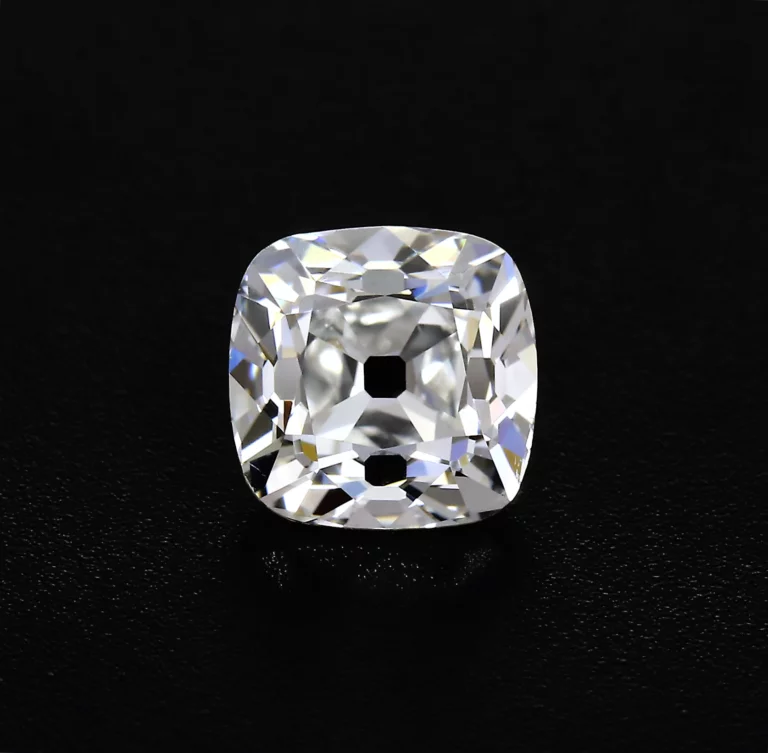
3.01 Ct. G VS2 Old Mine Cushion Brilliant
A near-square, 3.01 ct old mine cushion with a 51% table.
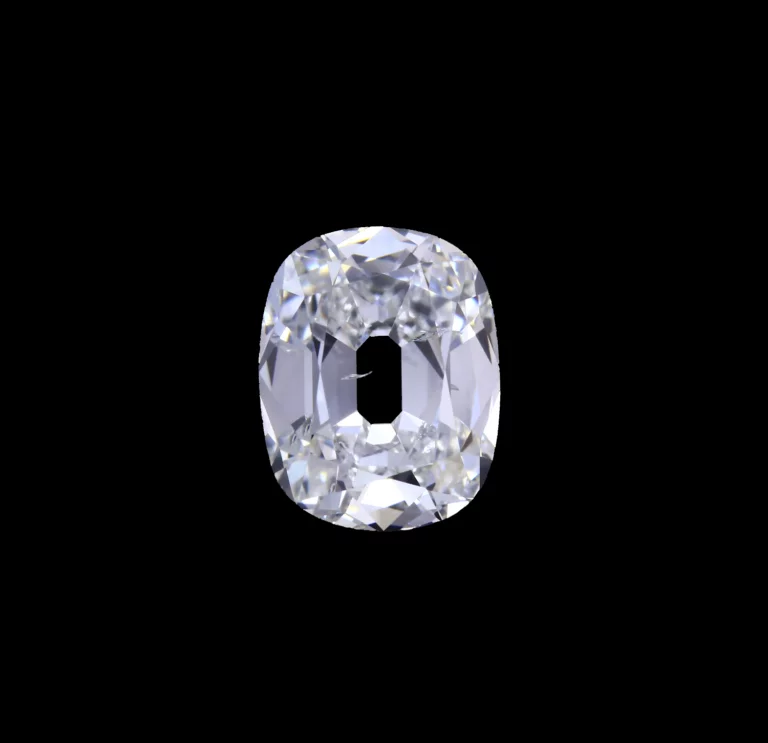
3.09 Ct. F SI2 Old Mine Cushion Brilliant
A 3.09 ct old mine cushion with a longer outline and 55.2% depth.