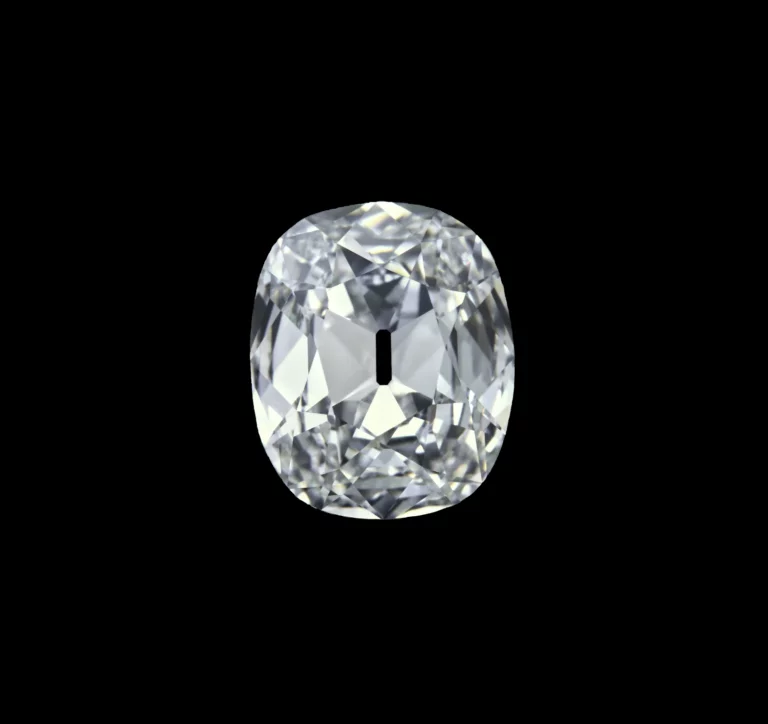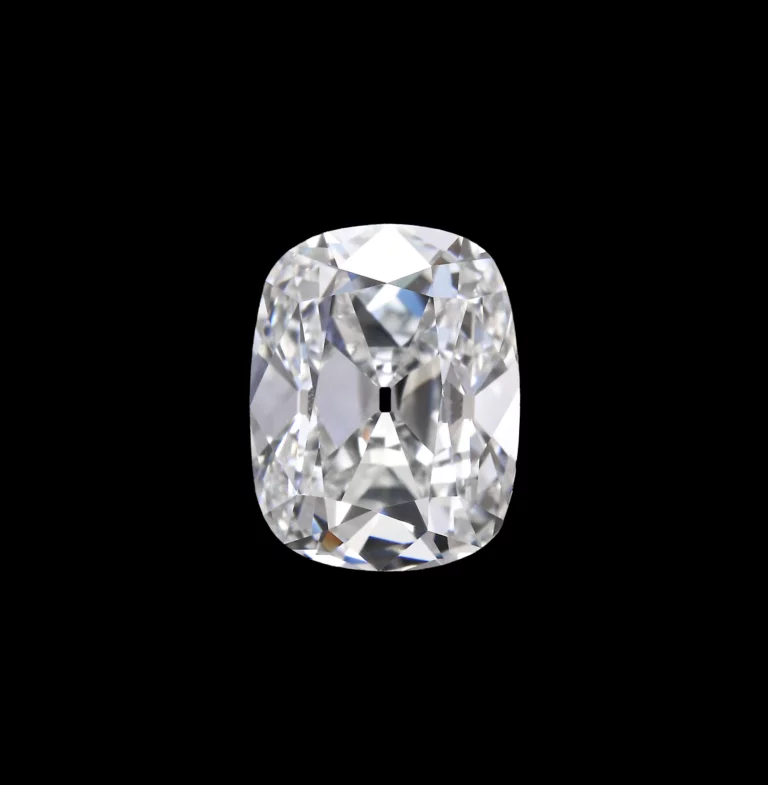
These two old mine cushions weigh almost the same, but one has a compact, near-square face and the other stretches noticeably along the finger. The 3.01 ct G VS2 and 3.09 ct F SI2 show why an antique diamond needs to be considered beyond its carat weight. Their GIA reports provide the measurements. Their photographs and videos show the outlines and changing facet patterns. Together, those views help narrow a choice before an inspection.
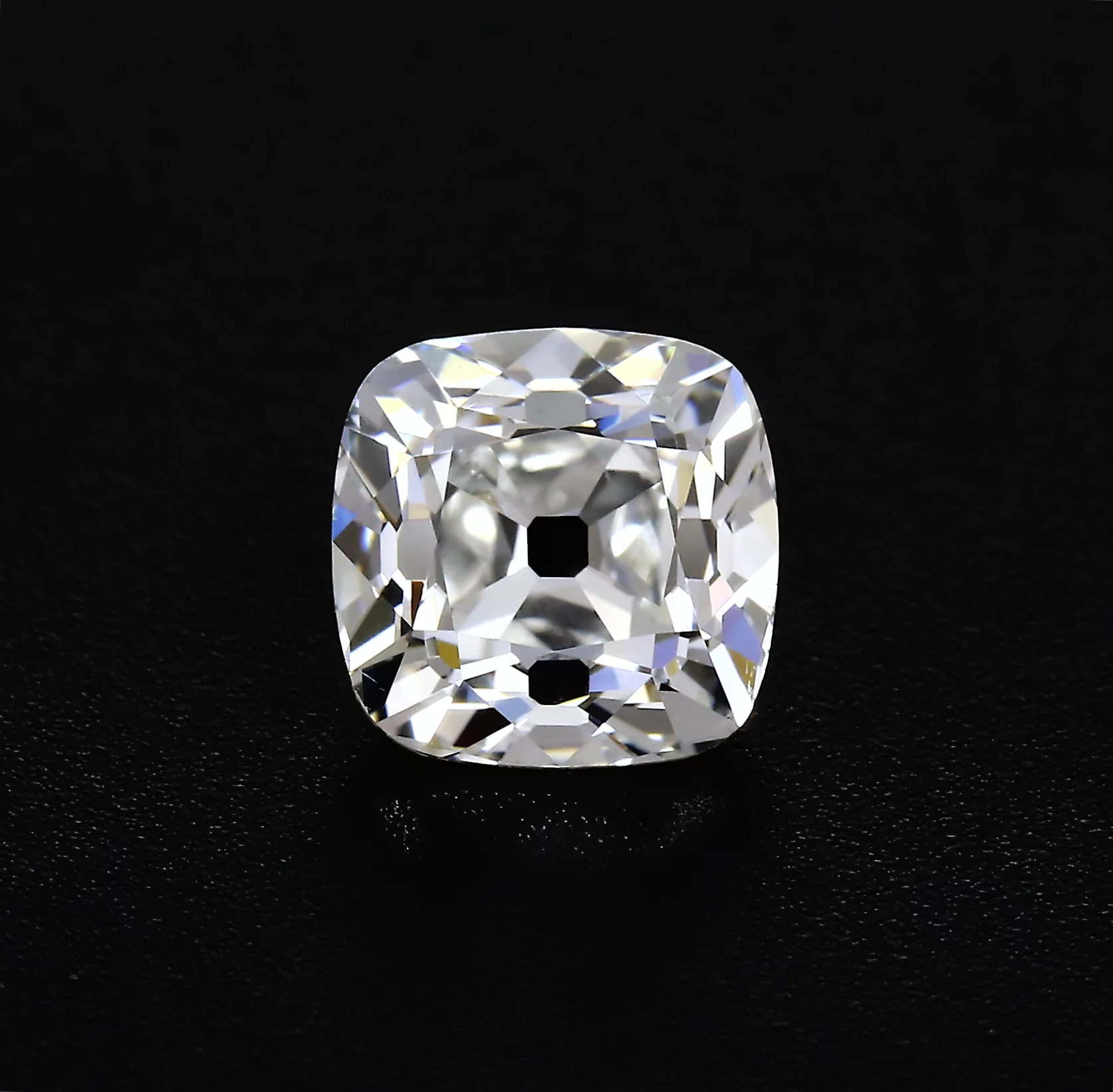
Two three-carat cushions, two different outlines
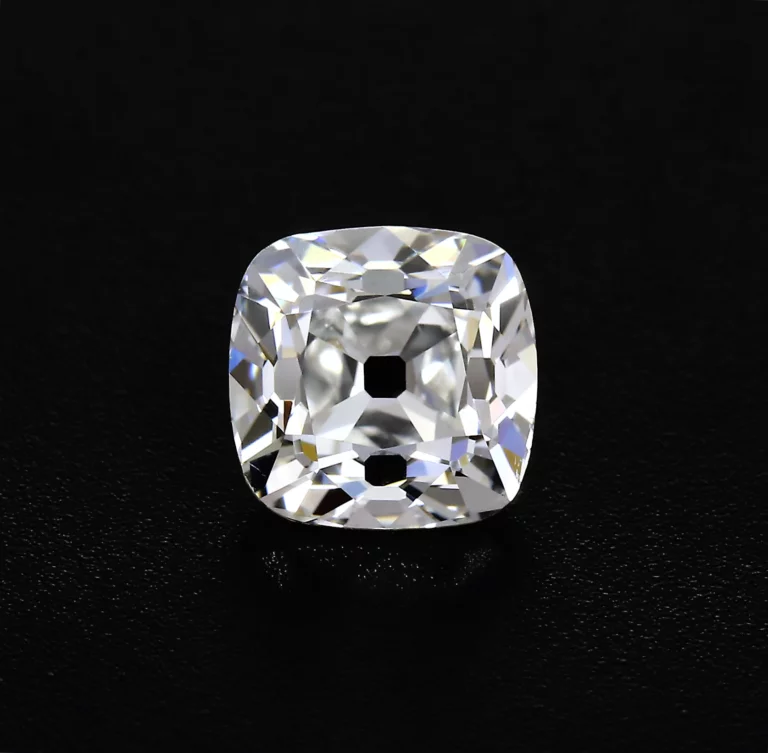
360 degree viewA compact, near-square outline surrounds broad central facets. Keep watching into the side view to see the depth beneath the face.
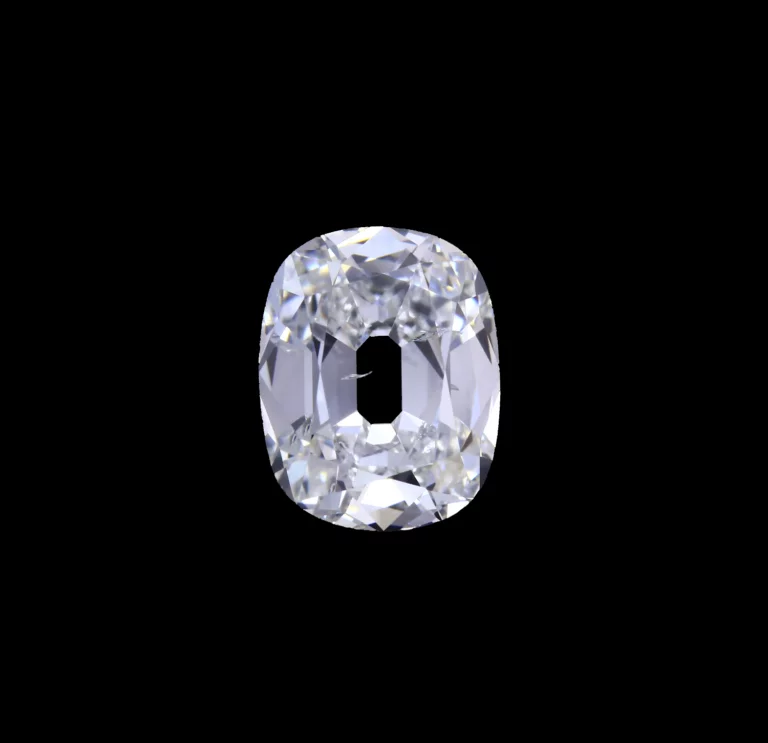
360 degree viewThe long outline and rounded ends frame an open centre. The side view shows how low the stone sits beneath that extended face.
Images fit matching frames; use the report measurements for physical scale. Lighting and camera exposure differ between clips.
The 3.01 ct cushion measures 8.24 x 8.05 mm across its face. Its length and width are close, giving it a compact outline with softened corners. The 3.09 ct measures 10.21 x 8.10 mm. It is 1.97 mm longer, while its width is almost the same. That difference is more useful to a ring design than the extra 0.08 ct alone. The longer cushion would run farther along the finger when set lengthwise. The near-square stone offers a more compact starting point. The setting, finger size and preferred orientation still matter.
Two ways to use the same rough weight
A cutter trying to keep weight from an irregular crystal did not start with a rule that every cushion must look square. The outline could follow the rough, and the pavilion could hold much of the carat weight below the girdle. These two diamonds make that history practical. At nearly equal weights, the 3.01 ct presents a compact 8.24 by 8.05 mm face; the 3.09 ct reaches 10.21 mm in length while measuring 8.10 mm across. That extra length is visible in a ring design. The reports cannot tell you which outline you will enjoy wearing, but they tell you precisely what to compare.
The 3.09 ct's lower 55.2% total depth is a measurement, not a verdict on brilliance. Some light may return in a broad flash and some may appear as contrast, depending on the actual facets and viewing setup. Put both stones through the same slow rotation under the same light. Compare the centre, the corners and the transition between them. If one stone holds your attention longer, the reason will be in the moving pattern as much as in the dimensions.
Read the depth beside the length
| Report detail | 3.01 ct G VS2 | 3.09 ct F SI2 |
|---|---|---|
| Measurements | 8.24 x 8.05 x 5.57 mm | 10.21 x 8.10 x 4.47 mm |
| Table | 51% | 51% |
| Total depth | 69.2% | 55.2% |
| Culet | Very Large | Extremely Large |
| Fluorescence | None | None |
| GIA report | 3505851339 | 2487391394 |
The 3.09 ct carries its weight across a longer face with a lower total depth. The 3.01 ct carries more depth beneath its compact outline. Neither depth percentage establishes which stone returns light more attractively. Total depth includes the crown, girdle and pavilion; it does not isolate crown height. Both reports record a 51% table. That shared figure also leaves plenty of room for differences in facet arrangement, culet size and outline.
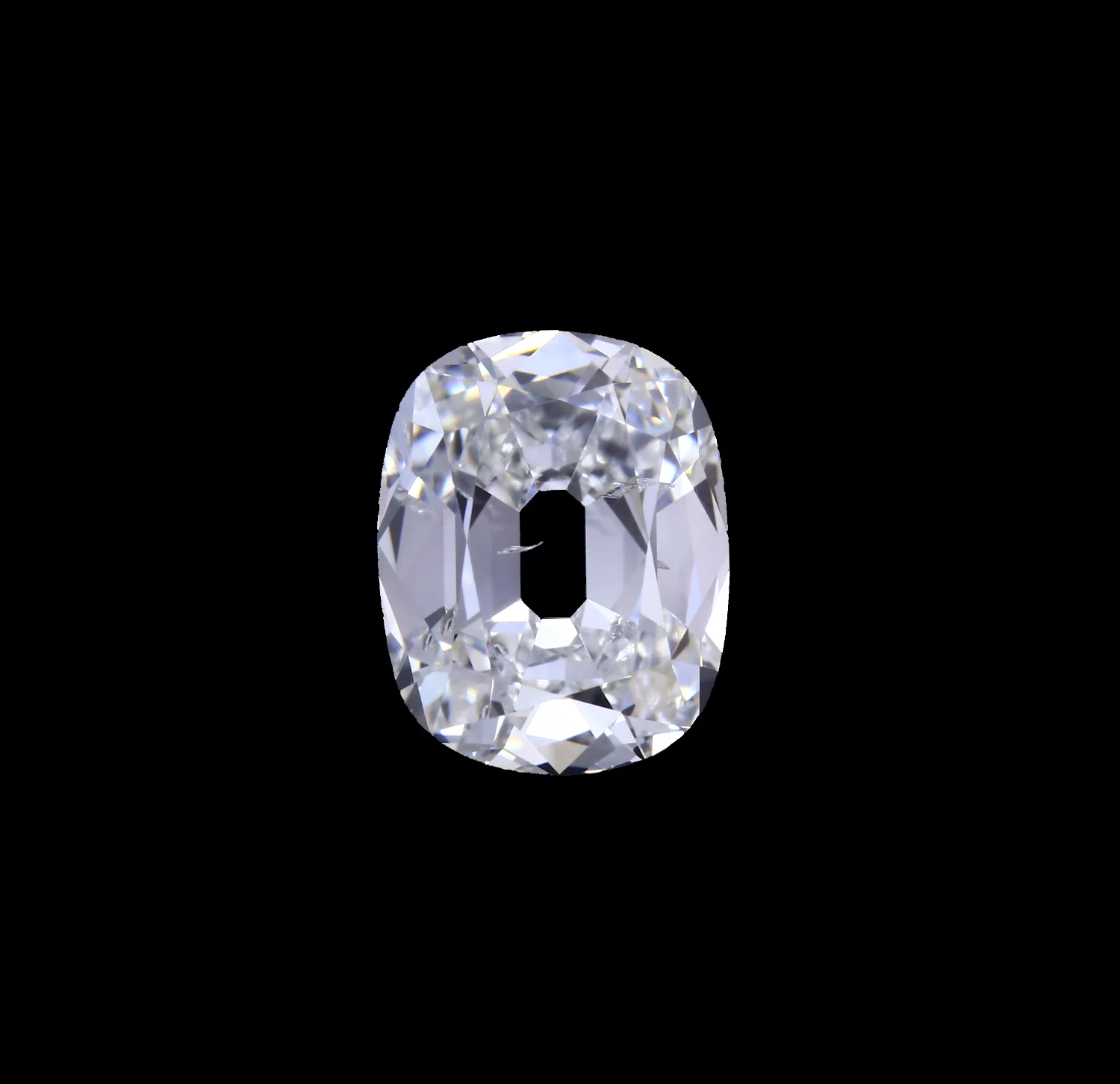
What to watch in the videos
Start face-on. Trace the corners and sides before concentrating on the centre. Then watch the face tilt away: the side view makes the difference in profile easier to understand. Both stones have visible culets. These are polished facets at the bottom of the pavilion. Their face-up appearance changes with the angle, lighting and background. Watch how the surrounding facets brighten and darken as the centre changes.
The clips were recorded separately. They are useful for examining shape and movement, but their different lighting and exposure cannot establish a fair colour or brightness ranking. For a final choice, ask to see both under the same lighting and at the same distance.
The open culet changes the centre
The reports record a Very Large culet for the near-square stone and an Extremely Large culet for the elongated one. A culet is a polished facet at the pavilion tip. Face-up, it can appear as a small geometric opening at the centre, and its size changes how the surrounding facets frame that point. Study each loose stone over a neutral surface, then again over a darker one. Look for the culet itself before attributing any central darkness to an inclusion or a weak light pattern.
A photograph can make the culet look more or less prominent according to tilt and background. The paired video study is valuable here because it lets you return to the same moment in each rotation. Keep the differing outline in mind: a centred opening can look quiet in one set of facets and conspicuous in another even when the report language seems close.
What the clarity grades leave to inspection
The reports record VS2 for the 3.01 ct and SI2 for the 3.09 ct. The SI2 grade alone does not establish whether an inclusion will be noticeable to you without magnification. Its position, visibility and any durability implications need to be reviewed in the actual stone. A small web video cannot settle that question.
Bring the preferred outline into a jewel
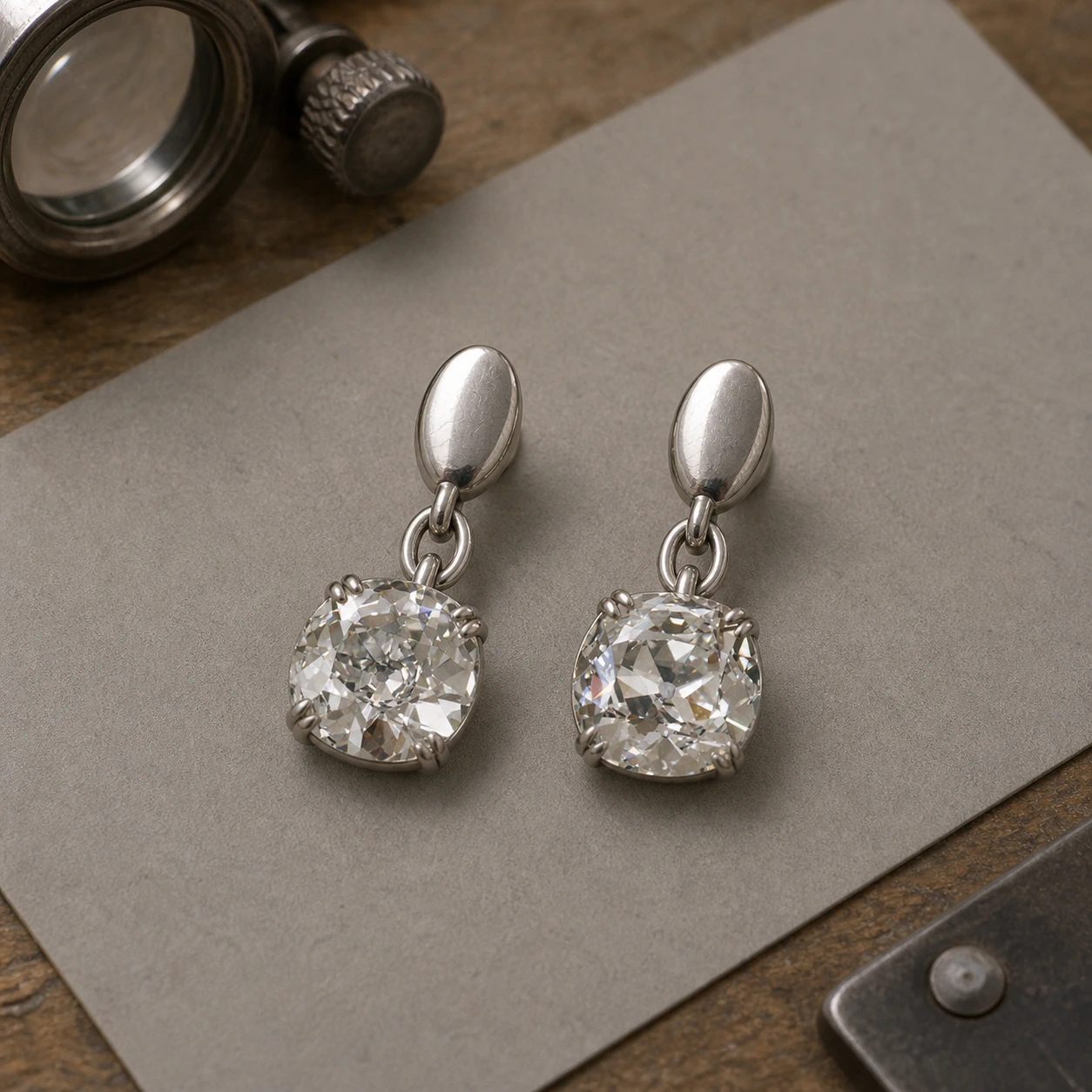
For a ring, decide whether you prefer the compact cushion or the extended outline, then ask a setter to review the profile and protection of the girdle. For earrings, finding a compatible second stone adds another set of decisions about size, outline and appearance in motion. Tell us your preferred outline and intended setting. We can confirm current availability and arrange the next view or inspection.
Sources
Stone specifications: GIA reports 3505851339, dated 13 November 2024, and 2487391394, dated 19 February 2024, reproduced in the respective stone records. Cut background: GIA, A Guide to Old Mine Cut Diamonds. Visual observations refer to the supplied Imperial Cushions footage; outline ratios and length differences are calculated from the report measurements.