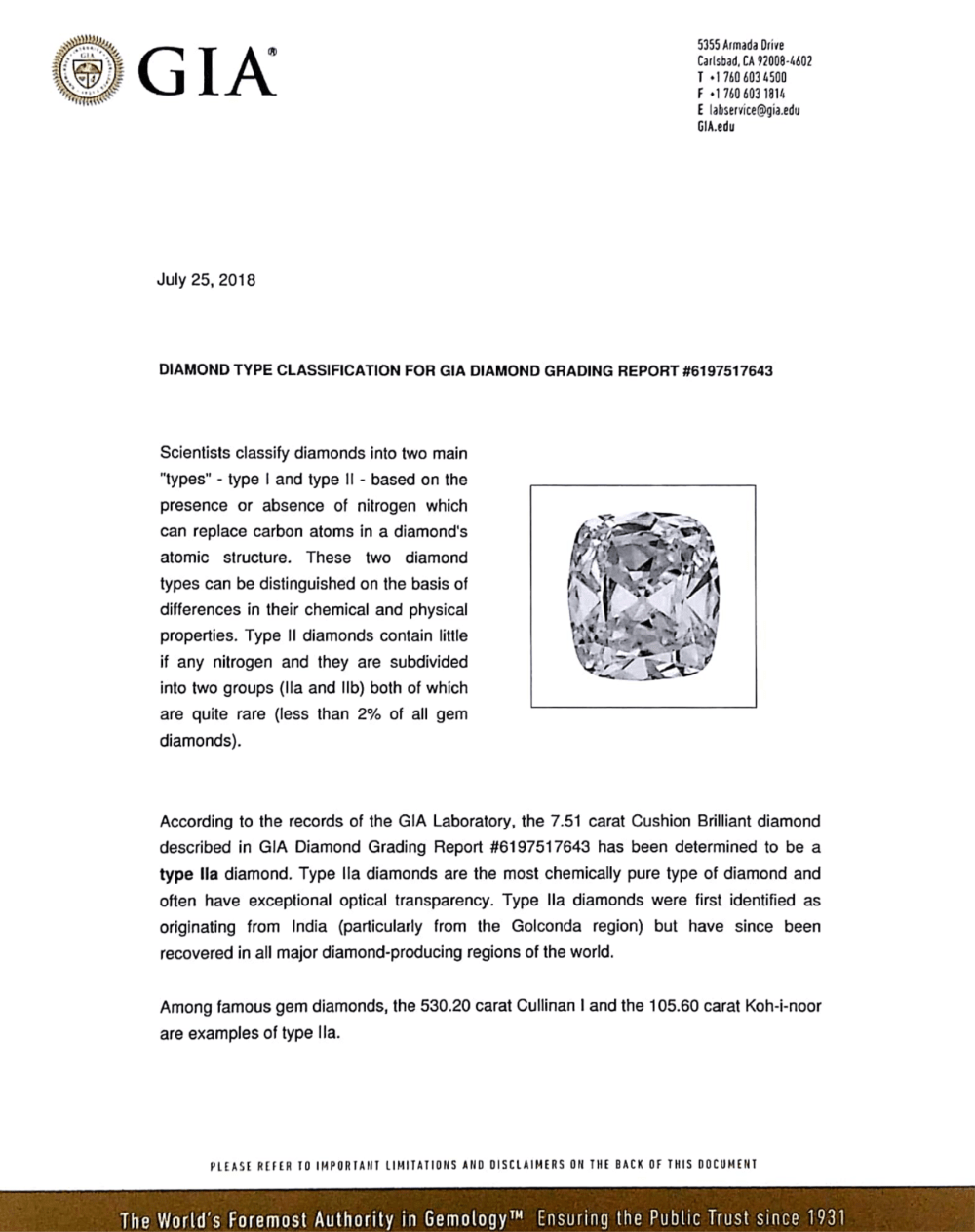
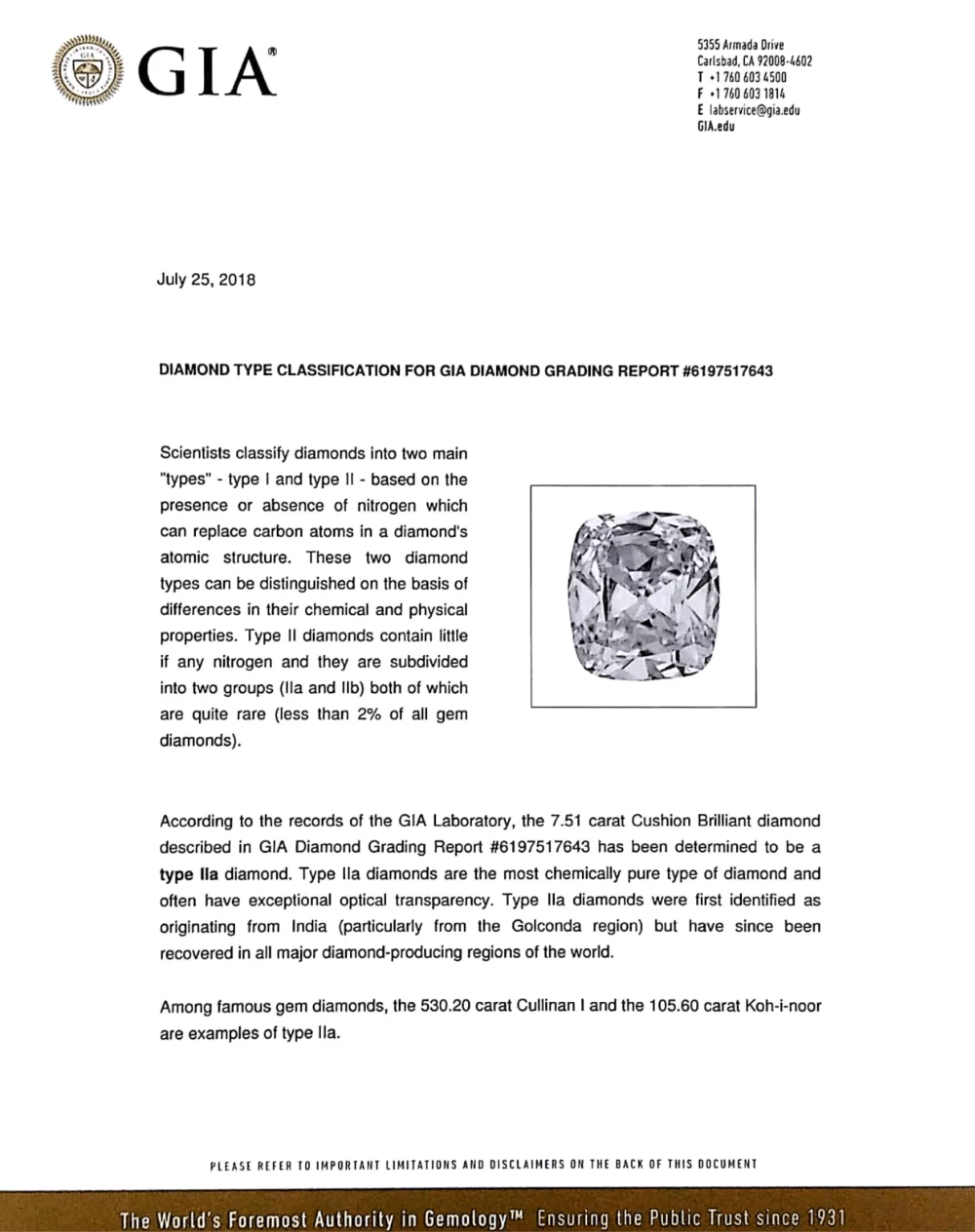
A Type IIa description needs a document that actually classifies the diamond. The D-to-Z colour grade, clarity grade and a seller's view through a loupe cannot supply it. Diamond type concerns defects and impurity atoms in the crystal lattice. GIA's review of the type classification system explains how infrared absorption identifies the nitrogen and boron features used for this classification. A buyer should ask which laboratory performed the analysis, how its type result is worded, and how the document is tied to the stone being offered.
Start with the grading report, then ask for the type letter
Read the report number, date, weight, measurements, shape, colour and clarity first. Those details identify the graded diamond and describe its quality, but a standard 4Cs report does not necessarily show a Type IIa classification. Ask for the separate type letter or other laboratory document that explicitly names Type IIa and gives a report reference. GIA's Report Check includes a section for Diamond Type Letter PDFs, which is a useful route for checking a document associated with a GIA record. The document and the offered stone still need to be matched by a qualified examiner.
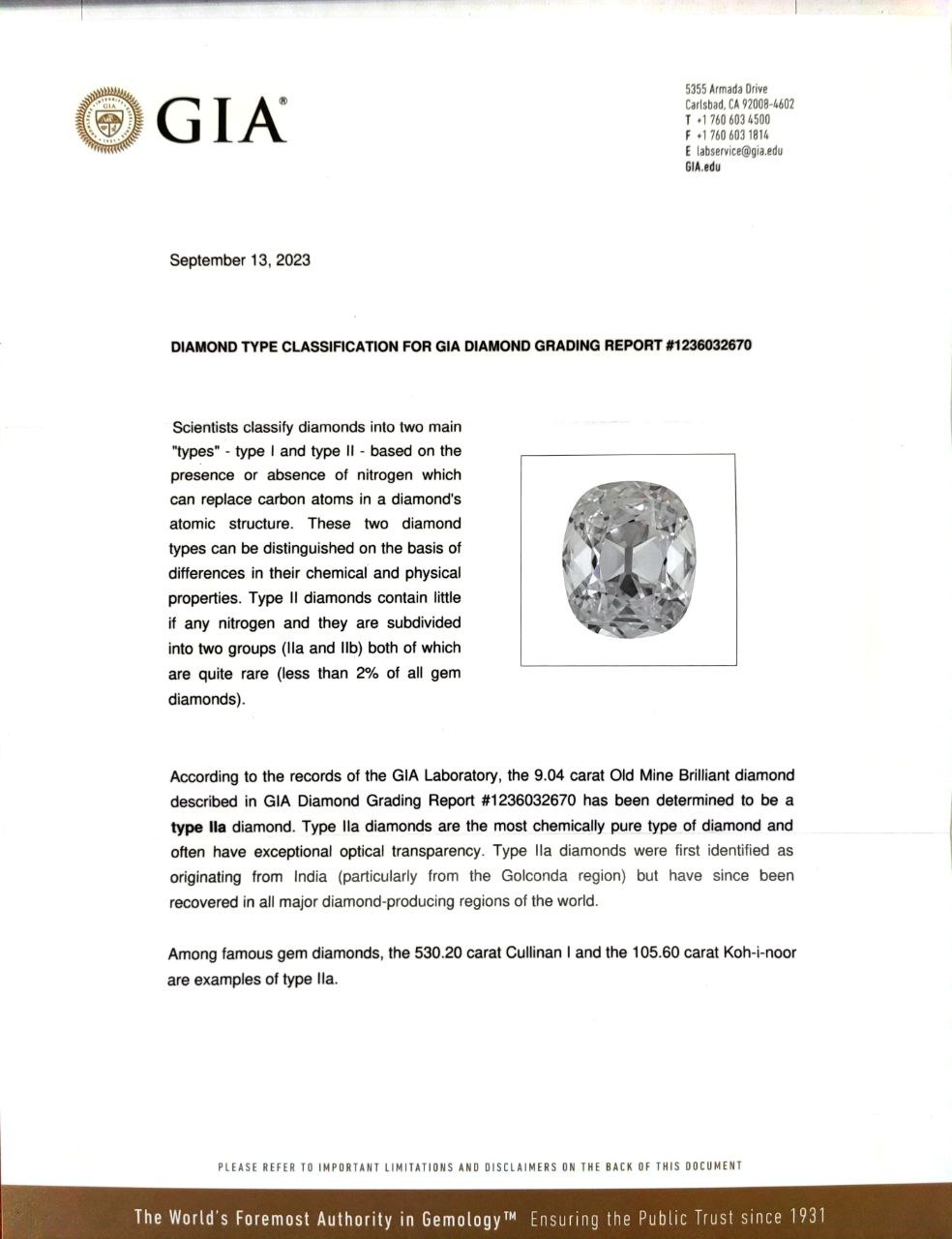
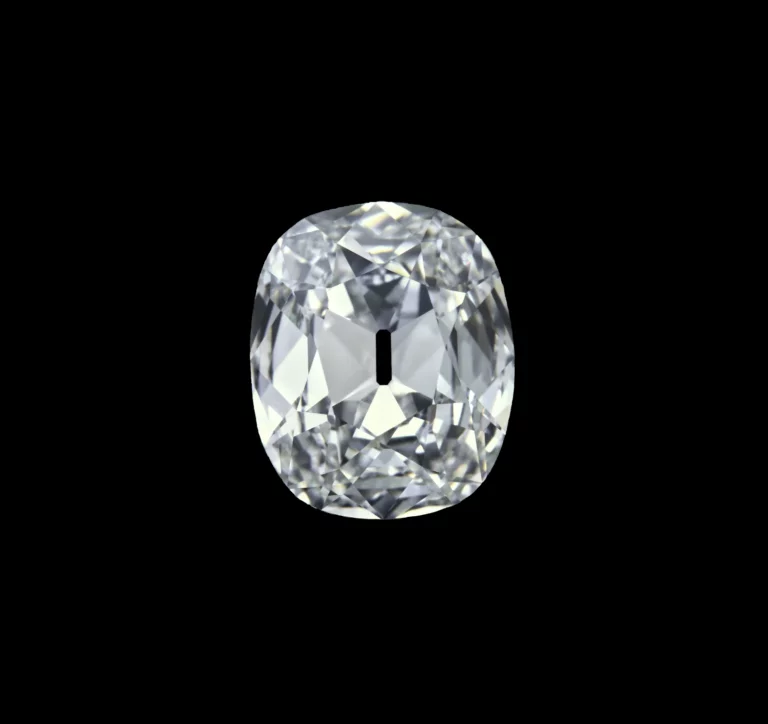
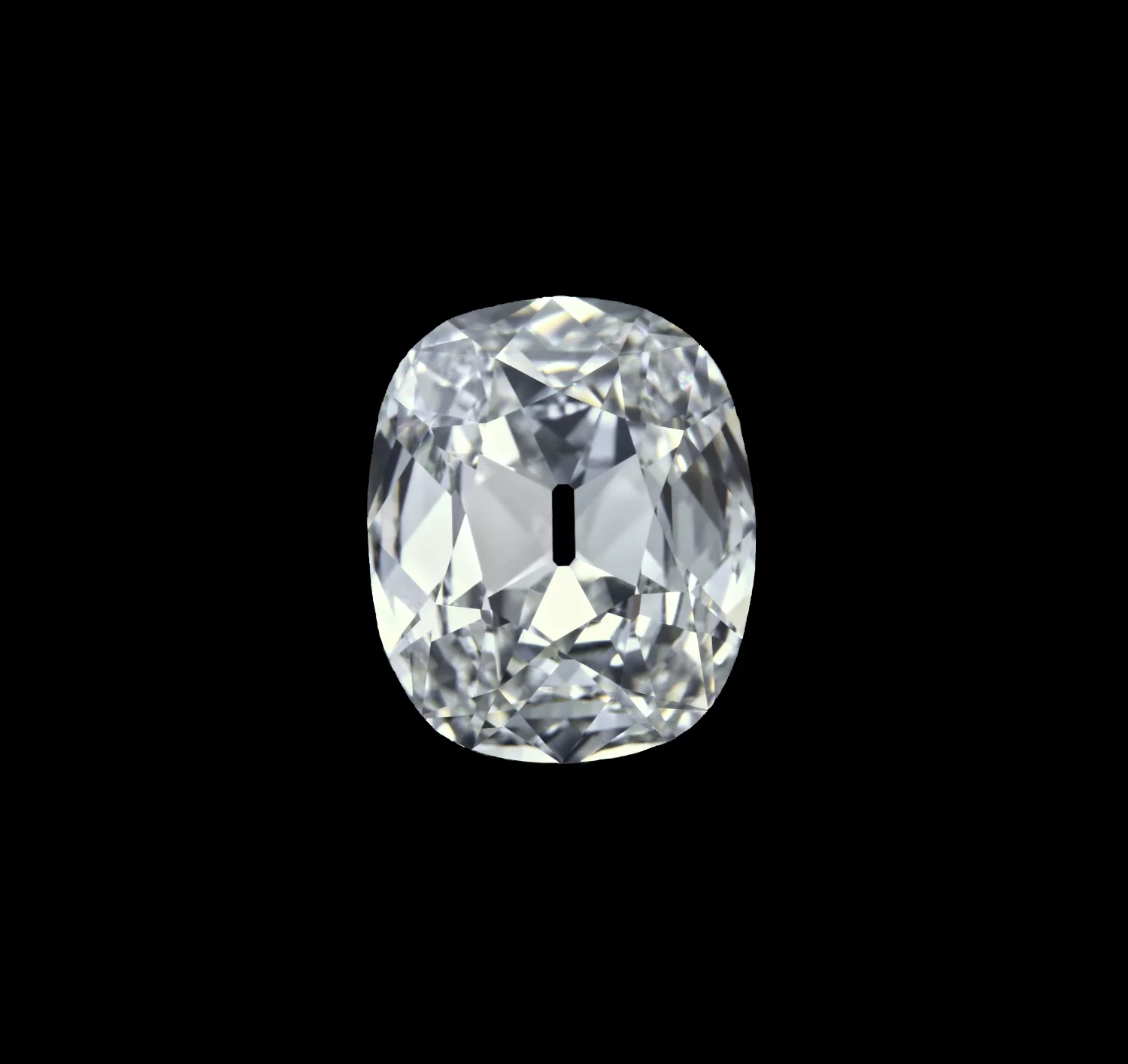
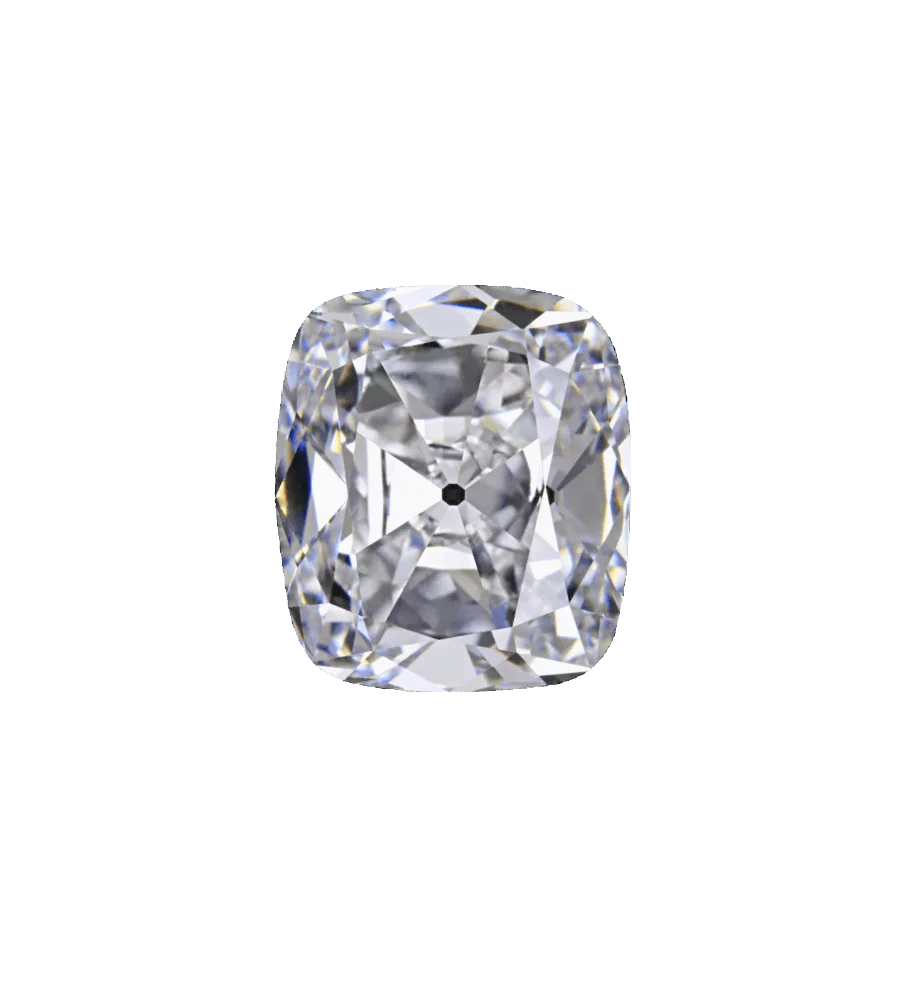
The 9.04 ct F IF Old Mine Cushion, IC-05729, makes the distinction concrete. Its GIA grading report is numbered 1236032670, dated 13 September 2023. Imperial's checked records also include a GIA Type IIa letter. Its F colour and IF clarity are grading facts; its Type IIa result comes from the separate type documentation. The Old Mine Brilliant cutting description concerns the facet arrangement. None of these entries establishes the mine, country or ownership history of the diamond.
What the laboratory is measuring
Most natural gem diamonds belong to Type I and show measurable nitrogen-related absorption in the infrared. Type IIa diamonds have no nitrogen or boron impurities detectable by the relevant infrared method at its sensitivity. That does not mean a chemically perfect crystal. It also does not mean the stone has no inclusions visible under a clarity examination. Type, colour and clarity each describe a different property, even though some high-purity stones can also receive high colour and clarity grades.
Infrared spectroscopy is the central test for diamond type. Additional testing can be needed to establish whether a diamond is natural or laboratory-grown and whether its colour has been treated. GIA's research on D-to-Z diamonds explains that infrared type analysis alone does not determine colour origin. A Type IIa label can therefore describe a natural stone, a laboratory-grown stone or a treated stone. Request the identification and treatment conclusions as separate fields in the supporting laboratory record.
Match the letter to the actual diamond
Compare the number on the type letter with the grading report and the seller's records. Check weight, shape and measurements, then have the report matched to the loose stone, including any inscription or identifying characteristics the document records. A screenshot passed through several hands is weaker than a retrievable laboratory record. If the document cannot be produced or its details conflict with the diamond, describe the type as unverified until the lab or an independent gemologist resolves the mismatch.
For older documents, dates matter. Recutting changes weight and dimensions, so a letter associated with the earlier stone needs a clear chain to the current polished diamond. Treatments performed after grading can also affect what a prior document tells you about present condition. Keep the letter, report and dated photographs together. They are evidence for the stone examined at a particular time, and the current stone must still be identified as that stone.
Keep origin claims on their own paper trail
Type IIa describes the diamond's crystal, not the place where it was recovered. The historic Cullinan was found in South Africa and has been identified as Type IIa; another Type IIa diamond does not inherit its history. Nor does a type letter establish a Golconda origin. A geographic assertion needs its own provenance or origin evidence. Read Imperial's Golconda article for the distinction between a historic name and a documented source, then return to the particular stone's records.
If you are considering a Type IIa diamond, request the full report, the type letter, current images and video, and a clear statement of what each document proves. The 9.04 ct F IF stone page shows a specific Old Mine example. Compare its form and movement on their own merits, and ask for a private examination before relying on any condition or availability statement.