Hold a colourless Type IIa diamond under a window and it does something odd: it seems to have no colour of its own at all, only the colour of the room. Collectors have chased that look for four hundred years, mostly in stones that came out of the river gravels of the Deccan and were traded through the fortress city of Golconda.
A few of those stones became the most famous diamonds in the world. Some now sit in crowns and museum cases. Others still turn up in Geneva and New York salerooms, where they set prices most of us will only ever read about. Here are the great ones, what is documented about them, and the stones in our own vault that share a cut, a colour or a type with each.
The museum stones
The Koh-i-Noor: 105.60 ct, oval modified brilliant
The GIA describes it as likely from the Golconda region, with an early history that is still argued over. It came to Queen Victoria in 1849 under the Last Treaty of Lahore. On arrival in England it was reported at 186 old carats, with a flat base and set in an armlet. In 1852, largely at Prince Albert’s suggestion, it was recut, losing a good deal of weight, and it is now a 105.60 ct oval modified brilliant set in the crown made for Queen Elizabeth (later the Queen Mother) for the 1937 coronation.
The Koh-i-Noor is the classic lesson in what a recut gains and loses: more modern brilliance, less history. If you prefer the modern side of that bargain in a Type IIa stone, look at the 1.01 ct round D IF, Type IIa (6.43 to 6.51 mm). It is smaller than the Koh-i-Noor by a little over 104 carats. We checked.
The Regent: an old brilliant cushion in the Louvre
The Louvre records the Regent as found in 1698 in the Golconda mines and acquired by Thomas Pitt, the English governor at Madras. It weighed 426 carats in the rough and was cut in England between 1704 and 1706 into a thick rectangular cushion, faceted as an old-style brilliant, almost colourless with the faintest blue-green tint. The Regent Philippe d’Orléans bought it for France in 1717. It went into the coronation crowns of Louis XV and Louis XVI, onto Napoleon’s sword in 1812, and later onto the Greek diadem of Empress Eugénie. The Louvre lists it at 3.2 by 3.1 cm.
That high-crowned, hand-proportioned cushion outline is the shape our vault is built around. The 7.51 ct D IF cushion brilliant, Type IIa (12.75 x 11.29 mm) is the closest in spirit, and for true old mine cutting there is the 2.13 ct D IF old mine cushion and the larger 9.04 ct F IF old mine cushion (14.45 x 12.02 mm).
The stones that came to auction
The Beau Sancy: 34.98 ct, modified pear double rose cut
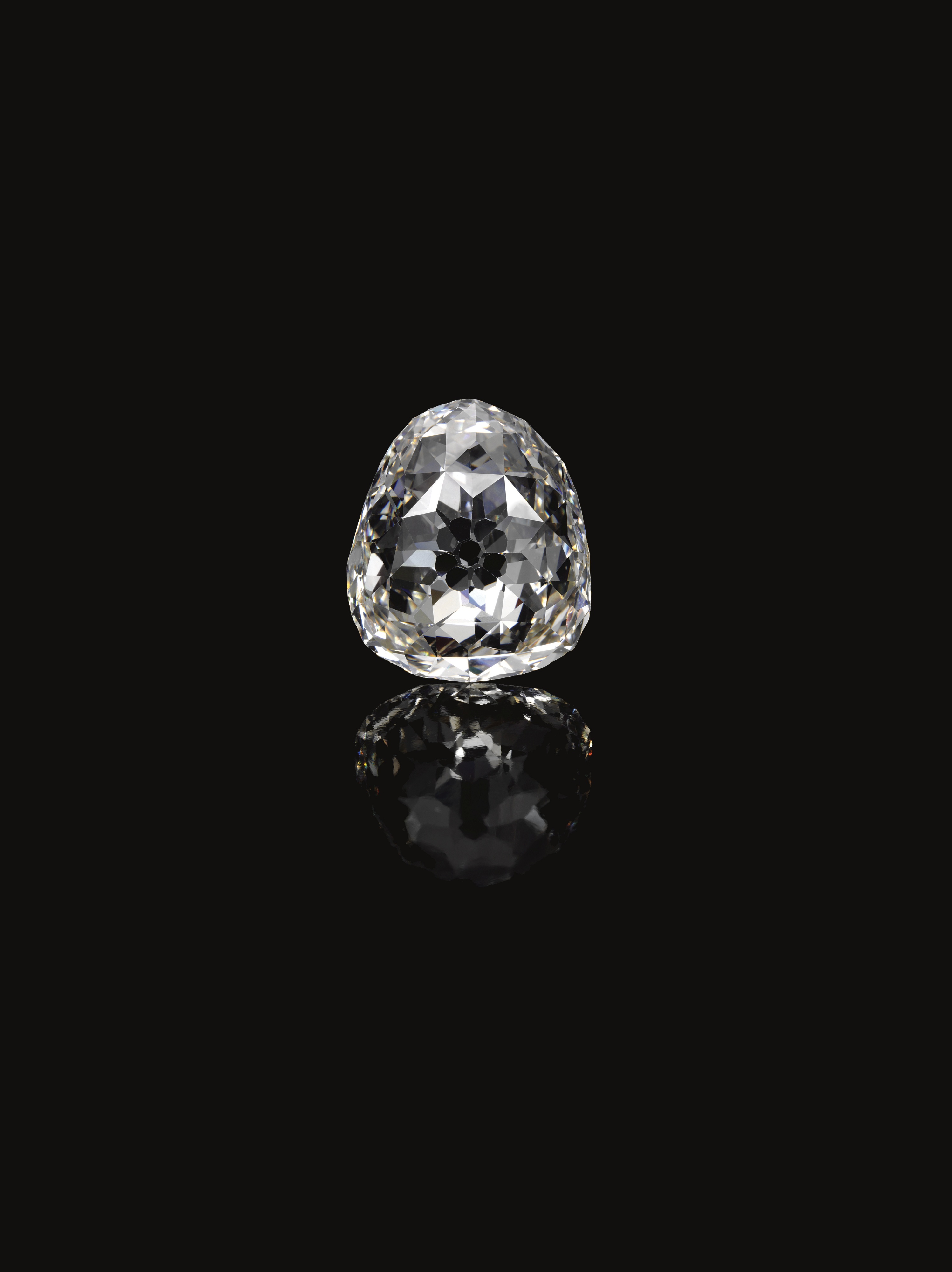
Sotheby’s catalogue traces the Beau Sancy to the river beds of Golconda and to Marie de Medici, who bought it in 1604 after losing the larger Sancy to James I of England. Its facets centre on an eight-pointed star, a style of cutting older than the brilliant. At Sotheby’s Geneva in 2012 it was estimated at CHF 1.85 to 3.65 million and sold for CHF 9,042,500, about CHF 258,500 per carat. The condition report mentions abrasion to the facet edges and girdle, which tells you how little buyers worry about honest wear on a stone with this story.
For early pear cutting you can actually wear, see the 3.04 ct D IF old cut pear, Type IIa (12.25 x 8.51 mm).
Le Grand Mazarin: 19.07 ct, light pink old mine brilliant
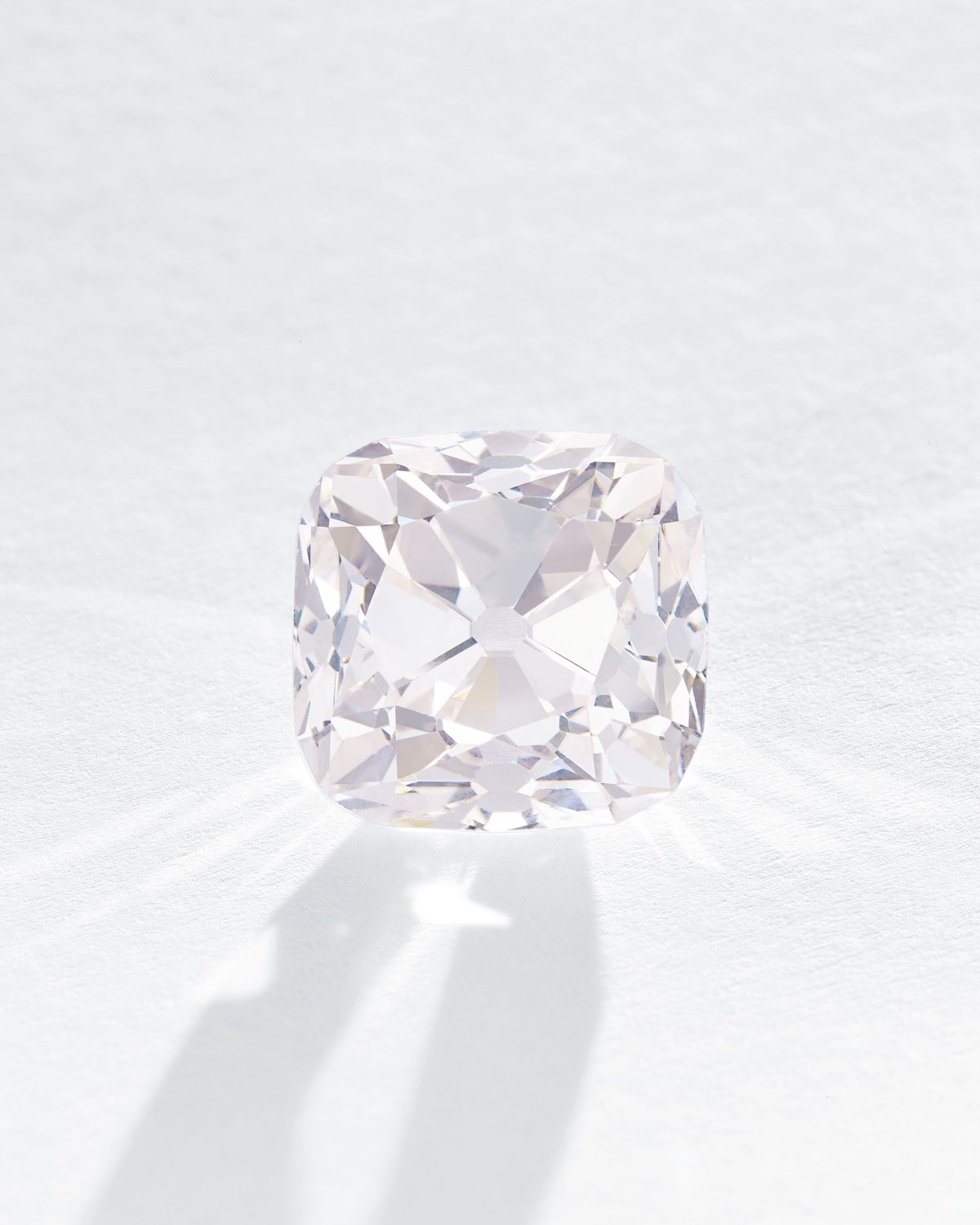
The provenance on the lot page runs from Cardinal Mazarin to Louis XIV, Louis XV and Louis XVI, then to Napoleon and Empress Marie-Louise, and on to Louis XVIII and Charles X. When it came to Christie’s Geneva on 14 November 2017, GIA graded it Light Pink, VS2, and confirmed it as Type IIa. It sold for CHF 14,375,000, roughly CHF 754,000 per carat.
What strikes us is the cut: an old mine brilliant, the same family as the stones we handle every day. The 6.01 ct D VS2 old cut cushion (11.63 x 10.91 mm) shows that antique faceting in a colourless stone.
The Arcot II: 17.21 ct, D, Internally Flawless pear
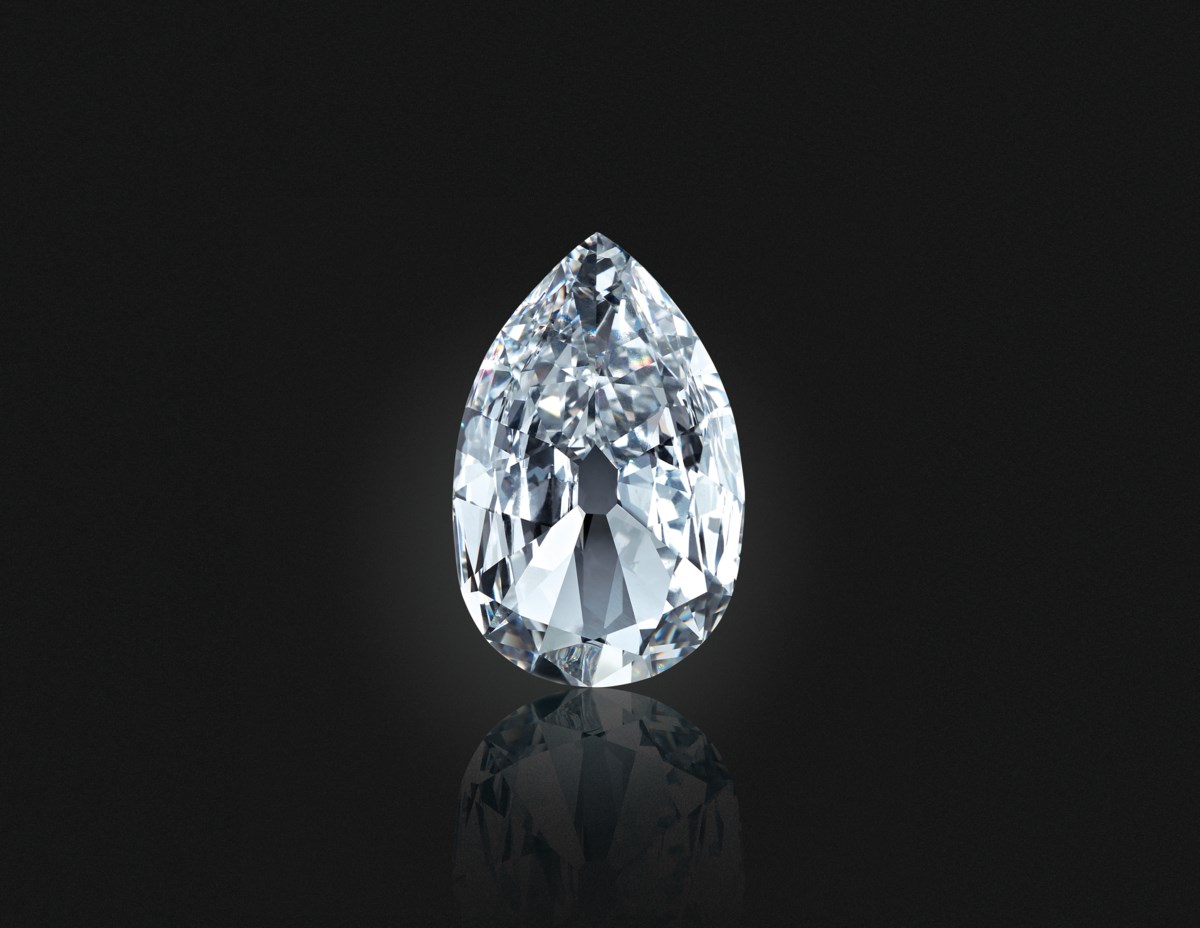
A pear brilliant with a provenance list that reads like a seating plan: the Nawab of Arcot, Queen Charlotte, the future George IV, a Marquess and a Duke of Westminster, a Sotheby’s London sale in 1959, then Harry Winston. GIA graded it D, Internally Flawless, Type IIa, and Christie’s presented it among the collection’s Golconda diamonds. At the Maharajas & Mughal Magnificence sale in New York on 19 June 2019 it made $3,375,000 against an estimate of $2 to 4 million, about $196,000 per carat.
Same grade, same type, same shape at a gentler weight: the 3.01 ct D VVS2 pear brilliant, Type IIa (17.18 x 8.39 mm). For an old mine stone with a pear’s sense of length, the 9.89 ct D IF old mine leaf shape, Type IIa runs 21.39 mm from end to end.
The Mirror of Paradise: 52.58 ct, D, Internally Flawless
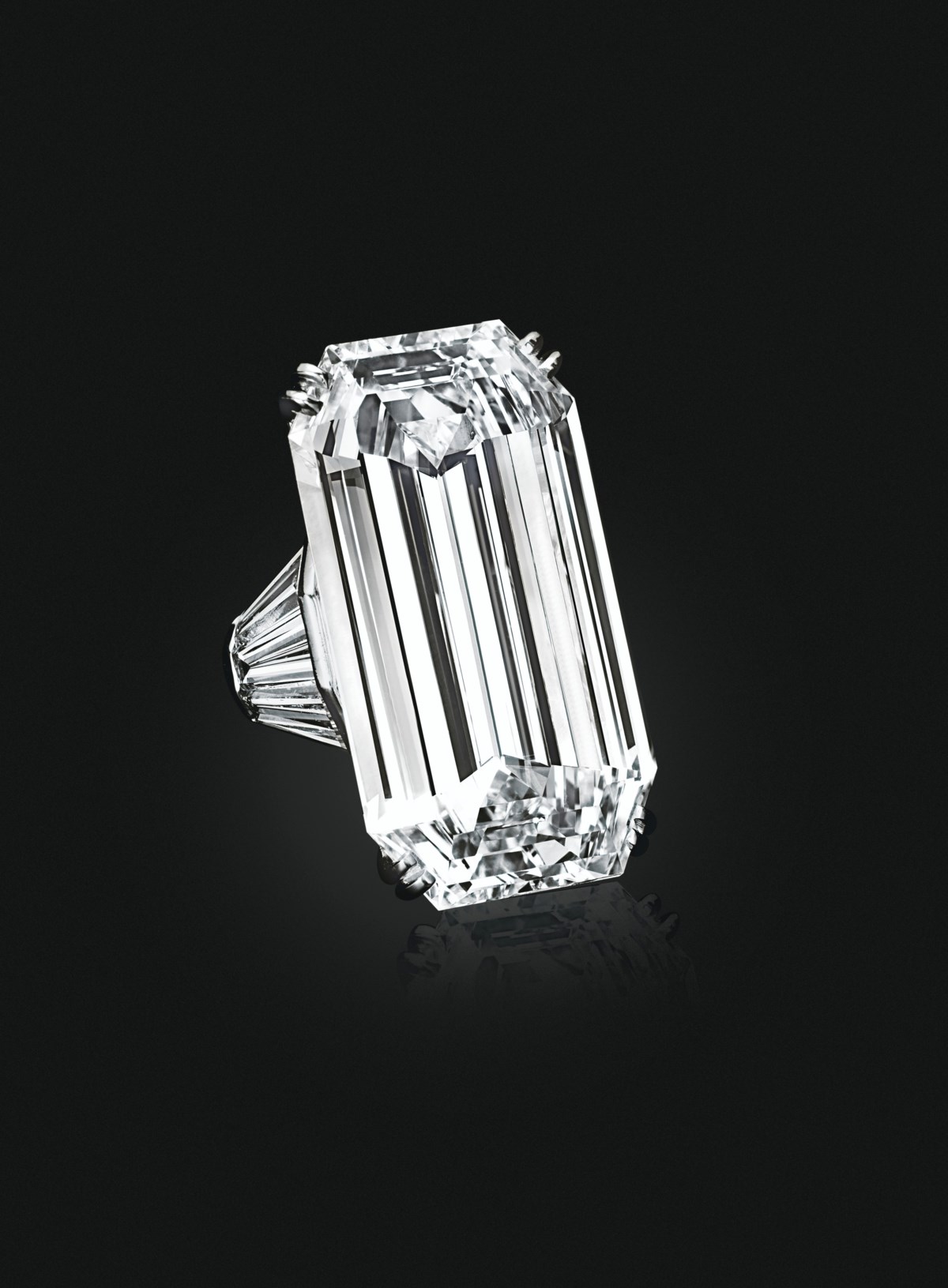
This one is useful because it sold twice in six years. In December 2013, National Jeweler reported a 52.58 ct D IF Golconda diamond selling at Christie’s New York for $10.9 million, about $207,600 per carat. The 2019 lot page lists that December 2013 sale in the stone’s provenance. Set as a ring and graded D, Internally Flawless, Type IIa, it then made $6,517,500 at Christie’s New York in June 2019, below its $7 to 10 million estimate. That is roughly $124,000 per carat.
Sale timing, setting and the mood of the room all count. If a colourless Type IIa with real presence is the goal, the 7.51 ct D IF is the stone we would show you first.
Two footnotes from the saleroom
The 76.02 ct D IF Archduke Joseph, the record colourless Golconda cushion, has its own entry in our guide to famous cushion and old mine diamonds at auction, and the Hope has a page of its own. And in April 2025 the 23.24 ct Fancy Vivid Blue “Golconda Blue”, set in a ring by JAR and estimated at $35 to 50 million, was withdrawn by its seller before Christie’s Geneva sale. Even legends get cold feet.
What it means for a collector today
- Type IIa is the common thread. The three lots above with GIA type reports were all Type IIa. Ask for the same confirmation on any colourless stone sold on that basis.
- Old cutting survives at the top. The Beau Sancy’s rose cut and the Grand Mazarin’s old mine brilliant went to auction in their historic cuts, and buyers paid well above estimate for the Beau Sancy with its wear on record.
- Provenance moves price more than weight. The Grand Mazarin made several times more per carat than the far larger Mirror of Paradise.
- Prices fall as well as rise. The same 52.58 ct stone sold for less in 2019 than in 2013.
Questions collectors ask
What is a Golconda diamond?
A diamond from the historic mines of south-central India, traded for centuries through Golconda. The term appears in museum and auction records for stones such as the Regent, the Beau Sancy and the Arcot II.
Is every Type IIa diamond from Golconda?
No. Type IIa describes a diamond with almost no nitrogen, and such stones come from many mines. Golconda is a question of documented origin and history, which a type report alone does not answer.
What did the Mirror of Paradise sell for?
$6,517,500 at Christie’s New York on 19 June 2019, about $124,000 per carat. In 2013 it had sold for $10.9 million, per National Jeweler.
What does a D-colour Golconda diamond cost per carat at auction?
It varies widely. The 17.21 ct Arcot II made about $196,000 per carat in 2019, while the 52.58 ct Mirror of Paradise made about $124,000 per carat at the same sale.
Can I buy a Type IIa diamond with antique cutting?
Yes. Our vault includes Type IIa stones in old cut pear and old mine leaf shapes, with the type recorded on each stone’s page.
If one of these stories has you picturing a particular stone on a particular hand, tell the Find My Diamond desk what you have in mind, or browse our antique diamonds.
Auction photographs are credited to their owners and link to the original pages.