Somewhere in a red leather case there is a ring that has been worn to dinner for a hundred years. The diamond has a high crown and a small table, the platinum is thin as wire, and the light it throws is soft and slightly flickering, like a candle in a draught. Open the case and you understand quite quickly why Cartier’s early jewels still empty the saleroom.
Cartier built its reputation in the decades when diamonds were still cut by eye: old mine cushions, old European rounds, old-cut pears. Those stones sit at the centre of the house’s Belle Époque and Art Deco jewels, and they keep reappearing at auction. Here are the documented ones, what they made, and the stones in our vault that share a cut, a colour or a grade with each.
A short history of the house
According to Christie’s, Louis-François Cartier took over a shop at 29 Rue Montorgueil in Paris in 1847, at 28. His son Alfred ran the business from 1874, and Alfred’s three sons made it famous. Louis stayed in Paris. Pierre opened in London in 1902 and received the Royal Warrant two years later, then moved to New York in 1909, leaving Jacques in charge in London. In 1917 Pierre acquired 653 Fifth Avenue for two strands of very fine pearls, which remains the most stylish property deal in jewellery history.
The house signatures followed: platinum garland jewels before the First World War, Art Deco geometry in the 1920s and 1930s, the panther (first as a wristwatch pattern in 1914, then fully sculpted for the Duchess of Windsor in 1948), the Trinity ring of 1924 and the multi-gem Tutti Frutti style that grew out of Jacques Cartier’s trips to India from 1911. The clients ran from King Farouk to Elizabeth Taylor.
A note before the lots: Imperial has no connection with Cartier. The stones linked below simply share a cut, shape or grade with the jewels described.
Cartier’s old-cut diamonds at auction
The Belle Époque tiara, 1920, Christie’s Geneva, 2024
Garlands of old-cut and single-cut diamonds rising to pear-shaped diamonds, in platinum, with a detachable frame fitting so it could be worn without the band. It is dated 1920, unsigned, with the maker’s mark of Gustave Renault and a red Cartier case. Offered at Christie’s Geneva on 12 November 2024 with an estimate of CHF 250,000 to 350,000, it sold for CHF 340,200.
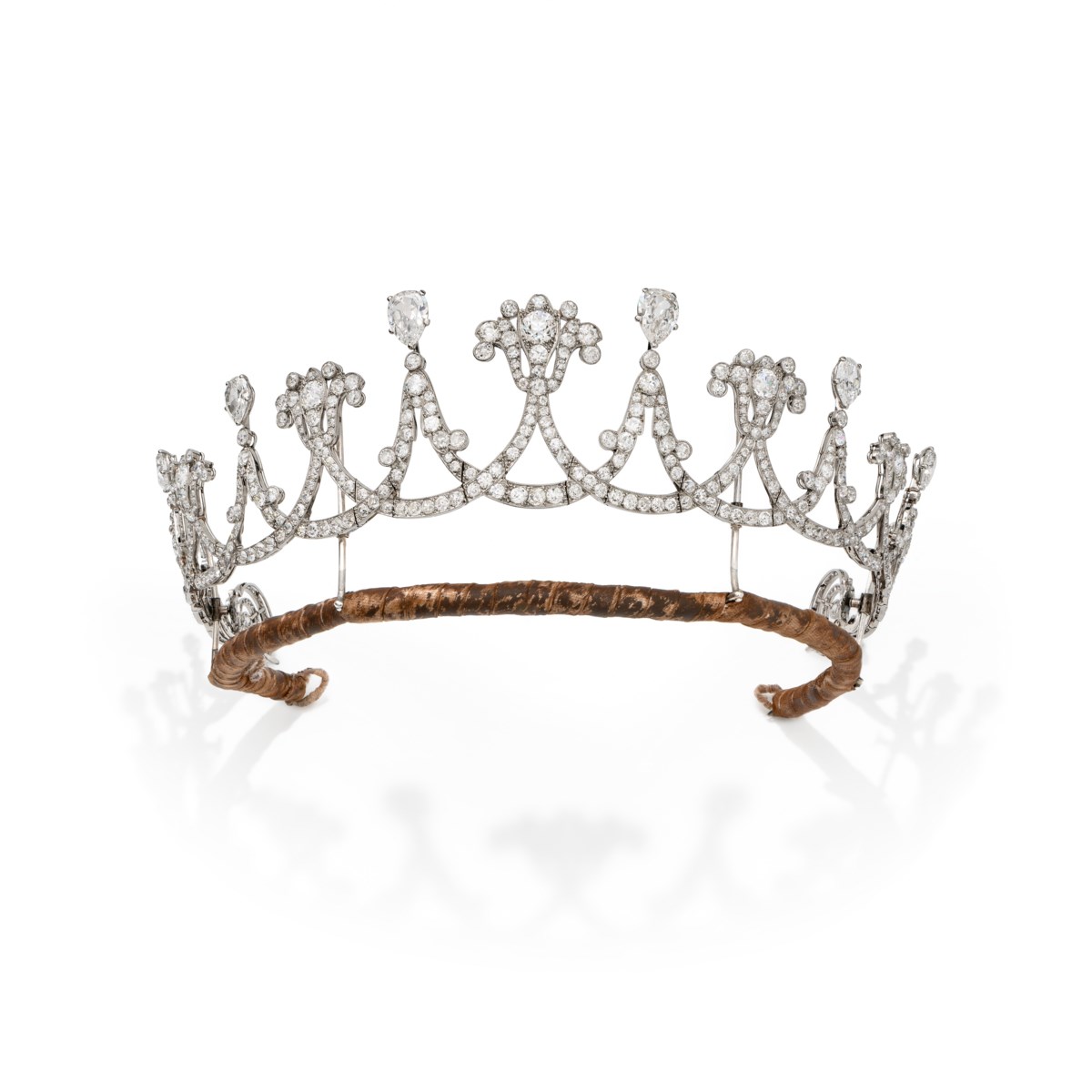
Look at the pears on the top points. Old pears were cut to hold weight and catch candlelight, so they look softer and fuller than a modern pear. Ours is the 3.04 ct D IF old cut pear, Type IIa (12.25 x 8.51 mm). For a long, modern-cut contrast, there is the 3.01 ct D VVS2 pear brilliant, Type IIa (17.18 x 8.39 mm).
A Belle Époque old-cut diamond ring, about 1910, Christie’s New York, 2015
The quiet one. An old-cut diamond in a surround of single-cut diamonds, in platinum, circa 1910, signed Cartier and numbered. Christie’s did not publish the centre weight. Estimate $30,000 to 50,000; sold in October 2015 for $37,500. This is the kind of ring people mean when they say they want “something old” and then go very quiet in front of the window.
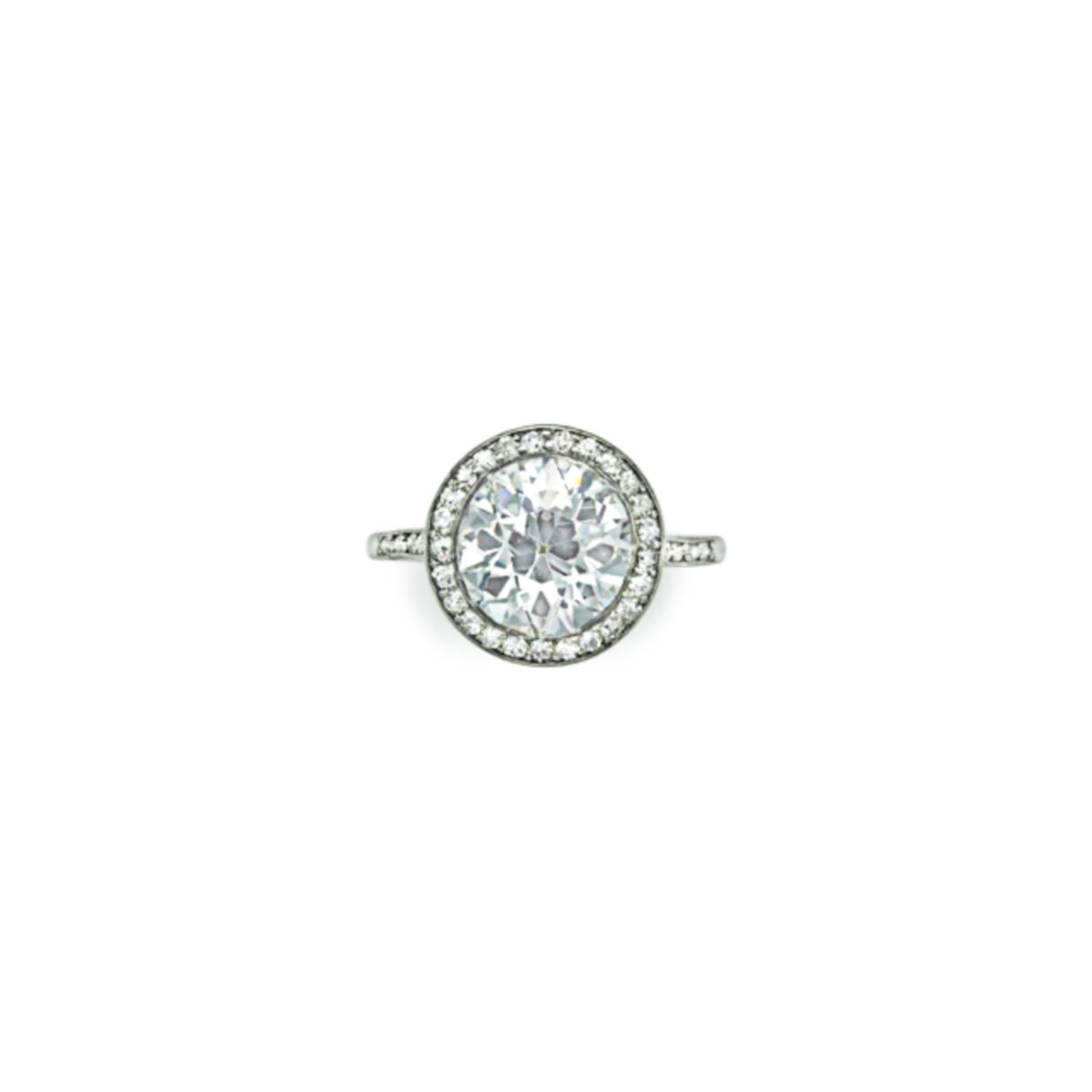
For a white old mine at that everyday size, see the 2.13 ct D IF old mine cushion (7.74 x 6.52 mm) or the 2.03 ct F VS1 old mine cushion (6.97 x 6.45 mm).
An Art Deco bracelet with cushion-cut diamonds, about 1930, Christie’s New York, 2012
A wide band of old European-cut diamonds set with rows of bezel-set stones, spaced by larger old European and cushion-cut diamonds, in platinum, circa 1930, signed Cartier, in its red case. Estimate $200,000 to 300,000; it made $470,500 in June 2012. Art Deco is usually remembered for its straight lines, but the stones doing the sparkling here are still the old cuts.
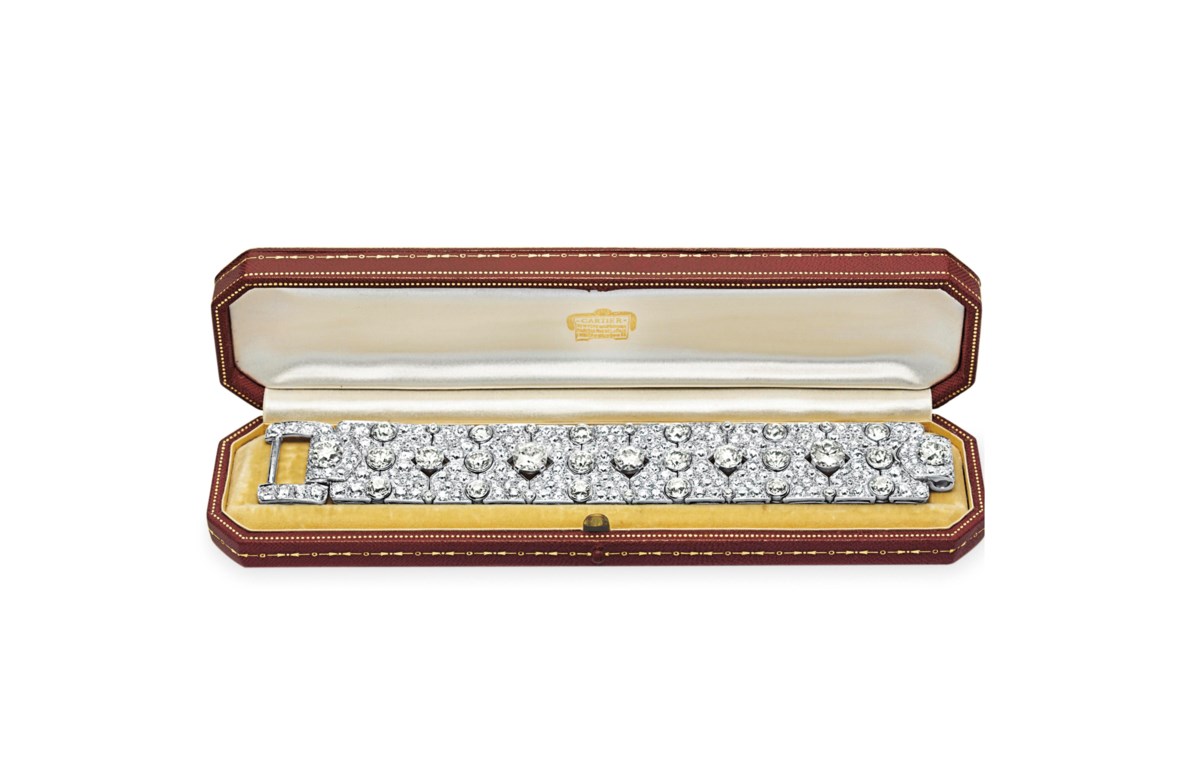
Cushions with real Art Deco era presence: the 5.01 ct H VS1 old mine cushion (10.85 x 9.39 mm) and the 3.06 ct G VVS2 old mine cushion brilliant (8.49 x 8.18 mm).
A 10.35 ct Art Deco ring, Christie’s Geneva, 2026
An emerald-cut diamond of 10.35 ct with baguette shoulders, 1920s, signed Cartier, with a 2025 GIA report grading it I colour, VS1 clarity. Sold at Christie’s Geneva on 13 May 2026 for CHF 254,000, well over the CHF 110,000 to 190,000 estimate. An I colour stone, comfortably over estimate. The signature and the date did the lifting.
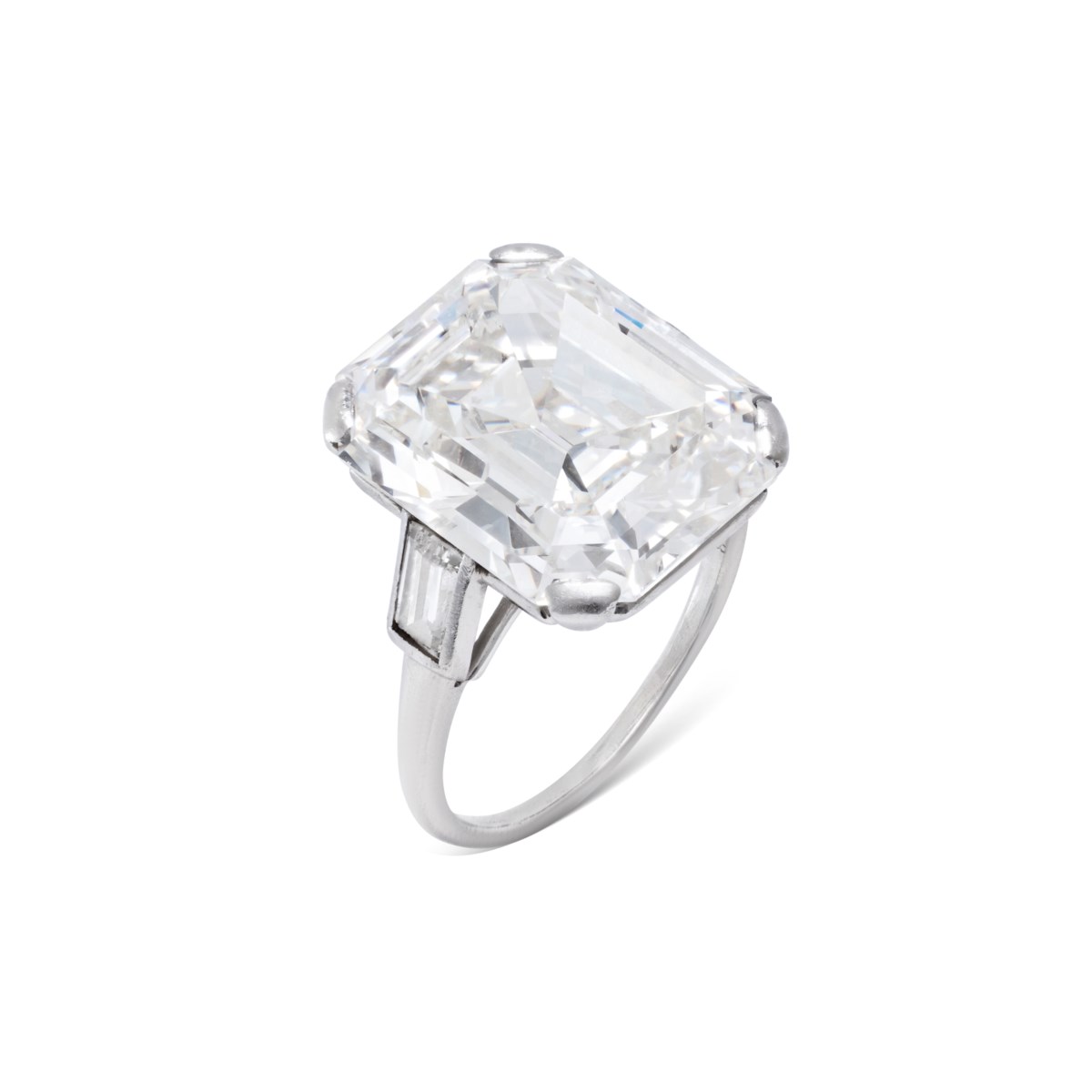
Our stones of that weight are cushions rather than step cuts. The 9.04 ct F IF old mine cushion (14.45 x 12.02 mm) and the 6.01 ct D VS2 old cut cushion (11.63 x 10.91 mm) are the ones to compare for size and whiteness.
The Type IIa results
A 12.60 ct D IF Type IIa ring, Christie’s New York, 2024
A round-cornered rectangular brilliant-cut diamond of 12.60 ct between two shield step-cut diamonds, platinum, signed Cartier, in a red case and pouch. The 2024 GIA report: D colour, Internally Flawless, Type IIa. It came from “A Fashionable Life: The Collection of an Elegant Lady” and sold on 11 June 2024 for $756,000 (estimate $700,000 to 1,000,000).
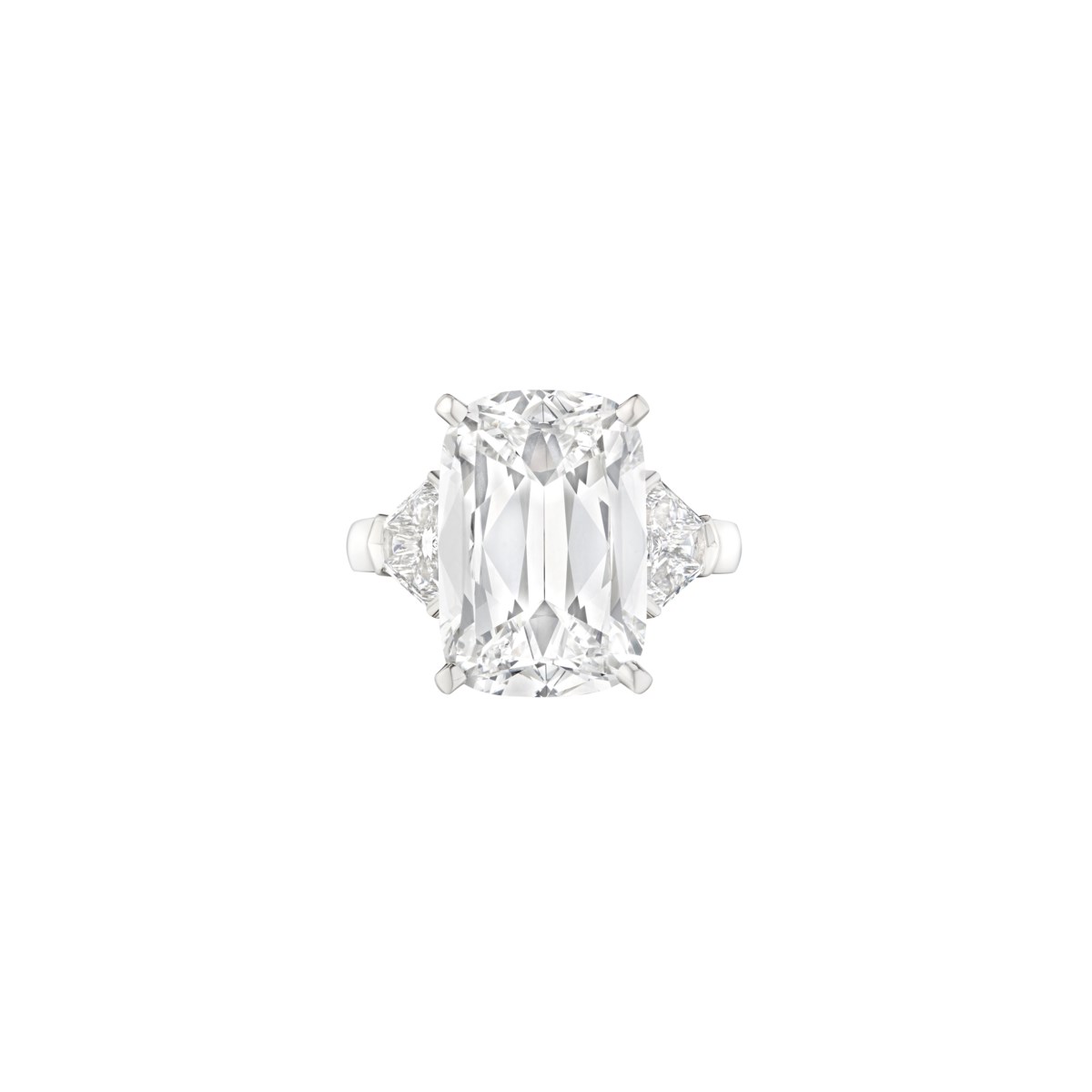
A round-cornered rectangle is a close cousin of the cushion. The 7.51 ct D IF cushion brilliant, Type IIa (12.75 x 11.29 mm) shares the colour, the clarity and the type. For a bigger face, there is the 16.06 ct I SI1 cushion brilliant (16.00 x 14.64 mm).
A 33.13 ct D VVS1 Type IIa ring, Sotheby’s Geneva, 2022
A step-cut diamond of 33.13 ct with tapered baguettes, signed Cartier, French assay mark, from the “Sunrise Ruby” Collection. GIA graded it D colour, VVS1, with a Type IIa letter and a working diagram suggesting it might reach Internally Flawless after minor repolishing. Offered in Geneva in November 2022 at CHF 2,300,000 to 3,300,000; Sotheby’s reports it sold for $3.2 million.
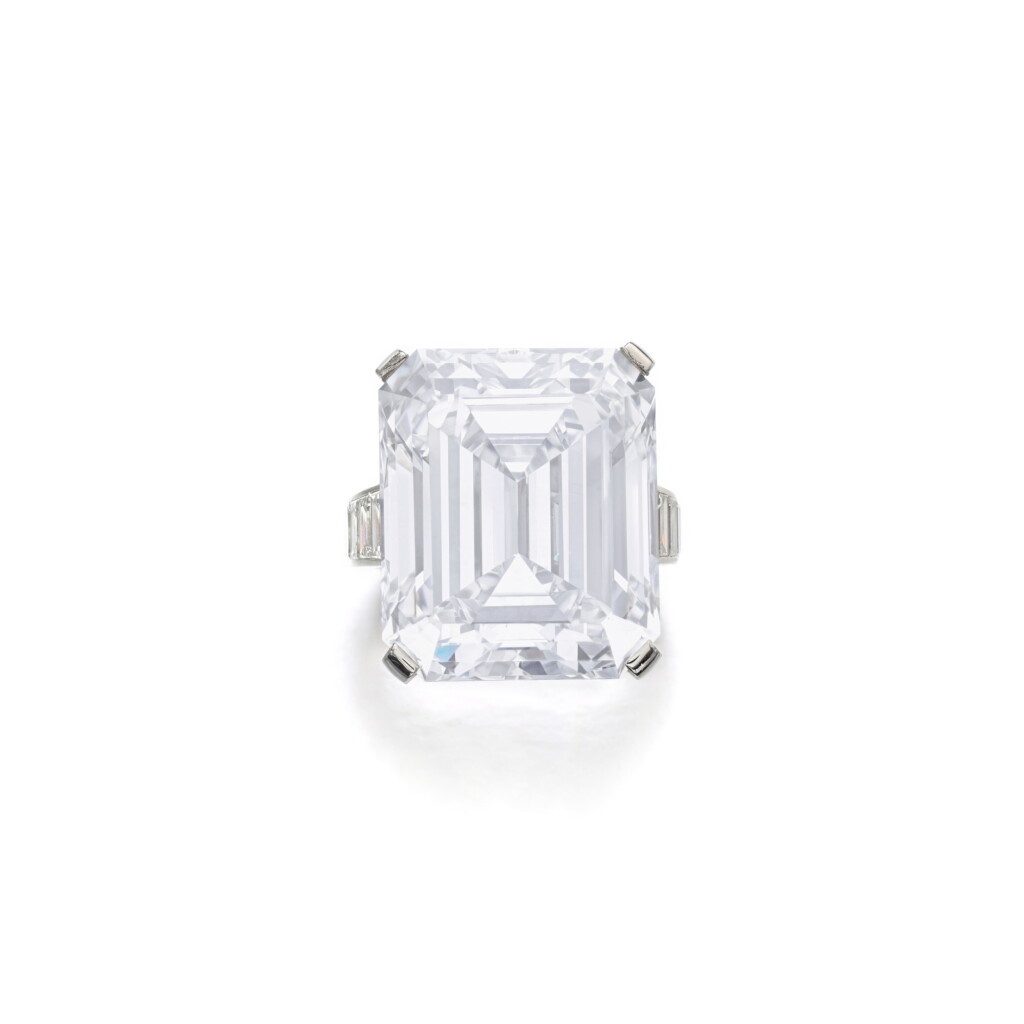
The most dramatic Type IIa stone in our vault is the 9.89 ct D IF old mine leaf shape, Type IIa (9.86 x 21.39 mm). A third of the weight, roughly the same amount of conversation at dinner.
What it means for a collector today
- Cartier’s early jewels were built around old cutting: old-cut pears, old European rounds and cushions. Those cuts are a documented part of the house’s history, and they still trade well.
- The signature and the date carry the price. The 10.35 ct ring is I colour and still cleared its high estimate by a wide margin.
- Paper matters at the top. Both Type IIa lots came with GIA reports and type classification. Ask for the same on any loose stone.
- Read the description line by line. The 1920 tiara carries a maker’s mark and a Cartier case rather than a signature, and the catalogue says so plainly.
Questions collectors ask
When was Cartier founded? In 1847, when Louis-François Cartier took over a shop at 29 Rue Montorgueil in Paris, according to Christie’s.
Did Cartier use old mine and old European-cut diamonds? Yes. Christie’s has catalogued Cartier jewels with old-cut diamonds from about 1910, a 1920 tiara with old-cut and pear-shaped diamonds, and Art Deco bracelets set with old European and cushion-cut diamonds.
What is the most expensive Cartier ring sold at auction? Sotheby’s ranks the Sky Blue Diamond ring first, an 8.01 ct Fancy Vivid Blue mounted by Cartier, sold in Geneva in November 2016. National Jeweler reported the price at the time as $17.1 million; a 2025 Sotheby’s article lists $19.5 million.
What does “Type IIa” mean on a Cartier lot? It is a GIA classification for diamonds with no measurable nitrogen. Both the 12.60 ct and the 33.13 ct Cartier rings above were classified Type IIa.
Can I buy a loose antique diamond like the ones in these jewels? Yes. Our vault includes old mine cushions from 1.52 ct to 12.78 ct and old-cut pears, each with full measurements on its page, and you can take the stone to the jeweller of your choice to set it.
If one of these jewels has you picturing a particular stone on a particular hand, tell the Find My Diamond desk what you have in mind, or browse our antique diamonds.
Auction photographs are credited to their owners and link to the original pages. Prices include buyer’s premium.