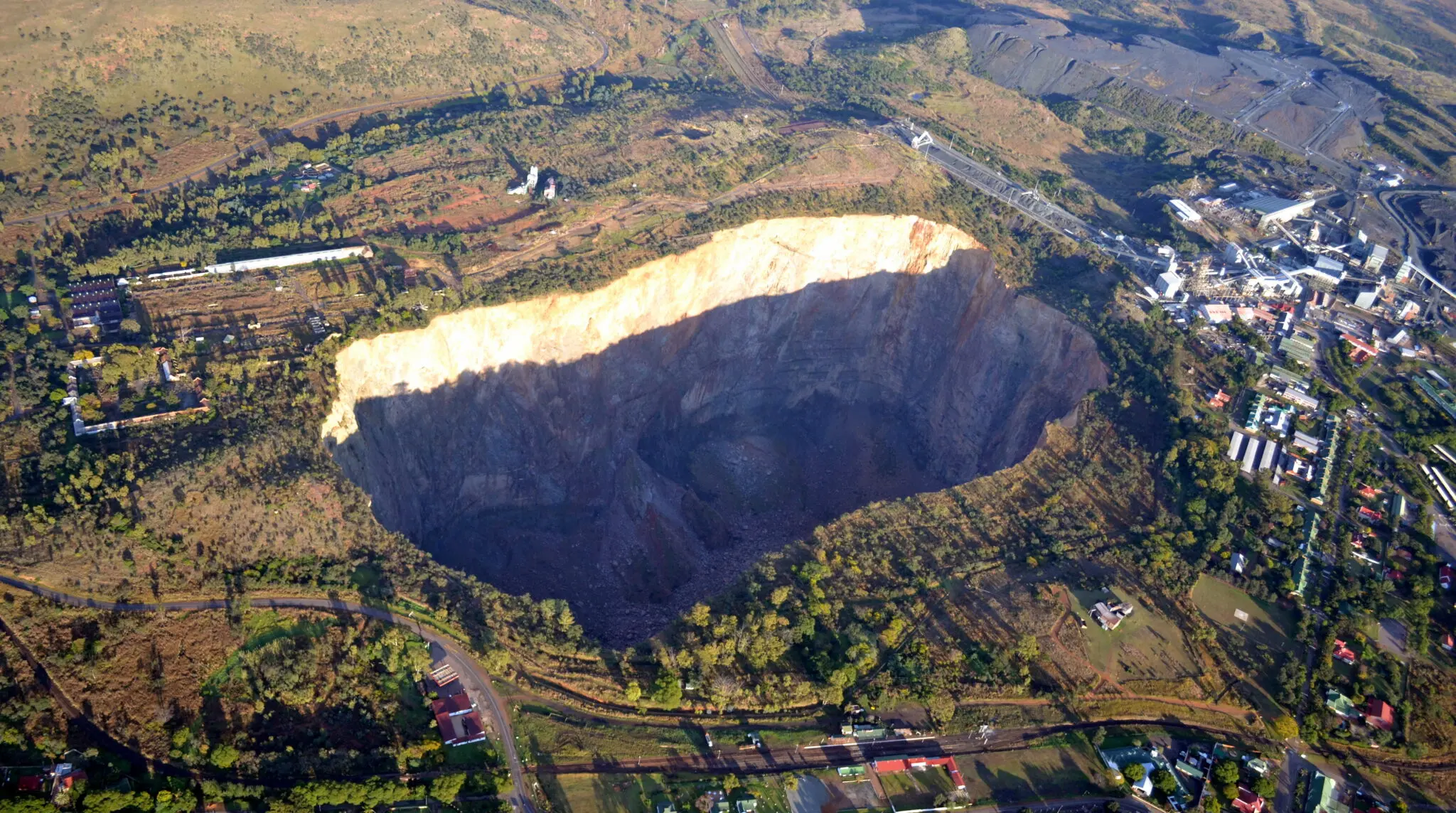
On 26 January 1905, Frederick Wells recovered an immense diamond at the Premier mine near Pretoria, South Africa. The rough weighed 3,106 metric carats. Before anyone could see a sceptre or a crown in it, the stone was a crystal measuring roughly 10.1 by 6.35 by 5.9 centimetres, according to the Royal Collection Trust. The Cullinan's South African discovery is documented history; GIA's later identification of the rough as Type IIa describes something different, the nature of its crystal lattice.
From the South African rough to Amsterdam
The diamond took the name of Thomas Cullinan, chairman of the mining company. GIA's historical study records that the Transvaal legislature purchased it in 1907 for presentation to King Edward VII. The rough then went to the Asscher firm in Amsterdam. A cleavage plan had to divide a crystal already famous for its scale, while leaving pieces that could be polished into major gems. The Royal Collection Trust describes four days spent preparing the groove. When the cleaving knife struck, the knife broke and the diamond stayed whole.
Joseph Asscher succeeded with a new knife on the next blow, according to GIA's detailed history. The principal pieces were then worked into nine large diamonds, numbered I to IX, with smaller stones from the remaining material. Three men worked long days over approximately eight months, the Royal Collection Trust says. That sequence is the visible consequence of a cutting decision: the single rough crystal became distinct shapes, each with a new place in the history of the Crown Jewels and royal jewellery.
The two best-known Cullinan stones
Cullinan I, the Great Star of Africa, is a pear-shaped 530.2 ct diamond at the head of the Sovereign's Sceptre with Cross. Cullinan II is a cushion-shaped 317.4 ct diamond in the Imperial State Crown. GIA gives those finished weights and shapes in its historical and gemological study. The two forms make the cutter's choices tangible: one long pear, one broad cushion, both taken from the same rough crystal.
The Royal Collection Trust says George V had Cullinan I and II set in the regalia after Edward VII's death in 1910. The other numbered stones followed different routes. Some became jewellery associated with Queen Alexandra and Queen Mary. The nine names preserve their common origin even as the stones moved into separate settings. Seeing the pear in the sceptre and the cushion in the crown also reminds us that one rough diamond can produce polished stones with very different outlines and patterns.
What Type IIa tells a gemologist
GIA's research account explicitly calls the 3,106 ct Cullinan rough Type IIa. In GIA's diamond type classification, Type IIa is a low-impurity category with no nitrogen or boron absorption detectable by the relevant infrared analysis. That property is independent of where a diamond was found. Type IIa does not by itself give a clarity grade, certify a natural origin, or reveal the mine.
GIA's research on unusually large, inclusion-poor diamonds uses the Cullinan as part of the term CLIPPIR, which stands for Cullinan-like, Large, Inclusion Poor, Pure, Irregular and Resorbed. The name grew from the study of crystals with a particular combination of size, shape and internal character. It does not replace laboratory examination of another diamond. The Cullinan remains the historic reference point for the term because its rough form, enormous scale and resulting polished stones are so well recorded.
What later examinations could see
The Cullinan story did not end when the two largest stones entered the regalia. GIA's study describes examinations carried out while the Crown Jewels were cleaned in the 1980s. Gemologists could inspect Cullinan I and II as mounted historical jewels and describe their dimensions, colour and clarity characteristics, though a mounted examination has limits. The published work records them as approximately D colour and potentially flawless. Those cautious words belong to the examination; they should not be converted into a modern loose-stone grading report.
By then, the stones had already spent decades in public view. Cullinan I remained a pear at the head of the sceptre and Cullinan II a cushion in the crown. The 1980s observations added gemological detail to an unusually complete historical chain: mine, rough, cutters, finished stones and settings. The chain explains the stones' identity in a way that an isolated photograph or a type label never could.
A separate Type IIa example
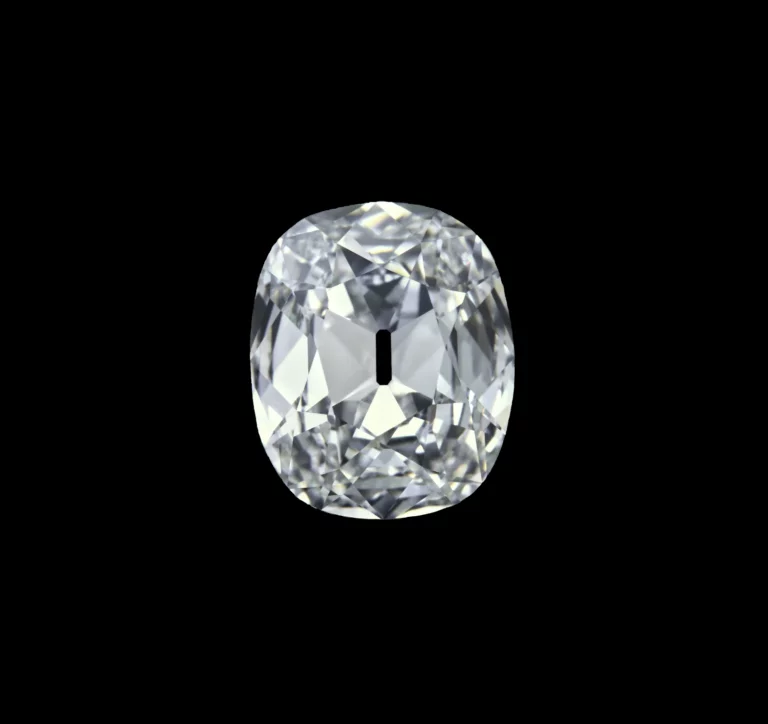
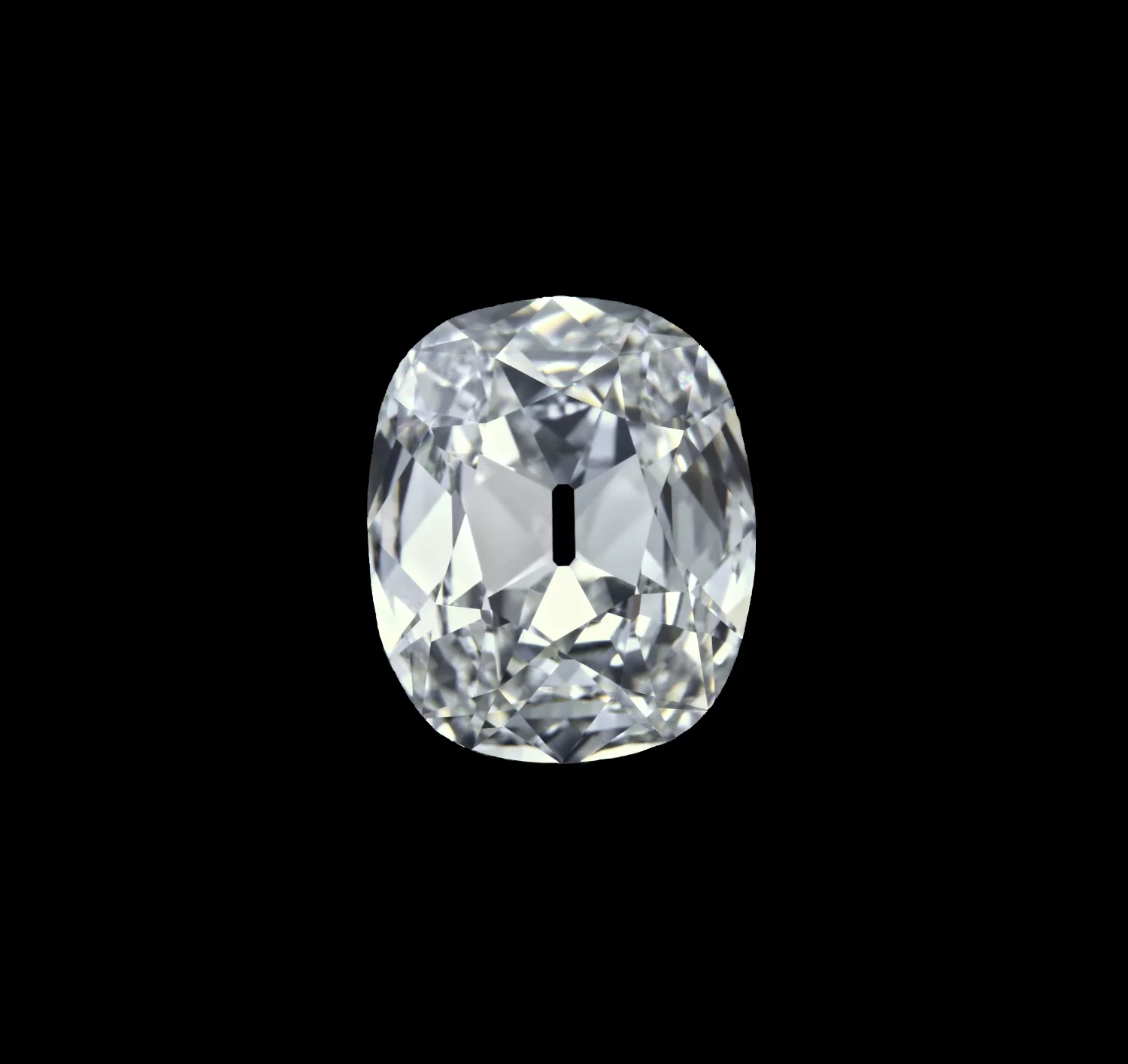
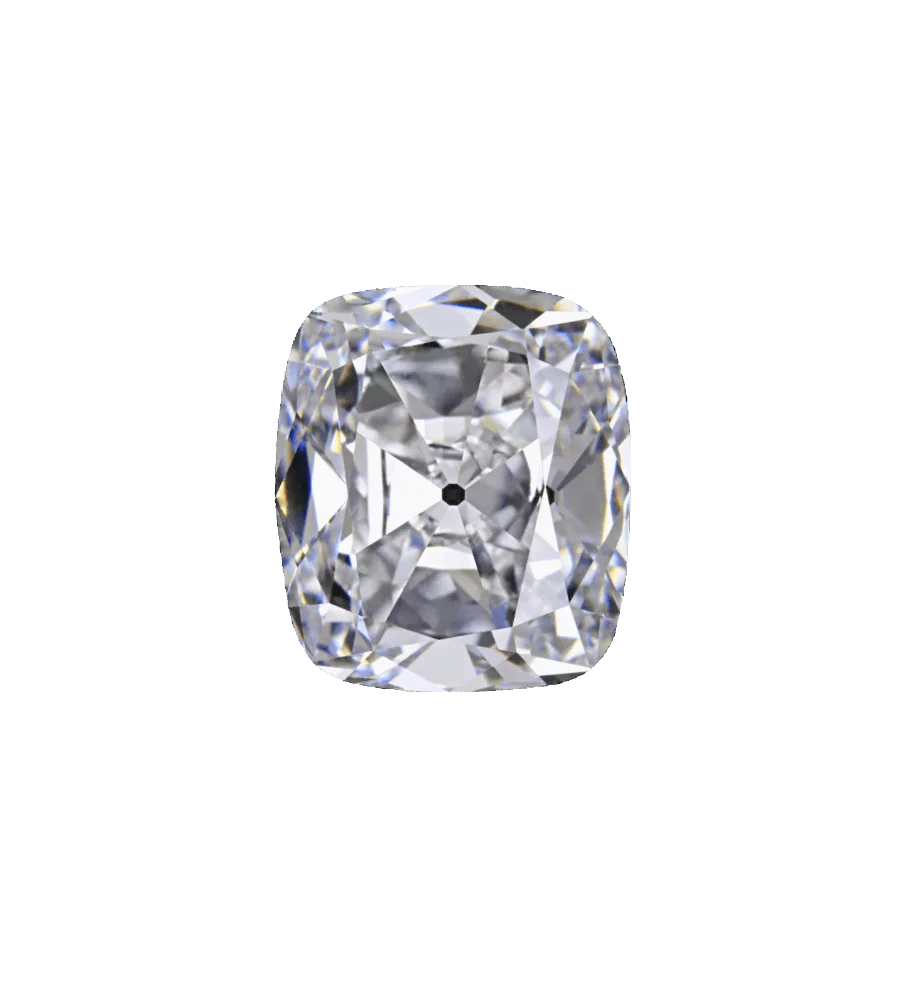
Imperial's 9.04 ct F IF Old Mine Cushion, IC-05729, offers a present-day Type IIa example. Its GIA report is 1236032670, dated 13 September 2023, and a checked GIA type letter supports the classification. The opening photograph shows that Imperial stone. Its report and letter establish facts about IC-05729, while the Royal Collection Trust account and GIA's history establish the Cullinan's South African discovery, cutting and place in the regalia.