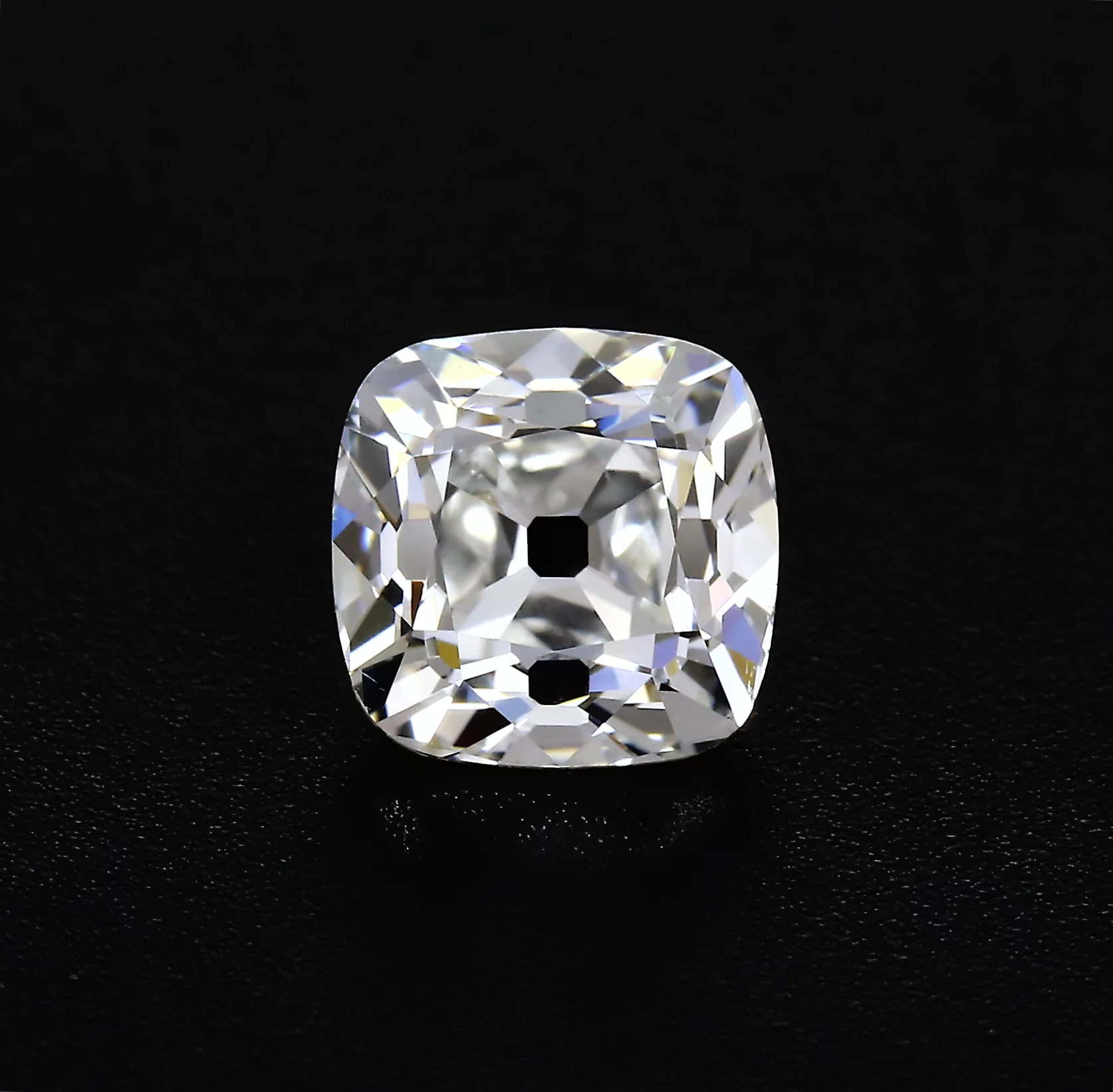
The old mine cut belongs to a long period when a diamond cutter worked much closer to the form of the rough. The result is often a soft square with a high crown, small table, deep pavilion and a culet large enough to see face-up. That description is a starting point, not a template. Historic examples can be rounder, longer or conspicuously uneven, and a modern cutter can reproduce the same visual language.
A cut shaped around the crystal
From the early eighteenth century through the late nineteenth, the old mine cut was one of the common brilliant styles. GIA's old mine guide places it in Georgian and Victorian jewellery and describes early bruting: shaping one diamond by grinding it against another. Weight retention and the shape of the crystal influenced the outline. A broad shoulder or unequal corners can therefore tell us something about how the cutter solved a physical problem, even though the feature alone cannot date the stone.
The name itself developed in the diamond trade. GIA's cushion-cut history explains its connection to the older Brazilian mines after South African deposits became important. The name refers to a cutting tradition, not to a laboratory-certified mine of origin. It should never be used to infer where an individual diamond was dug. An actual mine-origin claim needs its own evidence.
What the facets do differently
Like many brilliant styles, the old mine cut arranges facets around a table on top and a pavilion below. A smaller table leaves more room for crown facets; a higher crown and deeper pavilion change the profile. Shorter lower-half facets and an open culet help produce broad areas of light and dark. Watch those areas move through a slow rotation. Their changes often give the stone its pace, which is difficult to judge from a polished still image.
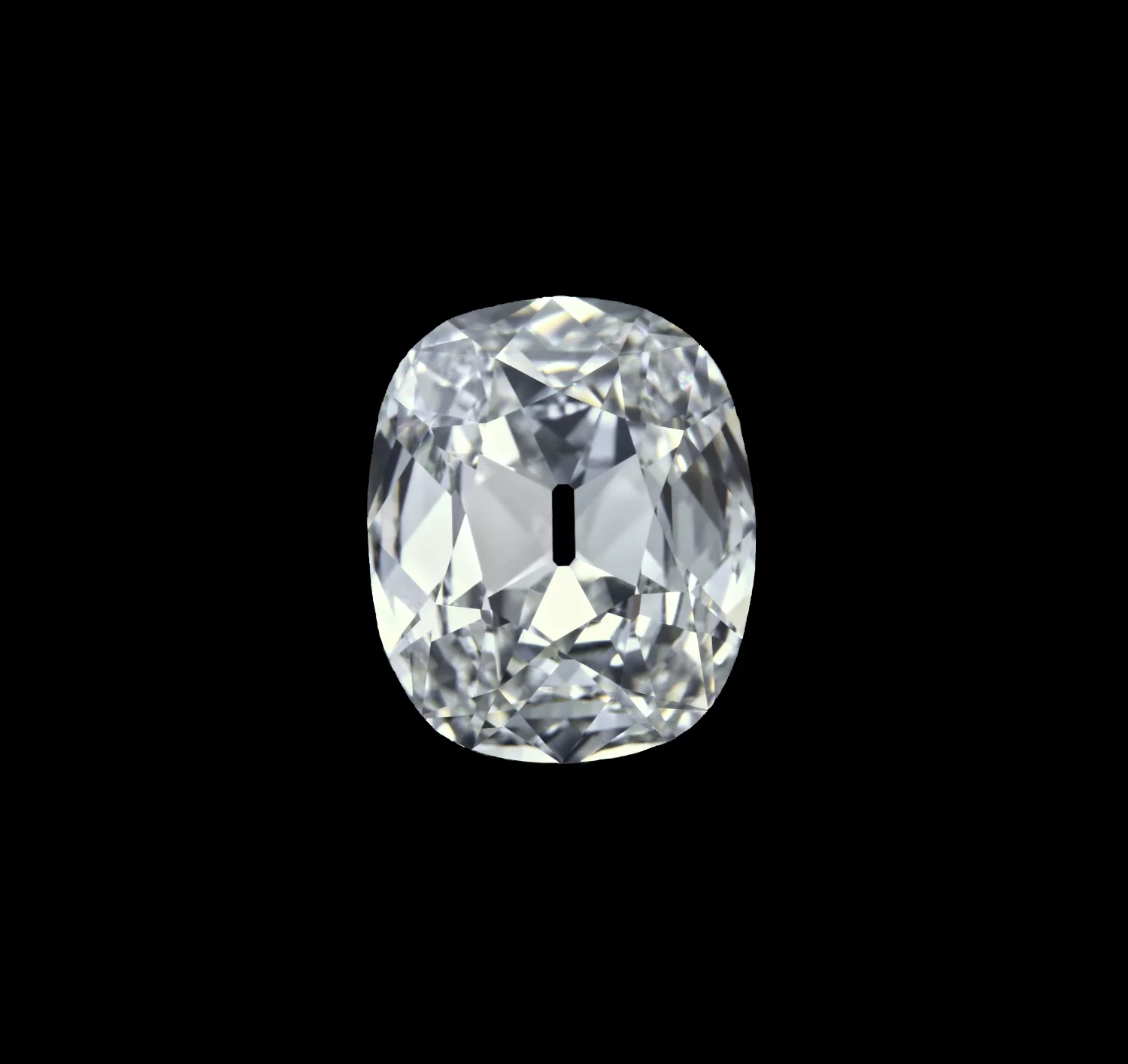
The culet was a practical solution at the point of the pavilion, where older cutting sometimes left a small flat facet. From above, it can look like a dot or small window depending on size, alignment, light and viewing angle. Do not confuse that appearance with damage without a close examination. The guide to antique diamond light return explains how to follow a changing reflection rather than freeze one dark frame as a verdict.
A longer shape is still part of the family
It is tempting to turn one proportion into a rule. Yet an old mine cushion can be almost square or plainly elongated. The ratio of length to width gives a useful shorthand, while the corners and side curves determine how the outline reads on a hand. IC-05912 measures 8.24 × 8.05 mm, about 1.02; IC-06215 measures 11.72 × 8.91 mm, about 1.32. The same cutting family has room for both silhouettes.
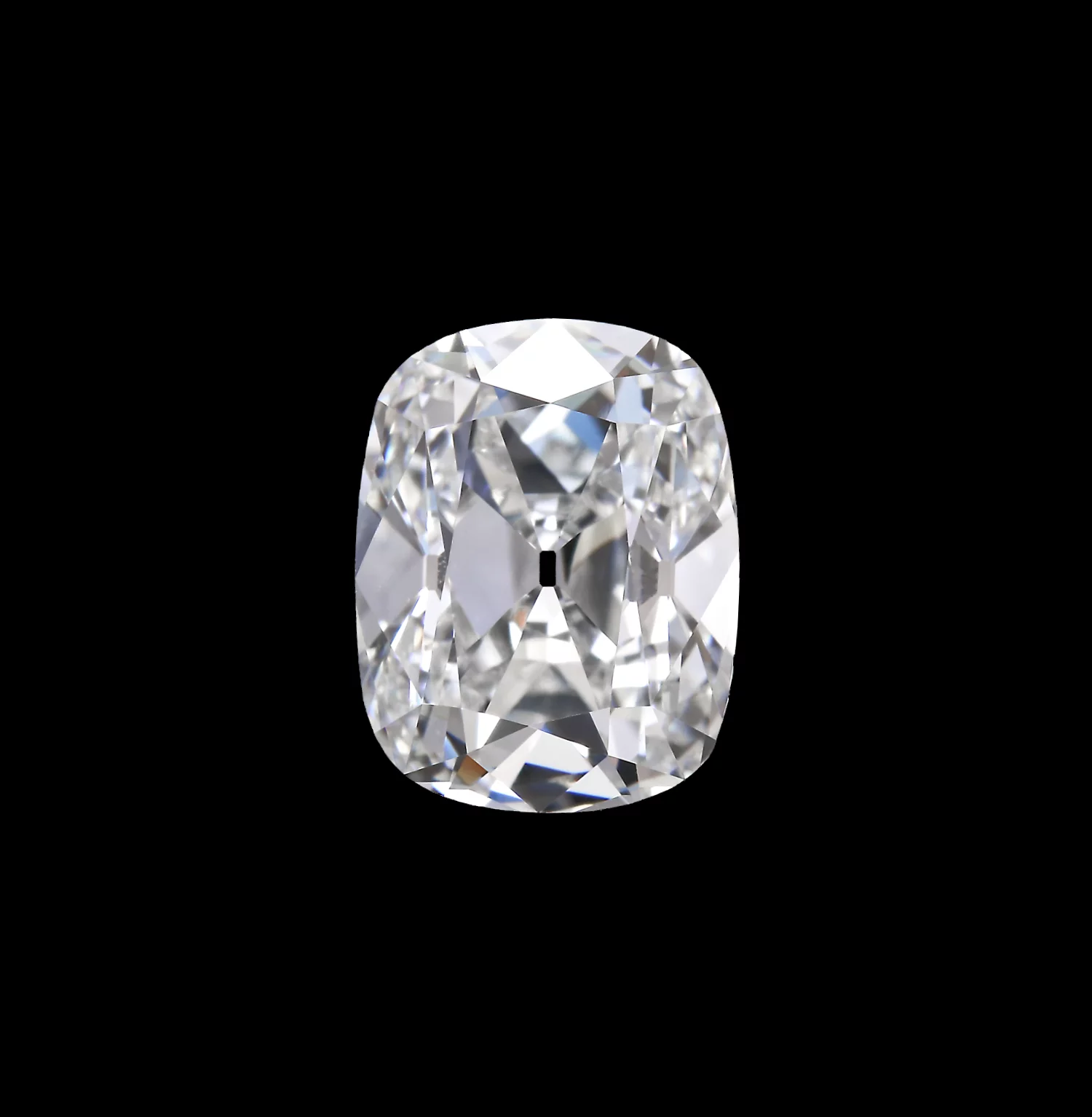
Measurements should sit beside the face-up view, never replace it. Carat measures weight, so a deep pavilion can hide weight below the girdle. Compare the actual millimetre spread, profile and face-up pattern. Then inspect any very thin girdle sections and corners before choosing a mounting. The idiosyncrasy that makes a stone appealing may call for careful seat design, especially where one side differs from the other.
Where style ends and dating begins
A grading report can state shape and cutting style, proportions, colour, clarity and other observed features. GIA's report guide describes these fields. It is not an invoice from the century of cutting. A diamond described as Old Mine Brilliant may be an original historic stone or a later stone fashioned in that style. Dating requires additional evidence such as an old mounting, reliable documentation and specialist study of the object as a whole.
The technical history is most rewarding when it sharpens the eye. Examine the rough-shaped outline, follow the broad facets in movement, and check the girdle under magnification. Those observations let the diamond speak in its own particulars before any period label is attached.
For a practical first viewing, set the report next to a face-up photograph and mark three things: the measured outline, the listed culet and the places where the girdle needs closer examination. Then put the document down and watch the stone turn at a normal viewing distance. The report supplies a map; the changing reflections and the shape in your hand supply the experience.
See the details in a stone
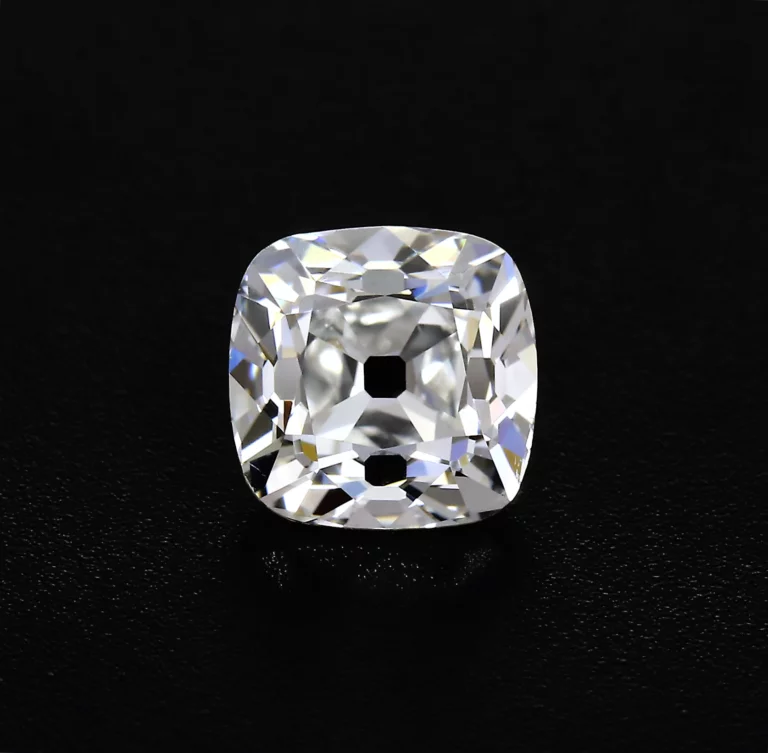
3.01 Ct. G VS2 Old Mine Cushion Brilliant
A near-square, 3.01 ct old mine cushion with a 51% table.
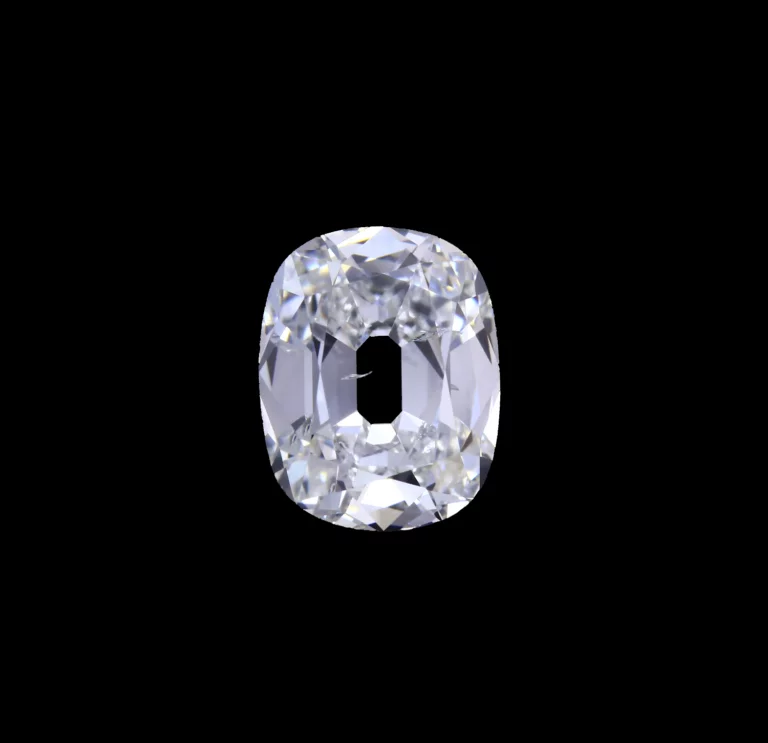
3.09 Ct. F SI2 Old Mine Cushion Brilliant
A 3.09 ct old mine cushion with a longer outline and 55.2% depth.